



Anyone waiting for municipal approval of a building plan may wonder why a local body should regulate construction on private land. In the Madras Presidency, such powers were formalised under the Madras City Municipal Corporation Act, 1919. After Independence, the first Conference of State Ministers on Town and Country Planning in 1960 gave impetus to master plans, planning legislation and similar regulatory systems across India. Behind these powers lay a public health purpose: ensuring proper drainage, sewage disposal, and healthier settlements. That rationale had been powerfully reinforced decades earlier by the work of a British doctor in India, who showed how environmental neglect could enable a tiny member of the animal world to transmit a deadly disease killing millions.
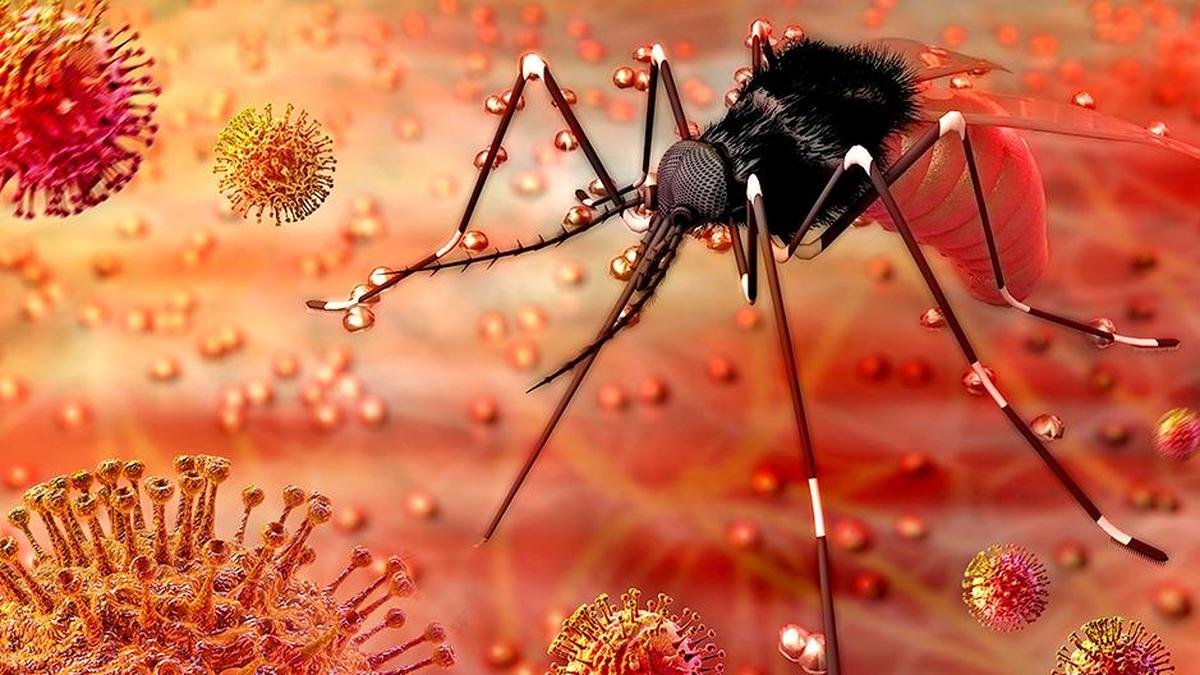
On August 20, 1897, inside a modest laboratory in Secunderabad, a British medical officer named Ronald Ross bent over his microscope and examined the stomach of this creature. What he saw that afternoon would help change the course of medicine. Within the stomach wall there were small and pigmented bodies. Ross had allowed the creature to feed on a patient with malaria several days earlier. The structures he was seeing provided crucial evidence that the malaria parasite did not merely pass through that creature by accident, but developed inside it. That was the point at which the role of that creature in the malaria lifecycle began to become scientifically visible. That creature is none other than a mosquito, and World Mosquito Day on August 20 was to commemorate this discovery in India.
The hidden enemy
For centuries, people suffered from malaria without knowing what caused it. The disease was particularly common around marshes and stagnant water. Since people living near such places frequently developed fever, chills and weakness, the illness came to be associated with unhealthy air. The very word ‘malaria’ comes from the Italian mala aria, meaning ‘bad air’. The association with stagnant water was not entirely wrong. What people could not see was that the water provided breeding sites for mosquitoes.
An important breakthrough came in 1880, when the French physician Alphonse Laveran examined the blood of patients with malaria and identified the parasite responsible for the disease. For the first time, scientists could actually see the organism causing malaria. But solving one mystery created another. If the parasite lived in human blood, how did it move from one person to the next? It could not simply appear in another person’s bloodstream. Some mechanism had to carry it. This missing link became one of the great medical questions of the late nineteenth century.
The mosquito idea
Patrick Manson, a physician who had studied tropical diseases, had already shown that mosquitoes played a role in the lifecycle of filarial parasites. He began to suspect that mosquitoes might also be involved in malaria. Ronald Ross, an officer of the Indian Medical Service, met Manson in England in 1894 and became interested in testing this hypothesis. Ross returned to India and began a painstaking series of experiments. He allowed mosquitoes to feed on people with malaria. He later dissected the insects under a microscope and proved with evidence that the parasite had entered and developed inside them.
The complete story did not emerge in a single experiment. Ross continued his work, particularly using malaria parasites of birds, and demonstrated further stages of the parasite inside mosquitoes, including its movement towards the salivary glands. Scientists in Italy subsequently established the transmission cycle of human malaria through Anopheles mosquitoes. Science had finally connected the pieces. A mosquito bites a person carrying malaria parasites. The parasites undergo further development inside the insect. When the infected mosquito later bites another person, the parasite can enter the new host and begin another infection. Ross received the Nobel Prize in Physiology or Medicine in 1902 for his work on malaria.
Health revolution
This discovery did more than solve a biological mystery. It completely changed malaria control. If mosquitoes transmitted malaria, preventing mosquito bites and reducing mosquito populations could prevent the disease. Drainage of stagnant water, environmental sanitation, mosquito nets, screening of houses and later, insecticides became important public health tools.
Disease prevention was no longer directed against an invisible ‘bad air’. Public health had acquired a clearly identifiable target. Its danger lay not in physical strength, but in what it carried from one human being to another. Though the mosquito appears to be an unlikely killer, it is considered the world’s deadliest member of the animal world because different species transmit malaria, dengue, chikungunya, yellow fever, Zika, Japanese encephalitis, lymphatic filariasis, and other infections. This distinction also explains why mosquito control cannot rely on a single strategy.
India’s long battle
India occupies a distinctive place in the history of malaria. It was in India that Ross carried out much of the work that clarified the relationship between mosquitoes and malaria. The country has also lived with the enormous health and economic consequences of mosquito-borne diseases for generations. India has made substantial progress in reducing malaria and has set the goal of malaria elimination by 2030. Yet dengue, chikungunya and other vector-borne diseases continue to remind us that success against one mosquito-borne infection does not automatically eliminate the larger mosquito problem. Surveillance, early diagnosis, prompt treatment, vector control and environmental management must therefore work together.
The tools available today would have been unimaginable to Ross. Modern laboratories can identify pathogens using molecular methods. Genomic surveillance can track changes in parasites and mosquito populations. Insecticide-treated nets protect millions of people. Yet, mosquitoes remain remarkably successful because they adapt to human environments and exploit the conditions we create.
In 2025, India recorded 233,917 malaria cases but only 76 deaths. The low fatality reflects the success of diagnosis and treatment; the continuing caseload shows that prevention remains unfinished. Planning authorities were empowered to regulate buildings, drainage, and sewage, in part to prevent environmental hazards, including stagnant water where mosquitoes breed. Yet stagnant water pools remain in and around buildings, providing mosquitoes with their breeding grounds. Public-health authorities are then left to control what should partly have been prevented, while battling insecticide resistance, increasing human and animal movement, urbanisation, and fragmented coordination with planners.While the discovery of mosquito’s role in the spread of disease was made in India, we are still battling to govern the environment in which it breeds.
(Dr. C. Aravinda is an academic and public health physician. The views expressed are personal. aravindaaiimsjr10@hotmail.com)
Published – August 20, 2026 02:17 pm IST


