



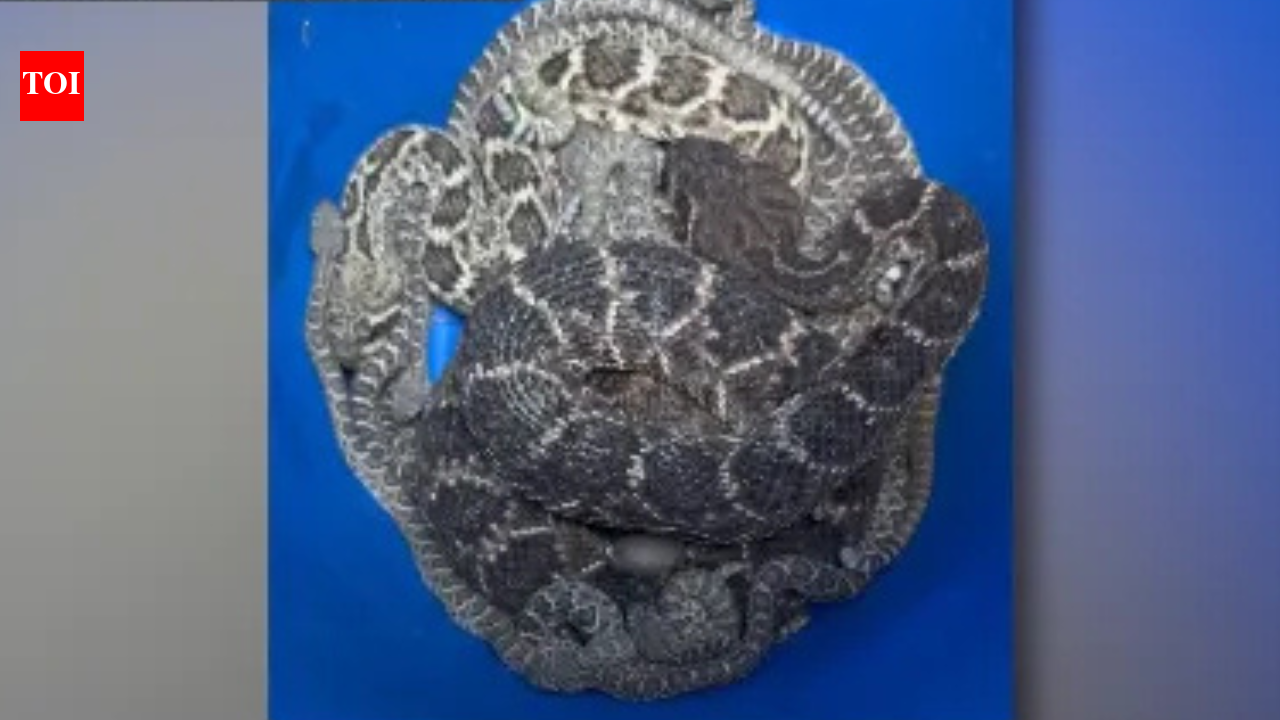
A routine wildlife-removal call in Aledo, Texas, turned into a startling discovery when specialists found more than 20 rattlesnakes living beneath a home. The homeowners had initially sought help with what appeared to be a typical animal-removal problem, but snake wrangler Sheila Taber soon realised the situation was far more serious. As the team worked in the crawl space, snakes continued to emerge, prompting Taber to describe the site as “a whole den”. Dallas Fort Worth Wildlife Control eventually removed more than 20 rattlesnakes from beneath the residence, with company owner Randall Kennedy estimating the final count at roughly two dozen. The discovery highlighted how easily wildlife can find shelter in spaces around human homes.
More than 20 rattlesnakes found beneath a Texas home
According to NBC 5 DFW, the wildlife-control team discovered a large group of rattlesnakes in the crawl space beneath the Aledo property. Taber, who has more than a decade of experience handling snakes, said the job initially appeared relatively straightforward. However, the number of snakes continued to increase as the team searched the area. “That was a whole den. They just kept coming out,” she said. Dallas Fort Worth Wildlife Control ultimately removed more than 20 rattlesnakes, while Kennedy said the final number was approximately two dozen.The space beneath the house appears to have offered several conditions that made it attractive to snakes. According to the report, the crawl space was cooler than the hot conditions outside and contained a ready supply of prey. Kennedy said rats and rabbits were present beneath the home, providing an available food source for the rattlesnakes. Texas Parks and Wildlife Department notes that snakes may be attracted to residential areas because they provide food and shelter. Rodents around homes can therefore indirectly attract predators that feed on them.
Texas is home to several rattlesnake species
Rattlesnakes are a natural part of the Texas ecosystem and are found across large parts of the state. Texas Parks and Wildlife Department says Texas has 10 species of rattlesnakes, while the western diamondback is the state’s most widespread rattlesnake. It can be found across much of Texas, although it is absent from the easternmost part of the state. Rattlesnakes play an ecological role as predators, helping regulate populations of rodents and other small animals.The discovery does not necessarily mean the snakes deliberately targeted the home. Wildlife often makes use of spaces that provide protection from predators, extreme weather and other threats. A crawl space can offer shade and relatively stable temperatures, while rodents living nearby can provide food. In this case, the combination appears to have created conditions suitable for a sizeable concentration of snakes. Kennedy described the situation by noting that if a space feels comfortable to people, it can also provide attractive conditions for snakes.Although rattlesnakes generally avoid people, coming across one unexpectedly can be dangerous because they are venomous and may strike when they feel threatened. Texas Parks and Wildlife Department advises people who encounter rattlesnakes to stop, locate the snake and slowly move away rather than approaching it. The danger becomes more significant when snakes are hidden beneath a house, because residents may unknowingly enter a confined space where they are difficult to see. Children and pets can also be at greater risk if they come too close to a snake.
Homeowners should not attempt to remove rattlesnakes
Wildlife experts advise against trying to capture or kill venomous snakes. The safest option is to keep a safe distance and contact trained wildlife-removal professionals or local animal-control authorities. The CDC similarly recommends contacting animal control or wildlife professionals when a wild animal poses a potential danger around a home. People should also keep children and pets away from the area until the animal has been safely dealt with.
How to make a home less attractive to snakes
Homeowners can take several steps to reduce the chances of snakes settling around their properties. Texas Parks and Wildlife Department recommends controlling rodents, removing potential hiding places and sealing openings that could allow snakes to enter buildings. Gaps around doors, windows, pipes, foundations and other parts of a structure should be inspected and sealed where appropriate. Removing piles of debris, wood and other materials can also reduce potential shelter for rodents and snakes.Anyone who encounters a rattlesnake should avoid approaching it or attempting to move it. The safest response is to back away slowly and give the snake plenty of space. If it is inside or immediately around a home, a qualified wildlife professional should be contacted for removal.


