



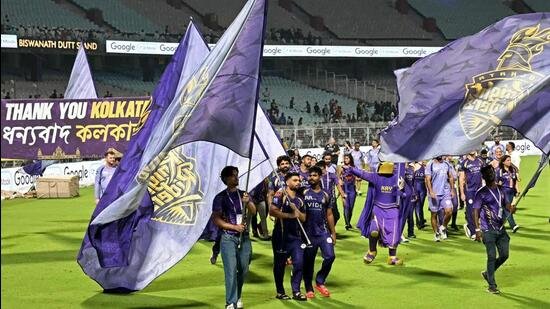
Kolkata: For a team that never truly controlled its own destiny, it wasn’t surprising that the Kolkata Knight Riders’ fate was sealed elsewhere before they even walked out to bat, as results in another city decided what was possible and… what wasn’t. That, in many ways, summed up their season — a campaign shaped by events beyond their control.
Mustafizur Rahman became unavailable after a diplomatic standoff between India and Bangladesh spilled over to the cricket field. Matheesha Pathirana was trapped in a clearance and NOC deadlock in Sri Lanka. Harshit Rana suffered a knee injury before momentum could build. Meanwhile, workload management decisions in Australia affected how KKR could use Cameron Green. Individually, these were isolated incidents. Collectively, they destabilised the balance of the squad.
“The first six games were really tough,” said Ajinkya Rahane. “Even though I thought we were playing really good cricket, there were patches, there were moments we didn’t capitalize on. This format is about very fine margins.”
Three things changed mid season. Playing away from home unshackled KKR’s potential, Anukul Roy, Sunil Narine and Varun Chakravarthy’s spin game found a rhythm, and a key group of batters—Angrkrish Raghivanshi, Finn Allen and Rinku Singh—became more consistent. The revival didn’t suddenly turn KKR into title contenders, but it gave them resilience. From being nearly written off midway through the campaign, they fought their way back into playoff contention and forced the race to remain alive until the closing stretch.
The biggest gains: Kartik Tyagi and Anukul Roy. If there is one area where KKR will leave this IPL genuinely optimistic, it is the emergence of two Indian players who now look central to the franchise’s future. Tyagi was arguably KKR’s breakthrough star, finishing with 18 wickets. More importantly, he offered clarity in role execution—top notch speed, attacking lengths, confidence under pressure and willingness to absorb punishment without retreating into defensive bowling.
Equally important was the growth of Anukul Roy. Trusted with a consistent role for the first time across an entire season, Roy repaid the faith with crucial middle-over wickets and calm lower-order contributions in chases. His domestic form translated effectively into IPL performances, validating KKR’s long-term investment in him. For a franchise that spent much of the season patching gaps, these two represented stability.
“When we sat down (at the start of the season), I thought, this is a great time for Anukul to come in and play each and every game,” said Rahane. “He had a fantastic Syed Mushtaq Ali season. I believe that whoever has a good season in the domestic league, you carry that confidence forward. Anukul Roy just did that.
“Talking about Kartik Tyagi, he was clear. He was really clear about his thought process. You will go for runs as a bowler but as long as you’re clear what you want to do for your team, that’s what matters. For these two guys, this is just the beginning. I’m sure they have the potential to do really well in the future and go and play at the highest level as well.”
It wasn’t a fairytale season by any stretch. Yet Rahane’s leadership became one of the more understated positives of KKR’s campaign. Rather than distancing himself during the poor start, Rahane leaned harder into the role. His refusal to consider stepping aside reflected the tone he wanted the dressing room to adopt: absorb pressure, stay composed and remain present.
“As cricketers, we are what we are because of our fans,” he said. “They appreciate when we do well and criticise when we don’t. This is part of the game and all cricketers understand this. For me, I have played my whole cricket with the right attitude. Character has always been very important for me. I am never one that steps down. When the team is struggling, it is important to show your character.
“Pressure does come, yes, it is very natural. Pressure comes to the privileged. When you lose five-six matches, your mind goes to the past and future, but it is important to stay in that moment. Things can turn around anytime. I told the players after losing six games that it just takes one game to change things around; the most important thing for the team is to believe and keep doing what we are doing.”
That mentality nearly rescued their season. This season won’t go down as a success given KKR couldn’t make it to the playoffs. But the fact that they ended the season looking more coherent than they did at the start, refusing to let the initial disruptions control the bigger picture is a win itself.


