






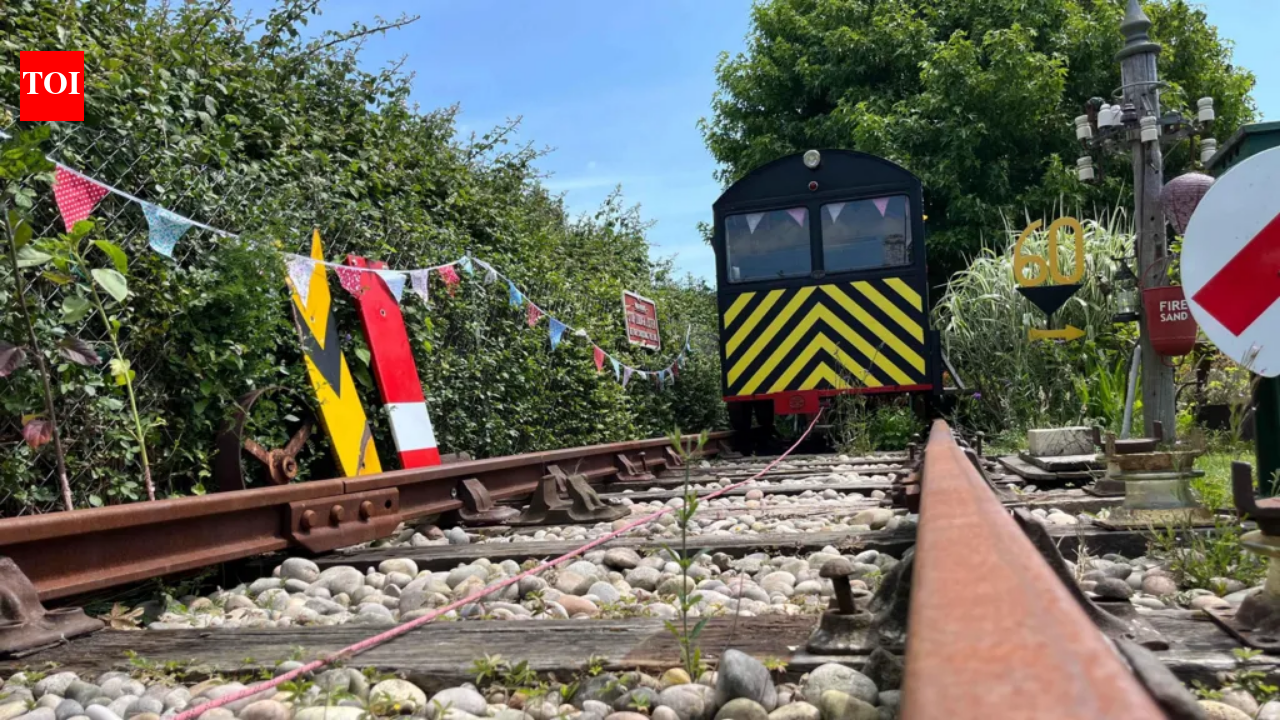
A former railway engineer has transformed his garden in East Sussex into an unusual working railway, complete with full-size track, a vintage-style carriage and railway memorabilia. Railway Magazine, which featured Adrian Backshall’s project, describes the 50-foot line as a Wickham lookalike built on an old platelayer’s trolley. The small railway now uses a 12-volt car battery charged by a solar panel to power its winch, allowing the carriage to travel slowly along the garden track. What began as a lockdown project has since grown into a distinctive railway-themed garden attraction for Backshall, his family and guests.
From railway career to garden railway
Adrian Backshall retired from Network Rail in 2018 after a career working on Britain’s railways. His connection with railway equipment, however, did not end with retirement. During the Covid-19 lockdown in 2020, Backshall began developing a railway in the garden of his home in Willingdon, East Sussex. The project gave him a way to put his railway knowledge and collection of equipment to use while spending more time at home. The centrepiece is a carriage based on a Victorian platelayer’s trolley. A friend who was a blacksmith helped create the Wickham-style body that sits on top of the original trolley.Platelayers’ trolleys were lightweight railway vehicles historically used by railway workers to travel along tracks while carrying tools and equipment. Backshall’s version retains the character of such a vehicle while giving it a new purpose as a garden railway carriage.
A 50-foot railway in the garden
What started as a much shorter line has now become a 50-foot railway running through the garden. Some of the track used in the project dates back to 1898, giving the otherwise modern garden installation a genuine connection with railway history. Backshall has also added railway signs, signals and other pieces of equipment around the property, making the garden resemble a miniature railway museum.The railway has two main stopping points, near the garden shed and patio. The line is not designed for speed. Instead, the carriage moves slowly enough for passengers to enjoy the unusual surroundings as it makes its journey through the garden. According to Railway Magazine, the 50-foot cable-worked railway has a maximum speed of about 0.3 miles per hour. That extremely slow pace is part of the charm of the project. Rather than trying to recreate a conventional railway journey, Backshall has created something closer to a moving garden room with a genuine railway feel.
Backshall’s garden contains a collection of authentic railway-related objects, including signs, signals and other equipment (Image Credit: George Carden/BBC)
From hand power to solar energy
The railway has also evolved technically since its early days. Initially, the carriage was moved using a hand-cranked pulley arrangement. As the project expanded, Backshall replaced that system with a 12-volt winch. The winch is powered by a 12-volt car battery, which is charged using a solar panel. This allows the railway to operate without relying on a conventional mains-powered system for its movement.The arrangement combines old railway equipment with simple modern technology. A Victorian-era trolley forms the basis of the carriage, while solar power provides the energy needed to move it along the track. The result is a small but functioning railway that reflects Backshall’s interest in both railway history and engineering.
Railway memorabilia fills the garden
The track is only part of the transformation. Backshall’s garden contains a collection of authentic railway-related objects, including signs, signals and other equipment. Some of the signs retain the language associated with working railway lines, giving visitors the impression that they have stepped into a small railway installation rather than an ordinary residential garden.Inside the carriage, the railway theme continues. The cabin has seating for four people and includes a wood-burning stove, while railway memorabilia and other details make the space suitable for entertaining. Backshall and his wife Ruth have used the train for gatherings and tea parties, turning the unusual railway into part of their home life. The project has also involved some negotiation over space. As the railway was extended, the track passed through part of the garden that had previously been used for flowers. Ruth has spoken about the changes with humour, while supporting the project that began as a lockdown idea.
A lockdown project that kept growing
Backshall’s railway demonstrates how a small hobby can develop into a much more elaborate personal project. The original lockdown railway was considerably shorter, but the line has since been extended to 50 feet. The addition of a solar-powered winch has also made the operation more convenient than the original hand-powered arrangement. For someone who spent decades around Britain’s railways, the project offers a way to preserve that connection after retirement. Instead of simply displaying an old trolley, Backshall has incorporated it into a functioning railway environment. The garden railway has also attracted wider attention. Backshall and Ruth held an open day in June 2025 to raise money for St Wilfrid’s Hospice, allowing the unusual project to serve a charitable purpose as well.Today, the 50-foot line stands as an unusual combination of railway history, engineering and gardening. With its Victorian trolley, historic track, railway signs and solar-powered 12-volt system, Backshall’s creation has turned an ordinary East Sussex garden into a working piece of railway heritage.


