


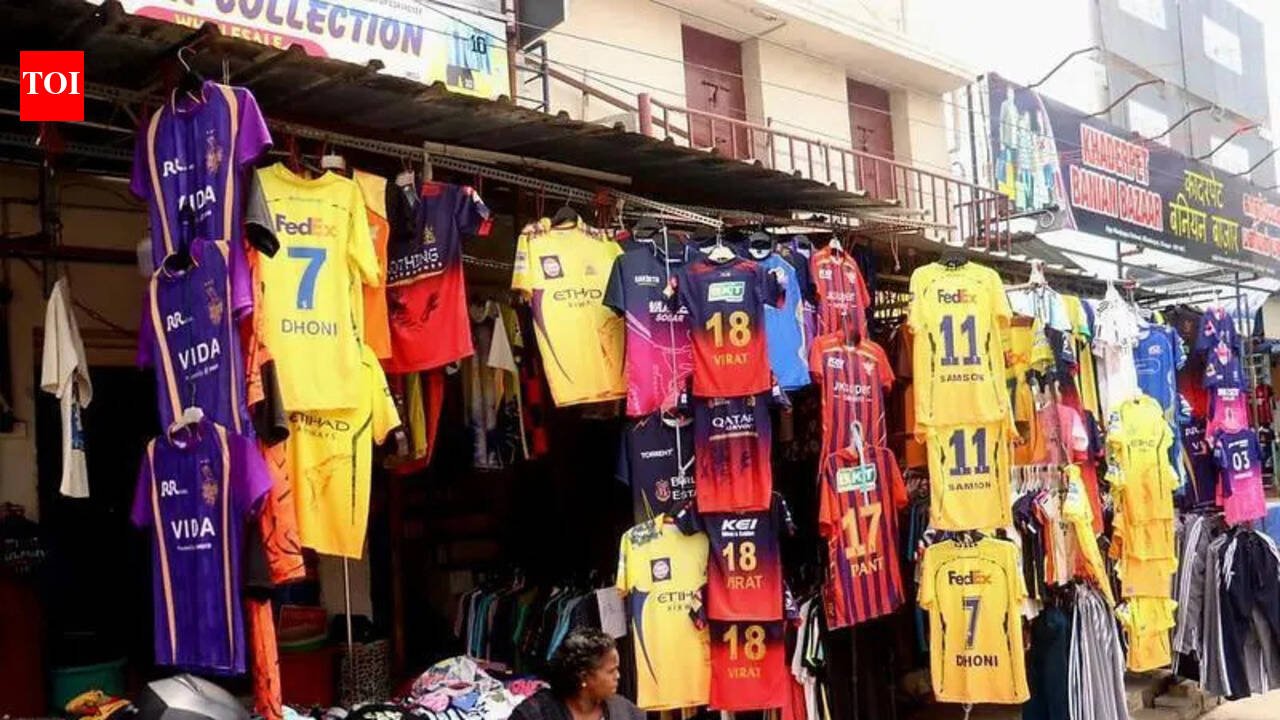
Tirupur: Usually, election time and the Indian Premier League (IPL) season bring brisk business to the garment manufacturers in Tirupur. When the state assembly election and IPL coincided this year, their hopes were high and expecting a sales bonanza. Much to their dismay, the business crumbled this time – IPL T-shirt sales declined by 50%, while T-shirt orders for the assembly election plunged by 75%.According to B Karthikeyan, a hosiery garment manufacturer and exporter, around five lakh T-shirts are produced during the election time alone, with bulk orders coming from major political parties like AIADMK, DMK, BJP, Congress, PMK, DMDK and VCK. “Candidates typically place customized orders featuring party symbols, and images and names of their leaders soon after the election announcement. Even independent candidates place such orders, though not in bulk.” However, in the recently concluded assembly election, orders were significantly lower, with most parties placing orders for just 10,000 to 20,000 pieces, he said. “DMK didn’t place any order at all. Total production for the assembly election stood at just 70,000 T-shirts.” Karthikeyan attributed the steep decline in the orders to the pricing of campaign items by the election commission to ensure transparency in candidate expenditures. “The election commission has fixed T-shirt rate at around Rs150 per piece, while the normal price is only around Rs60-Rs80 per piece, and even lower in bulk orders. As it will inflate candidates’ expenditure, the demand has dropped.” He said the garment manufacturers in Tirupur hadn’t this time prioritized IPL orders owing to the election and the rising raw material costs triggered by West Asia unrest. “Generally, my firm gets orders for 50,000 to two lakh IPL T-shirts annually. This season, we didn’t get any orders. According to Rahul Arafath, a garment manufacturer, Tirupur’s Khaderpet, known for bulk garment trade, wears a deserted look this IPL season, unlike previous years when orders begin months in advance and peak over four months. “Typically, around 10 lakh T-shirts are ordered annually from across India, generating nearly Rs5 crore in revenue. However, IPL orders have dropped by 50% this year due to the elections in five states.” He said the election restrictions on carrying cash above Rs50,000 and vehicle checks had deterred wholesale buyers from visiting Tirupur. “Only a few small traders approached us, that too for limited quantities, leading to major seasonal losses.” Karthikeyan said around 600 small, micro and job-work units were engaged in seasonal T-shirt production in Tirupur. “Under normal circumstances, manufacturers earn more than Rs2 crore in IPL sales in three months. With both seasonal orders missing this year, the sector has suffered significant income losses.” Muthurathinam, president, Tirupur Exporters and Manufacturers Association, said IPL orders had been declining for the past three years as cities such as Surat and Ludhiana were offering T-shirts at 20% lower prices, drawing buyers away. “Rising input and labour costs have made it difficult to compete with other states,” he said and urged the new govt to be formed in the state to take steps to improve competitiveness and support the industry’s growth.
