



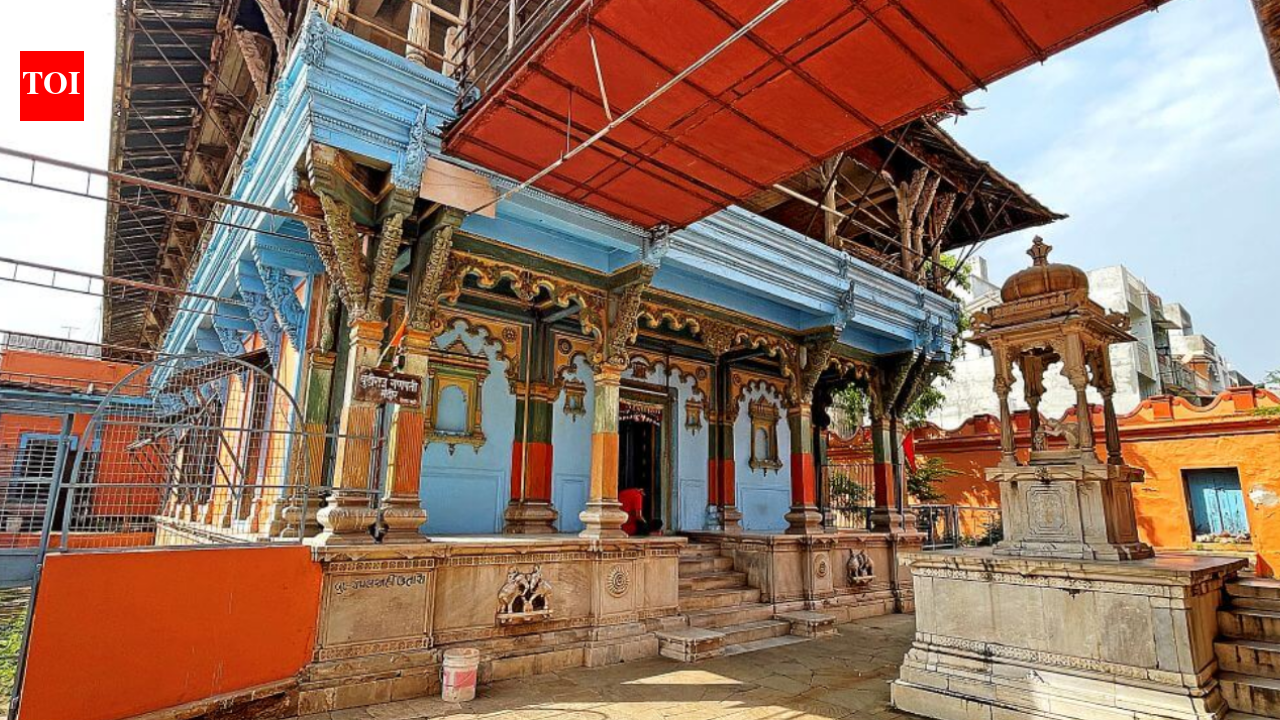
Stepping inside old temples gives a different energy; these places hold centuries of history where our ancestors set foot, and the walls speak for years of tradition and practices.One such story is about the Dundiraj Ganpati Mandir, located in the narrow lanes of Vadodara’s old Wadi area, which most of the city walked past without a second glance for years. This 175-year-old temple is built entirely from teakwood from the Gaekwadi era and is one of a kind in Gujarat.For decades, it slowly wore down without government or Archaeological Survey of India support, with the wood ageing, the paint fading, and the carvings collecting dust. Then a family decided they weren’t going to wait for outside help. They quietly began restoring it themselves.
The Mairal family took up the responsibility to restore the temple
Rather than continue waiting for support from others, the Mairal family took charge of the temple’s revival, assembling a team of experts on their own. Ashutosh Mairal, a retired professor at MS University, described the process to the Times of India in April 2026, “A significant portion of the work has been completed over the past few years, though sourcing skilled artisans for heritage woodwork was a major challenge”. Finding people who still understand traditional teakwood carving today is rare, which made this restoration as much about preserving craft knowledge as preserving wood.
The temple is set to be nominated as a UNESCO world heritage site
The turning point came when a team from the Council of Architecture visited the temple two years ago. According to the report, the team appreciated its craftsmanship and historical significance, and indicated it would recommend the temple for nomination to the UNESCO World Heritage list.
The temple also has a royal history
The temple’s story goes back to 1849, built by Gopalrao Mairal, dewan under Maharaja Ganpatrao Gaekwad, entirely at his own expense. A devoted follower of Lord Ganesha, he brought in skilled artisans from Hyderabad, Rajasthan, and Mumbai to construct it. The two-storeyed structure rests on 44 beautifully carved wooden pillars, each about 16 inches in diameter.The most interesting aspect about the temple is the ‘mushak’ or mouse, usually placed at Lord Ganesha’s feet, sits outside the temple, facing the idol, so that the idol of Lord Ganesha, surrounded by Riddhi and Siddhi and sons Laabh and Laksh, can be viewed through the space between the mushak’s ears. The temple was consecrated through a havan performed by Gopalanand Swami of the Swaminarayan sect.
The temple preserves age-old art
Inside, the temple holds paintings over a century old, created under the supervision of Raja Ravi Varma, two of which the Mairal family still preserves today.Apart from this, according to local folklore, it is believed that a secret tunnel runs beneath the Mairal Wada, believed to have once held hidden wealth, guarded by a ‘naag’ (cobra), accessible only to those who know a secret mantra.


