



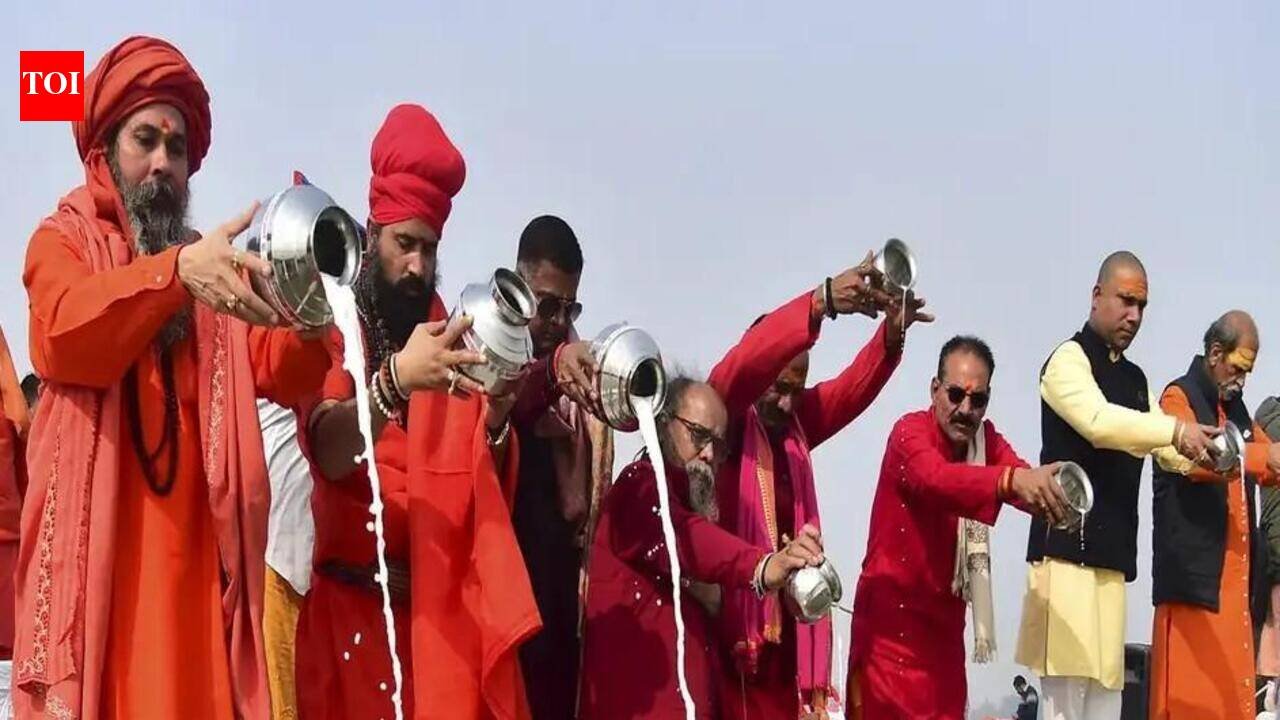
Prayagraj: Magh Mela 2027 will be held over 52 days, beginning with Makar Sankranti on Jan 14-15 and concluding with Mahashivratri on March 6. The month-long Kalpwas will start on Jan 22 and end on Feb 20, giving the mela administration an additional week to provide amenities for Kalpwasis.The extended duration of the mela is also expected to give thousands of small traders and service providers more days to earn from the annual congregation.The schedule marks a significant change from 2026 Mela, which began on Jan 3 with Paush Purnima, and the Kalpwas too had commenced from the same date.The major bathing dates will be Makar Sankranti on Jan 14-15, Paush Purnima on Jan 22, Mauni Amavasya on Feb 6, Basant Panchami on Feb 11, Maghi Purnima on Feb 20 and Mahashivratri on March 6.The additional preparation window is particularly important because the mela area is spread over a vast stretch of riverbed that remains inundated for almost a month during floods. Even on Thursday, the entire area is flooded with water from Ganga and Yamuna. The mela administration can only commence its work when the floodwater recedes and the land dries up.Thereafter, the administration would rapidly level the sandy terrain and create roads and pontoon bridges, and lay kilometres of water-supply lines, electricity networks, sanitation facilities, hospitals, security arrangements and accommodation for pilgrims and Kalpwasis.Officials have already started preparations as Mela authority has floated tenders for 10 major works, including tents, hangars and pagodas, temporary hospitals, community toilets, public-address systems, catering, photography and videography. Agencies are being selected in advance so that work can begin without delay once the floodwater recedes.The administration is also preparing for a substantially higher turnout. Officials have estimated that 25-28 crore pilgrims could visit 2027 Mela. Railway officials, during a recent coordination exercise, projected around a 10% increase in footfall and estimated that 4.75-5 crore devotees could arrive in Prayagraj on Mauni Amavasya alone.The estimate is higher than the 4.52 crore recorded on the corresponding bathing day in 2026.The longer mela period is significant for the local economy as well. Thousands of people set up temporary businesses around the fairground, including food stalls, shops selling religious items and clothes, transport services, boating, tenting and other essential services. With the mela continuing for 52 days, these traders and service providers will have more working days to cater to pilgrims and earn their livelihood.Deputy mela officer Vivek Shukla said the administration had started the tendering process well in advance to ensure that infrastructure work could begin immediately after the floodwater receded. He said the objective was to have essential facilities ready in time for the arrival of pilgrims and Kalpwasis.
