



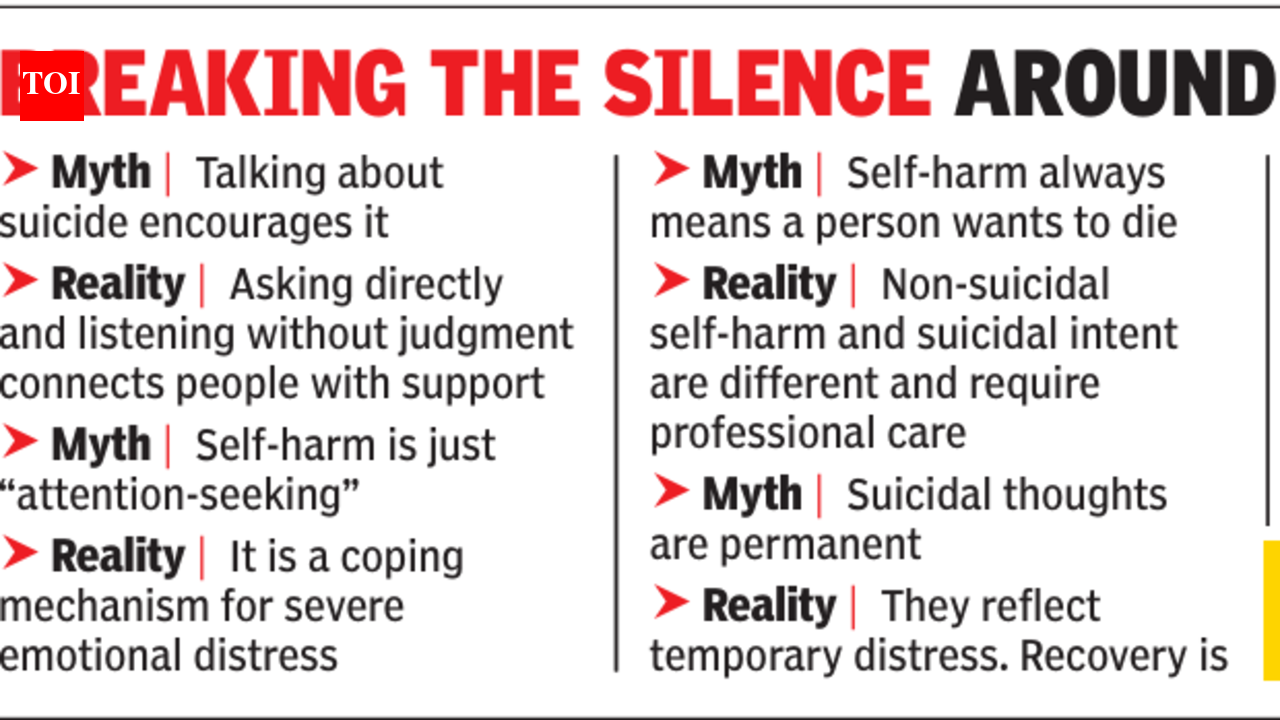
Chandigarh: Ahead of World Suicide Prevention Day on Thursday, experts at PGIMER and Chandigarh organisations are pushing for open conversations, early intervention, and skill development to change how society views suicide and mental health. This year’s theme, “Changing the Narrative on Suicide,” highlights that suicide stems from a complex mix of social, familial, personal, and financial challenges rather than mental illness alone.To help individuals recover and rebuild their lives, PGIMER’s department of psychiatry has partnered with the Chandigarh Skill Development Mission to offer free vocational training. The programme targets patients aged 14 to 45, offering ITI-backed, online, and offline courses to build skills and connect them with job opportunities. More than 100 patients have enrolled so far, helping restore confidence, routine, and independence while challenging the stigma that people with mental illness cannot lead productive lives.“Mental illness is one part of suicide, not the entire thing. It is a multisectoral issue, with social, familial, personal and financial factors also playing a role,” said Dr Akhilesh, additional professor in PGIMER’s department of psychiatry.“Many patients and parents feel that they cannot do anything because of the illness. Parents may also have limited resources. Free govt-supported vocational training gives patients an opportunity to learn, work and gain recognition,” said Dr Rama Malhotra, vocational guidance instructor at PGIMER.Prevention efforts are also expanding across local educational institutions. PGIMER teams regularly conduct outreach in schools and colleges, including IIT Ropar, to teach students and teachers how to spot warning signs, regulate emotions, and prevent substance abuse. Additionally, Project SAATHI—launched in January 2026 by the UT administration, Chandigarh Citizens Foundation, PGIMER, and GMCH-32—focuses on holistic wellness among govt school students.Mental health professionals emphasise recognising early warning signs, such as social isolation, feelings of worthlessness, sudden mood or sleep shifts, talking about death, risky behavior, or giving away belongings.“Notice changes early and take them seriously. Talk openly and ask directly about suicidal thoughts. The person needs to feel heard rather than judged,” said counselling psychologist Navya Gulati.Experts also warn against common misconceptions, clarifying that discussing suicide does not encourage it, nor should self-harm be dismissed as mere attention-seeking. Beyond community outreach, PGIMER functions as a regional coordinating centre for the Tele-MANAS helpline to train counselors and bridge service gaps caused by a shortage of mental health professionals.To mark the occasion publicly, PGIMER will host a nukkad natak (street play) at Panjab University on Sept 10, with experts stressing that support and open dialogue must continue well beyond a single day.“People often do not know the difference between a psychologist and a psychiatrist. Awareness will only come through talking about it,” said counselling psychologist Taranpreet Kaur.
