


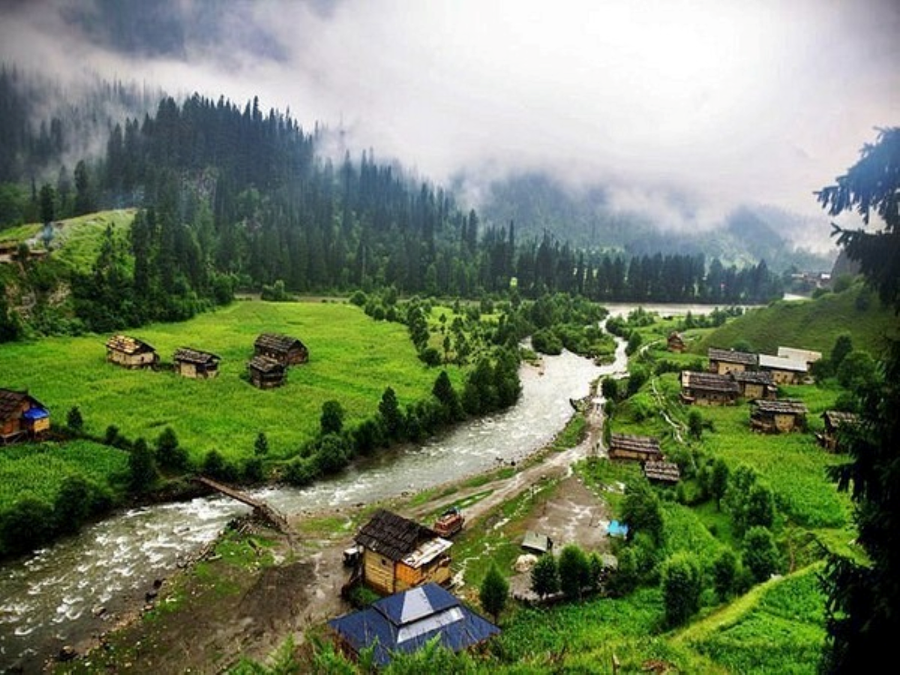
Kashmir has always been spoken of in superlatives. Its mountains are majestic, its rivers restless, its meadows poetic, and its seasons almost too beautiful to be believed. Yet for decades, the region has been seen mainly through the lens of sightseeing, shikara rides, houseboats, gardens, and snow-covered postcard views. That picture is not wrong, but it is incomplete. In the changing world of travel, Kashmir must now be seen not only as a place to admire, but as a place to experience. Adventure tourism offers that possibility.
The conversation around tourism in Kashmir often revolves around numbers: how many visitors arrived, how many hotels were occupied, how many days the season lasted. These numbers matter, certainly. But they do not tell the full story. A tourism model that depends only on a few famous destinations and a few peak months is vulnerable. It leaves much of the region’s potential untouched. Adventure tourism can change that by spreading visitors across more areas, more seasons, and more communities.
The appeal of adventure tourism is not difficult to understand. Today’s travellers, especially the young, are looking for more than passive leisure. They want activity, challenge, discovery, and memory. They want to trek where the paths are wild, camp where the skies are open, paddle where the waters are clear, ski where the slopes are fresh, and cycle where the roads test endurance. Kashmir already has the natural landscape for all this. What it needs is a stronger, safer, and more organized framework to support it.
The region’s mountains, forests, lakes, alpine meadows, glaciers, and rivers are not just scenic assets; they are adventure assets. Trekking routes in areas such as Sonamarg, Gurez, Pahalgam, Lolab, and Kupwara have the potential to attract serious outdoor travellers. White-water rafting, paragliding, skiing, mountaineering, mountain biking, angling, camping, and rock climbing can all become meaningful components of a wider tourism ecosystem. But a destination does not become an adventure hub simply because nature has provided the setting. It becomes one when the right infrastructure, training, rescue systems, and local participation come together.
This is where Kashmir must think beyond symbolism and toward systems. Adventure tourism requires more than promotion. It requires mapped trails, trained guides, safety audits, weather monitoring, emergency response, equipment standards, and clear rules. A visitor may come for the thrill, but will return only if the experience feels secure and professionally managed. One accident, one poorly handled expedition, or one unsafe activity can damage confidence far more than any advertisement can build it. Safety, therefore, is not a secondary concern. It is the foundation.
There is also an important economic argument. Adventure tourism can create livelihoods in places that are often left out of mainstream tourism benefits. A local guide, a trek porter, a camp operator, a transport provider, a homestay owner, a trainer, a rescue volunteer, and a food supplier all become part of the chain. Unlike some forms of tourism that concentrate income in a few urban pockets, adventure tourism has the capacity to spread opportunities into remote and rural areas. That matters in a region where employment remains a pressing concern and where young people are eager for dignified work close to home.
Another advantage is seasonality. Kashmir’s tourism industry has long been vulnerable to weather patterns and short travel windows. Adventure tourism can help extend the season by offering different experiences at different times of the year. Summer treks, autumn expeditions, winter skiing, and spring cycling events can keep the region active for longer periods. This diversification is not just good business; it is good policy. It makes the tourism economy more resilient and less dependent on a single flow of visitors.
But there is a caution that cannot be ignored. If adventure tourism is developed carelessly, it can damage the very environment that makes it attractive. Unregulated camping, plastic waste, trail erosion, uncontrolled vehicle movement, and reckless commercial activity can quickly scar fragile ecosystems. Kashmir cannot afford a model that sells nature in the name of nature. Sustainable planning must therefore be built into every proposal. Carrying capacity, waste management, conservation rules, and community monitoring must not be treated as afterthoughts.
Local communities must also be treated as partners, not spectators. Too often, tourism projects are designed from the outside and imposed on the ground with little consultation. That approach rarely works for long. People who live in the mountains know the terrain, the weather, the risks, and the rhythm of the land better than anyone else. Their knowledge should be valued, their youth trained, and their villages included in decision-making. When communities benefit directly, they become protectors of the destination rather than bystanders to it.
There is also room for policy imagination. The government, tourism bodies, private investors, and local institutions can work together to create adventure circuits, certify guides, improve signage, develop rescue systems, and market Kashmir not only as a scenic destination but as an outdoor experience hub. Schools and colleges can also play a role by encouraging outdoor education, mountaineering clubs, and environmental awareness. If young people grow up seeing their landscape as a living classroom and an economic asset, the future of tourism becomes stronger.
Kashmir does not need to imitate the world’s adventure destinations. It already has its own identity. What it needs is confidence, planning, and professionalism. The valley’s beauty has long been its gift. Adventure tourism can turn that gift into a source of broader opportunity. It can attract a different kind of traveller, open a different kind of economy, and create a different kind of relationship between people and place.
If done wisely, adventure tourism can help Kashmir move from being admired at a distance to being experienced deeply. That is a shift worth making.
(The author is a research scholar and freelance writer)
