


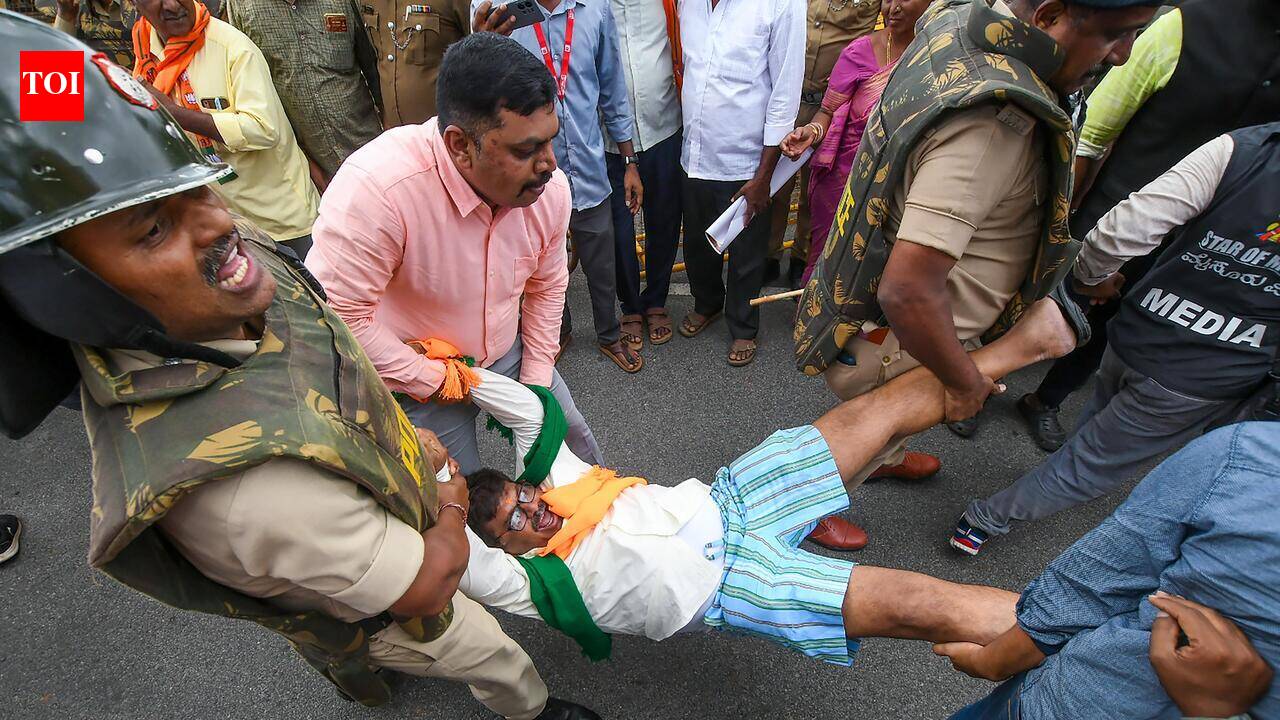
Bengaluru: The latest Cauvery river water crisis, caused by a steep rainfall deficit in Karnataka, has again revived calls for a permanent, scientific distress-sharing formula to govern water releases during drought years.While the Cauvery Water Disputes Tribunal (CWDT) award, modified by the Supreme Court in 2018, settled water allocations for normal years, it stopped short of prescribing a detailed operational mechanism for sharing distress when rainfall and inflows fall below normal. In the absence of such a framework, the CWMA and the Cauvery Water Regulation Committee (CWRC) take case-specific decisions, often triggering protests, litigation and political confrontation.Hydrologists say the underlying principle of distress sharing is straightforward: When the basin receives less water than normal, every stakeholder should proportionately share the shortage. However, translating that principle into practice has proved difficult because states differ on how rainfall deficits, reservoir storage, inflows, drinking water needs and irrigation demands should be assessed.Political analysts say the absence of a codified mechanism has ensured that every weak monsoon turns into a political flashpoint.“Instead of a predetermined scientific process, decisions are often made after prolonged deliberations before the CWRC, followed by objections, protests and legal challenges,’’ said Vishwas Shetty, political analyst. “Successive govts at the Centre and in states in the basin have avoided building consensus on a politically sensitive issue despite frequent disputes.”Water management experts also contend that Karnataka, being the upper riparian state, experiences deficient inflows first and therefore seeks greater weightage for real-time reservoir levels and rainfall. Tamil Nadu, they point out, argues that its delta farmers depend on scheduled releases and that upstream states cannot alter allocations unilaterally. These competing priorities have prevented consensus on a common formula.Water expert S Vishwanath also says scientific assessment itself requires improvement. “Updated studies on siltation in major reservoirs, accurate estimation of live storage, reliable rainfall forecasts and transparent real-time hydrological data are essential before any formula can command confidence among all stakeholders,’’ he said.Hydrologist Anushree M said the distress-sharing mechanism must be dynamic to be effective. “It can’t be tied to fixed monthly schedules. With climate variability making droughts more frequent, allocations designed for normal monsoon years are no longer adequate. A transparent, science-based formula would make water regulation more predictable while reducing disputes and political tension,” Anushree said.Water experts and political analysts say both Centre and riparian states must jointly evolve a transparent, science-based distress-sharing formula, without which disputes and confrontations will continue.Sandeep Shashtri, political analyst, said: “Besides a distress formula, Karnataka also needs to use multiple strategies. While legal recourse is inevitable and essential, it must be supplemented with dialogue with Tamil Nadu. Karnataka should also present relevant data on drought to the central govt, Union ministries and authorities concerned, get MPs from Karnataka to raise the issue in Parliament, use back channels within the bureaucracy to discuss the issue, and place data in the public domain.”
