



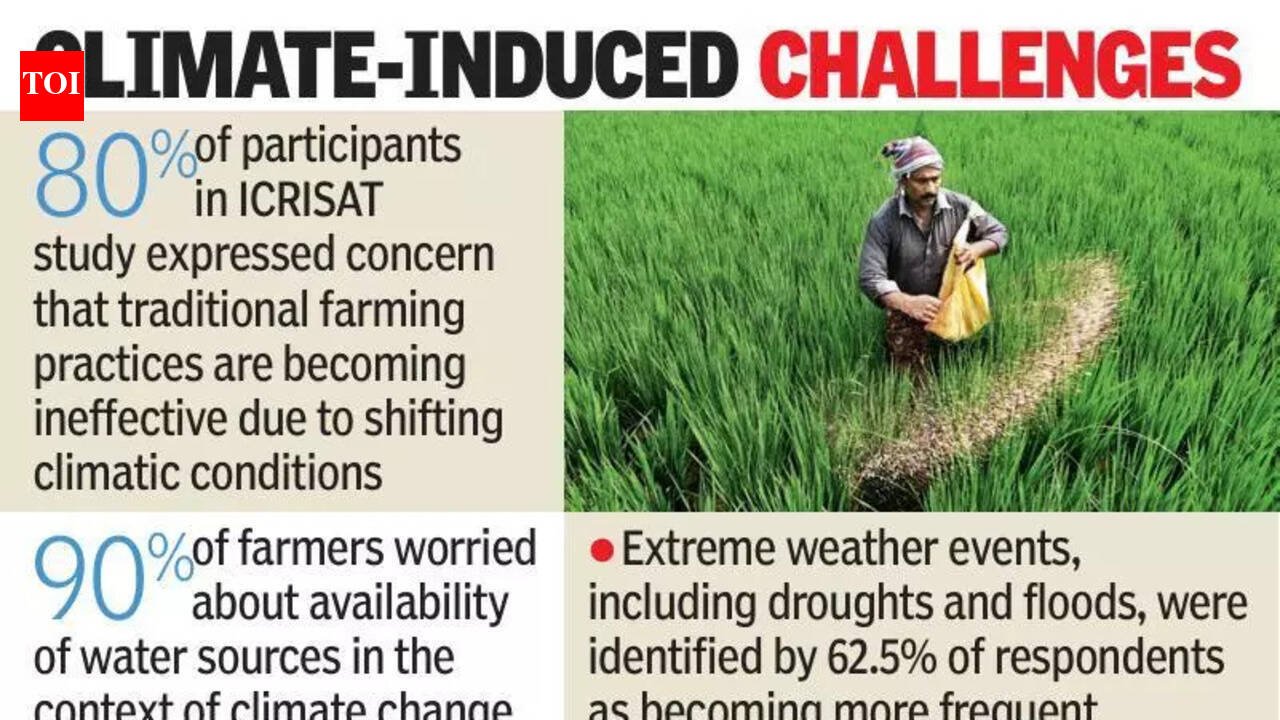
Extreme weather events, including droughts and floods, were identified by 62.5% of respondents as becoming more frequent, indicating that the increased incidence and intensity of such events were impacting agriculture in semi-arid regions. Nearly 58% also reported changes in cropping seasons and practices, making it difficult to determine appropriate times for sowing and harvesting. Additionally, about 58% stated that climate change directly influenced farm profitability, underscoring the economic vulnerabilities arising from climate-induced yield variability.Respondents noted an increase in the occurrence of droughts (54.2%) and hailstorms (56.3%) in recent years, supporting findings by Rao et al. (2020), which documented heightened climate-induced risks in agriculture. Furthermore, 60.5% of respondents reported observing higher incidences of invasive weed species and pests, linking altered climatic conditions to the proliferation of these threats. Importantly, 54.1% indicated that climate change was forcing farmers to migrate to urban areas, highlighting the growing socio-economic challenge of climate-induced rural-to-urban migration. Additionally, respondents observed that livestock rearing (60.4%) and overall livelihood patterns (60.5%) were increasingly vulnerable, reinforcing insights from the Food and Agriculture Organization (2020), which documented significant disruptions in livestock systems and rural livelihoods globally due to climate-related stresses.MSID:: 128916940 413 |


