



A safety pin is one of those small household items that rarely gets much attention until something needs fixing. It sits in a sewing box or gets left in a drawer. Yet its simple design can solve several everyday problems in a matter of minutes. The clasp keeps the sharp end covered while the spring action lets the pin grip fabric and other lightweight items. That makes it useful far beyond basic sewing repairs. A safety pin can help restore a loose drawstring, give a broken zip a temporary pull, and hold fabric together until it can be properly repaired. When a problem appears unexpectedly, a safety pin can be surprisingly handy. Here are nine practical ways to use a safety pin for everyday problems.
9 simple safety pin hacks for quick household fixes
1. Fix a broken zip pull
A broken zip pull can make a jacket, bag, or pouch frustrating to use. You do not always need to replace the entire zip. A safety pin can provide a temporary pull until you can make a proper repair. Safety pins are also considered a possible temporary material for zipper repairs.Open the pin and pass the closed end through the hole on the zip slider. Close the pin securely. You can then hold the rounded part of the pin and use it to move the slider. Make sure the sharp end is completely covered by the clasp before using the item.
PC: AI Generated
2. Thread a loose drawstring
A drawstring can disappear inside the waistband of trousers, shorts or pajamas. Getting it back through the narrow fabric channel can seem harder than the original problem. A safety pin provides a simple way to guide it through.Attach the safety pin to one end of the string and close it firmly. Push the pin through the opening in the fabric channel. Then bunch the fabric towards the pin and pull the pin forward. Repeat this movement until it reaches the other end.
3. Hold a torn seam together
A safety pin can hold the edges of a torn seam together as a temporary measure. It is particularly useful when you need to keep a garment wearable until you can make a proper repair.Bring the torn edges together without pulling the fabric too tightly. Insert the safety pin through both layers from the inside where possible. Close the clasp fully and check that the sharp end is covered. For a larger tear, use more than one pin rather than putting too much strain on a single one.
4. Secure a loose scarf
A scarf, shawl, or loose fabric layer can shift while you are moving around. A small safety pin can keep overlapping fabric in place without requiring permanent stitching. This can be useful when you want a temporary fix for an outfit.Place the pin through the overlapping layers from the inside. Keep the clasp against the inner side of the fabric so it does not rub against the skin. Use a small pin for lightweight material and avoid pulling the fabric tightly around it.
PC: AI Generated
5. Hold a fabric patch in place
A patch can cover a small tear or worn section of fabric while you prepare a permanent repair. Safety pins can hold the patch in place without requiring glue or immediate stitching. This gives you time to sew around the damaged area properly.Choose a patch that extends beyond the damaged section. Place it over the tear and secure the edges with safety pins. Keep the pins away from the part of the fabric that will touch your skin. Once you have access to a needle and thread, remove the pins and sew the patch securely.
6. Secure a loose bag strap
A loose strap on a lightweight fabric bag can sometimes be held in place with a safety pin until it can be stitched. This is useful for a short-term fix when the original stitching has not been done.Fold the strap back into its intended position. Use a large safety pin to hold several layers of fabric together. Close it fully and test the connection gently before carrying the bag. Do not use this as a permanent repair for heavy bags. The pin can open or pull through the fabric under a heavy load.
7. Keep small fabric items together
Safety pins can also help keep pairs of small fabric items together. This can be useful for organising gloves, fabric pieces or other lightweight items that are easily separated in a drawer. Bring the items together and place the safety pin through an edge or existing fabric seam rather than through a delicate central section. Close the pin fully before storing them. Avoid using this method on expensive or easily damaged fabrics where the pin could leave a visible hole.
8. Keep a loose bedsheet corner in place
A loose bedsheet can pull away from the corners of the mattress during the night. A safety pin can temporarily secure the fabric from underneath the mattress. Bring the overlapping fabric together beneath the mattress and insert a closed safety pin through the fabric layers. Make sure the pin is completely secured and cannot come into contact with the person sleeping on the bed. Remove the pins before washing the sheet.
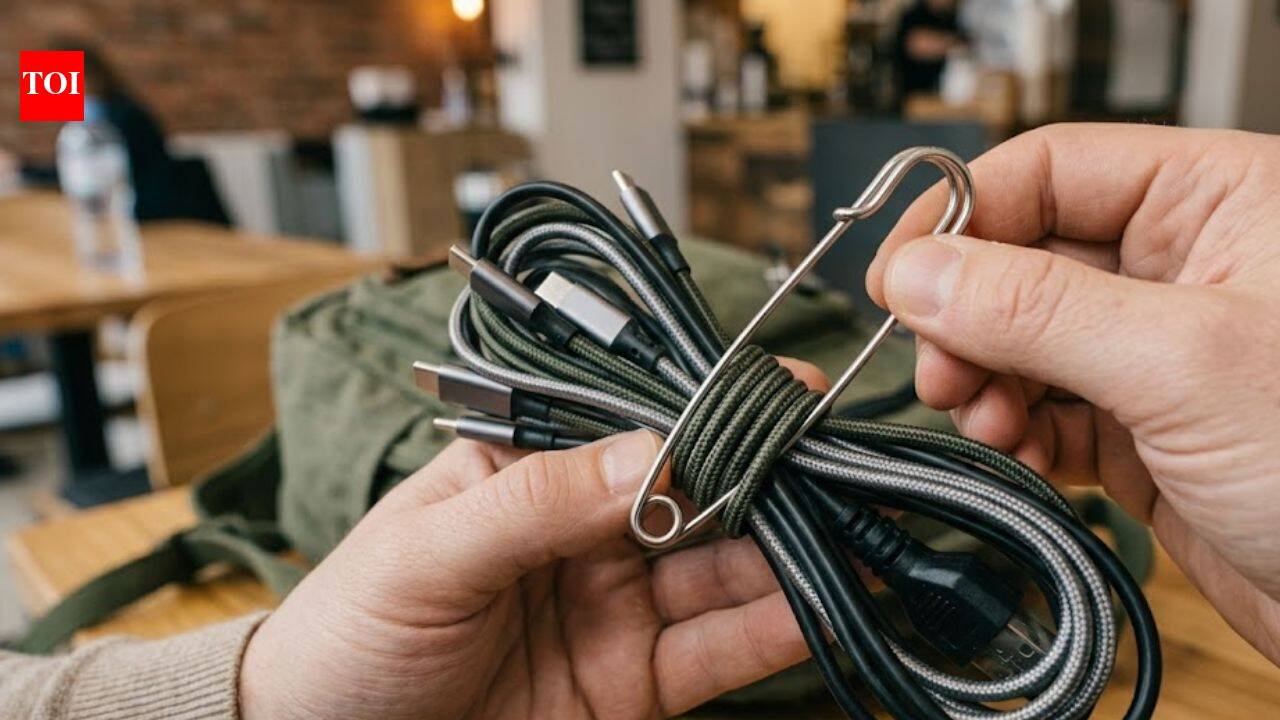
9. Keep cables neatly bundled
Charging cables can become tangled when several are kept together in a drawer or bag. A safety pin can act as a simple temporary cable organiser. Coil the cable loosely and place the closed safety pin around the bundle. Do not push the pin through the cable or clamp it tightly. Leave enough space for the cable to move slightly. This is useful for keeping a single cable organised inside a travel bag or drawer.


