



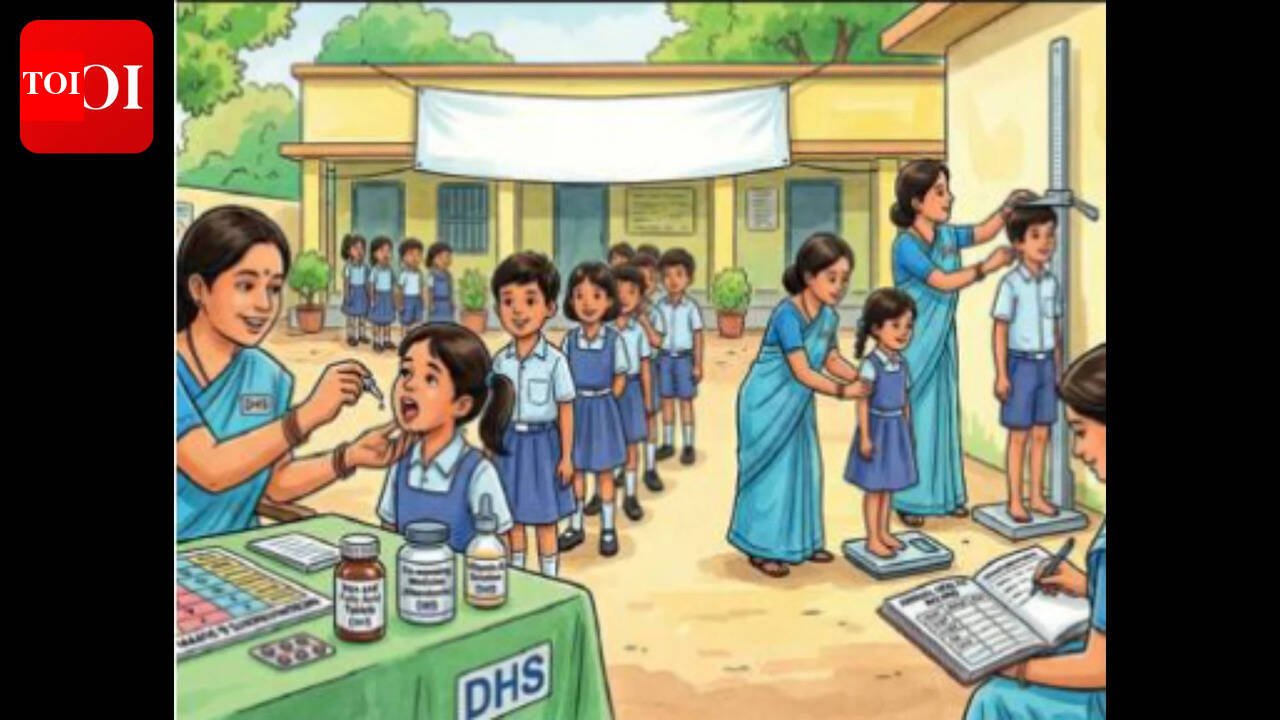
Panaji: A total of 84,528 primary and high school students in Goa have been screened for refractive vision errors under the school health programme since the 2021–22 academic year.The programme saw a low coverage for many years, but the efforts were intensified in 2023-24.Over the last six years, refractive errors have been detected in 5,148 school children in Goa and 3,811 have been provided free spectacles under the programme.The school health programme checks are carried out by specialists and trained technicians.In 2021-22, only 2,928 students were screened across 29 schools in the state.However, after state govt decided to improve coverage under the programme, 23,009 children in 288 schools were screened in 2023-24 and 30,495 students across 387 schools in 2024-25.Up to Dec 2025, another 13,128 children were screened from 175 schools.In 2023, the directorate of education and the director of planning and statistics collaborated to have teachers from govt and aided schools across Goa trained by Prasad Netralaya, Udupi, to screen school students for vision issues. The teachers screened around two lakh children on their level.Accordingly, the teachers shortlisted the students and technicians from the partner hospital visited the state to carry out test for these students.Under the Centre’s school health programme, states are also encouraged to offer school students annual health check-up. The directorate of health services (DHS) must also provide micro-nutrients, vitamin A, iron and folic acid tablets and de-worming medicine to children. It is also required to record parameters like height and weight of all the school students. However, less than 50% children enrolled in Classes I to VIII in Goa receive annual health check-ups.As per the scheme, children have to undergo annual health check-ups in schools and teachers have to inform parents in case any medical intervention is required.In Goa, iron folic acid (IFA) doses were administered to 77% and deworming tablets were given to 83% of enrolled students. But coverage of children provided with vitamin A tablets was dismal.


