






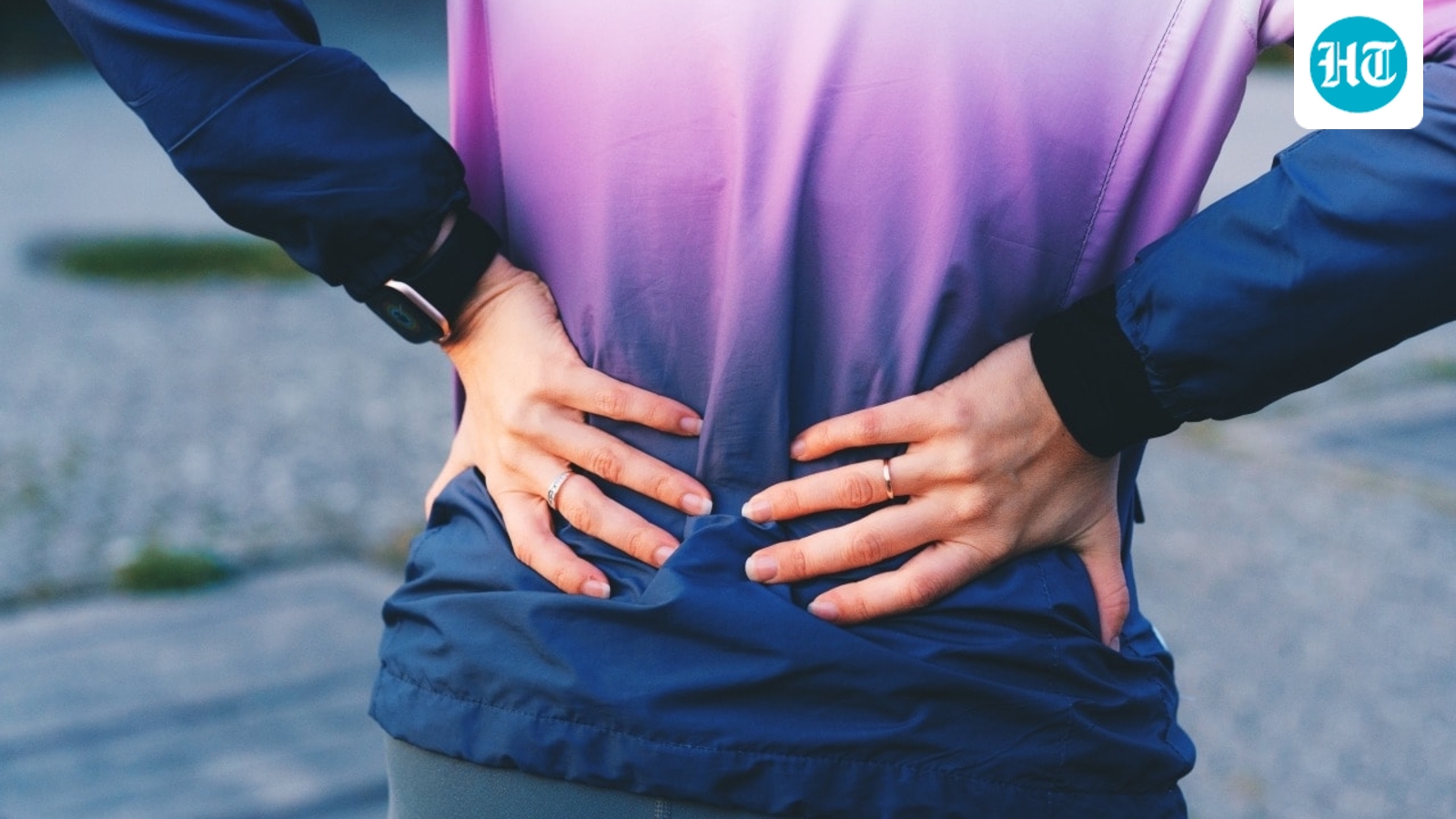
As many as ‘80 per cent of adults will experience lower back discomfort at some point in their lives’, a common issue that often becomes more frequent with age – 63-year-old fitness coach and grandmother Jacqueline Hooton highlighted this widespread concern in an October 2025 Instagram post. Also read | 63-year-old grandmother shares 1 exercise senior citizens must do to stay independent as they age
Lower back pain is more common than you think
As per the World Health Organisation (WHO), low back pain affected 619 million people globally in 2020, and cases are estimated to rise to 843 million by 2050, largely driven by population expansion and ageing. It reportedly remains the single leading cause of disability worldwide and the condition for which the greatest number of people may benefit from rehabilitation.
Low back pain can be experienced at any age, with most people encountering it at least once in their lifetime, per WHO. While prevalence increases with age up to 80 years, the highest number of cases reportedly occurs between 50-55 years, and it is more prevalent in women – about 90 percent of cases are non-specific low back pain, the most common presentation of the condition.
Movements for back pain relief
Jacqueline shared an instructional workout video demonstrating seven foundational mobility movements designed to ease stiffness and alleviate back pain. Jacqueline shared that in otherwise healthy adults, lower back pain is frequently caused by mechanical or lifestyle factors rather than underlying disease or structural damage.
Rather than retreating to rest, she advised that reducing movement or becoming afraid to move can be counterproductive – instead, maintaining spinal mobility is key to relieving discomfort and restoring function. “When back pain strikes, these are the seven basic movements I recommend,” Jacqueline wrote in her caption, suggesting that individuals repeat the routine several times throughout the day until discomfort diminishes. Also read | Grandmother shares her secret to staying fit: ‘Exercise won’t make you look younger than you are but…’
In the video demonstration, Jacqueline performed a sequence of controlled stretches and mobility exercises focused on loosening tight muscles around the spine, hips, and lower body:
1. Beginning in a standing position, Jacqueline places one hand on her hip while leaning laterally to stretch the side of her torso. She follows this by gently rounding her spine down into a relaxed standing forward fold, letting her hands hang toward the floor to decompress the spine.
2. Lying flat on her back, she draws both knees toward her chest and hugs them with her arms, gently pulling her thighs in to release tension in the lower back.
3. From a prone position, she keeps one leg extended straight on the floor while hugging the opposite knee into her chest, alternating sides to target individual hip flexors and the lower spine.
4. Lying on her back with feet flat on the floor and knees bent, she gently tilts her pelvis and lifts her hips upward off the mat to engage the core and posterior chain.
5. Moving onto hands and knees in a tabletop position, she alternates between arching her back downward while lifting her head (cow pose) and rounding her spine upward toward the ceiling (cat pose) to promote full spinal articulation.
6. From all fours, she sinks her hips back toward her heels and extends her arms forward onto the floor, allowing her lower back and shoulders to gently lengthen.
7. Lying flat on her back, she draws one knee across her body toward the floor while extending the opposite arm outward, performing a gentle rotation to relieve tension across the lower spine and hips.
Jacqueline’s approach highlights gentle, accessible movement as a practical daily tool for proactive joint health and mobility management, encouraging older adults and fitness enthusiasts alike to keep moving safely.
Note to readers: This article is for informational purposes only and not a substitute for professional medical advice. Always seek the advice of your doctor with any questions about a medical condition.
This report is based on user-generated content from social media. HT.com has not independently verified the claims and does not endorse them.


