



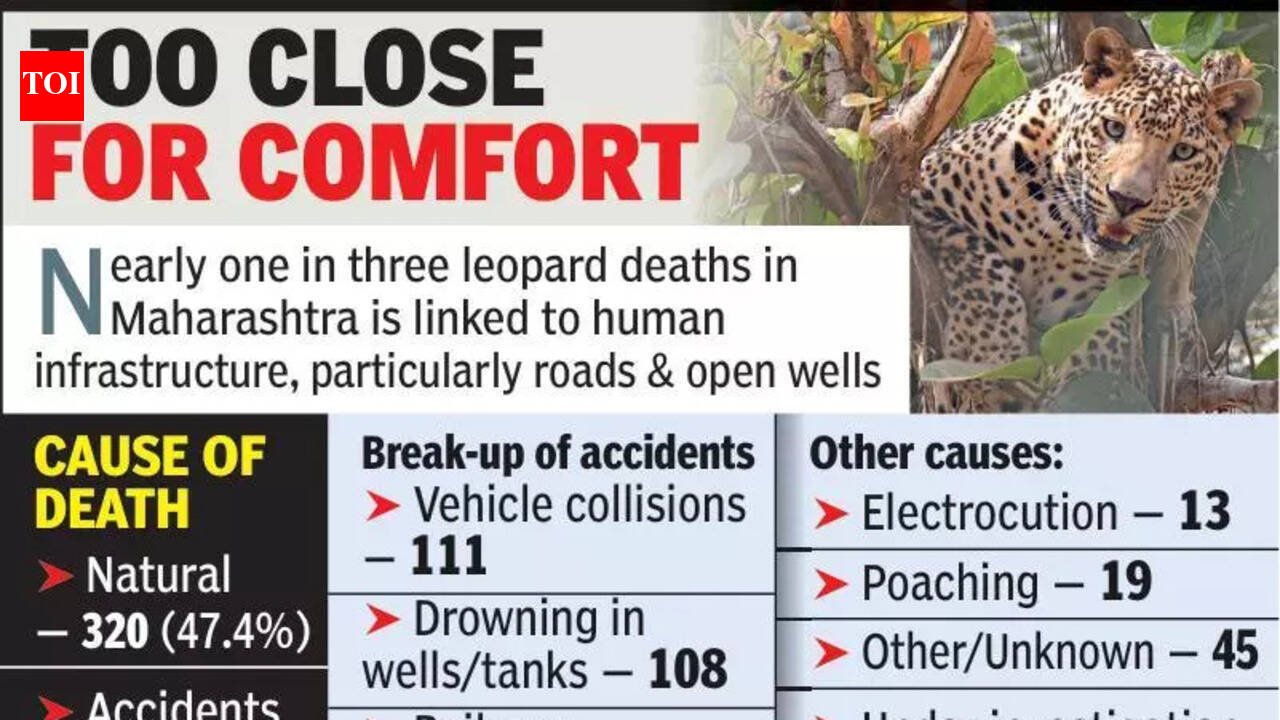
Chandrapur: Maharashtra has lost 675 leopards between 2021 and early 2026, with accidents, poaching and unknown causes together emerging as the biggest causes of mortality, according to data obtained from the Maharashtra forest department through a Right to Information (RTI) query.The figures reveal that nearly four out of every 10 leopard deaths were caused by accidents, highlighting the growing impact of human infrastructure on wildlife across the state. The RTI application, filed by Nagpur-based activist Abhay Kolarkar, analysed leopard mortality records from January 2021 to February 8, 2026. Natural causes accounted for 320 deaths (47%). Deaths in accidents amounted to 247, of which vehicle collisions claimed 99 leopards, while 91 animals died after falling into wells, tanks or water bodies. Two deaths were reported in railway accidents. Exact reason of accidental deaths not explained for 55 cases. Wildlife experts describe these two factors as the most persistent threats to the species in Maharashtra’s human-dominated landscapes.The mortality pattern also reveals a strong geographical concentration. The Nashik and Pune forest circles together accounted for nearly half of all leopard deaths recorded during the period, reflecting the intense human-leopard interface in western Maharashtra, where expanding urban areas, vineyards and farms overlap with leopard habitats.The year-wise data shows dramatic fluctuations. Year 2021 recorded the highest number of deaths at 167, followed by 144 in 2024 and 137 in 2025. The lowest mortality was reported in 2023 with 77 deaths. Although poaching remains relatively limited compared with other causes, the RTI data still recorded 30 leopard deaths linked to poaching, including 13 deaths due to electrocution and 17 cases of hunting, trapping and poaching.Another worrying trend is the growing number of cases where the exact cause of death could not be established. The data lists 45 deaths under ‘other or unknown causes’, along with 31 cases that remain under investigation, indicating possible delays in post-mortem examinations or challenges in wildlife forensic analysis. Experts caution that the rising number of unexplained deaths must be investigated more rigorously to rule out concealed wildlife crime.Conservationists say these numbers highlight the urgent need for wildlife-friendly infrastructure across Maharashtra. Uncovered wells in agricultural fields continue to trap and drown leopards, especially during dry seasons when animals move towards human settlements in search of water.Similarly, increasing road traffic through forest and semi-forest landscapes has raised the risk of vehicle collisions. Experts have repeatedly called for wildlife crossings, speed restrictions and warning systems in known leopard corridors, particularly along highways linking the Nashik, Pune and Mumbai regions.This year, the state has already reported 10 leopard deaths. Conservationists say that unless preventive measures such as covering open wells, installing escape ramps in water tanks and building wildlife crossings on major roads are implemented urgently, accidental deaths will continue to pose a major threat to the species in Maharashtra.


