






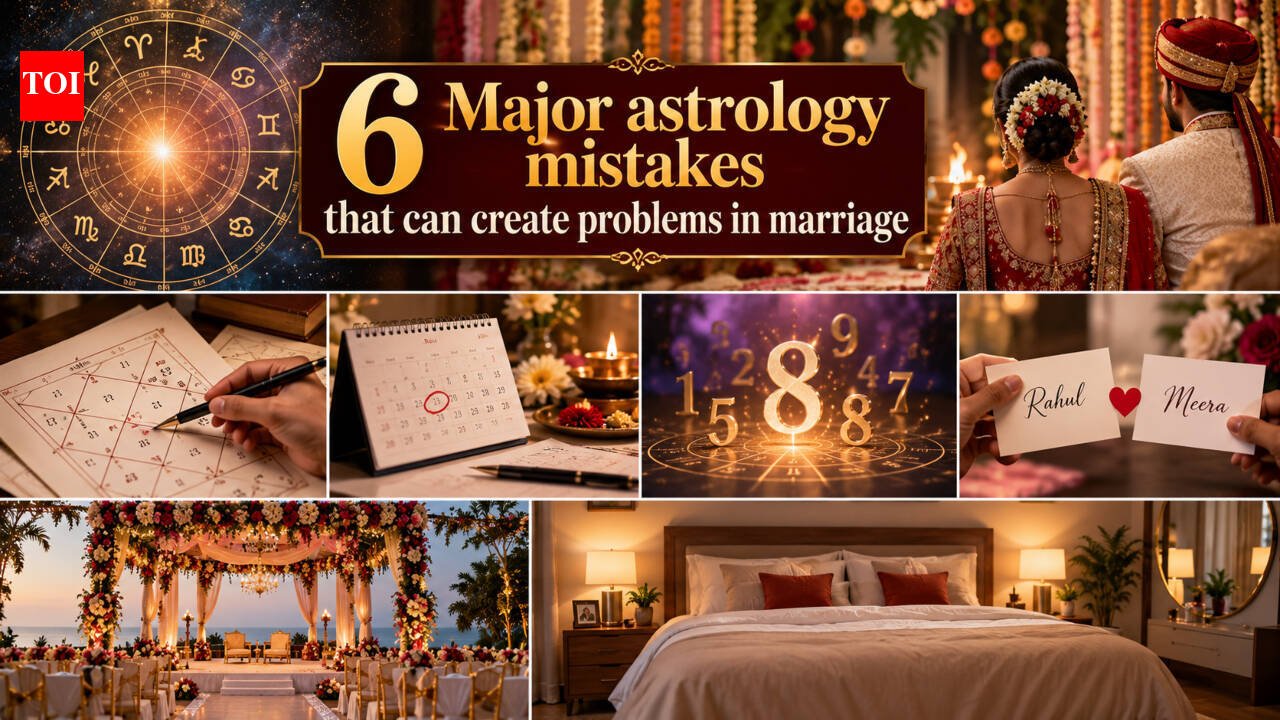
When a marriage faces problems, people often visit an astrologer much later and ask:“Was something wrong in our horoscopes?”But marriage, from an astrological perspective, does not begin on the wedding day alone. It is a journey of choices, beginning with compatibility and moving through the marriage date, wedding environment, names and eventually the home in which the couple starts living.In my approach, one of the biggest mistakes is looking at only one layer of compatibility and expecting it to explain the entire marriage.Here are six areas that are often ignored.
1. Leaving kundali milaan aside and focusing only on gun milaan
“Kitne Gun Mile?”This is probably the most common question before an Indian marriage.But Gun Milaan is not the same as complete Kundali Milaan.Getting 28, 30 or even 32 Guns does not automatically guarantee a harmonious marriage. The individual horoscopes, condition of relationship-related houses and planets, ongoing Dashas, emotional compatibility, longevity of the relationship and other relevant combinations need to be studied together.Gun Milaan can be one part of the assessment. It should not become the entire assessment.
2. Selecting the wrong muhurat for marriage
We spend months choosing the venue, caterer, photographer and clothes.And sometimes choose the marriage Muhurat from a forwarded WhatsApp list.A marriage Muhurat deserves individual attention. Tithi, Nakshatra, weekday, planetary positions, Lagna and other Panchang factors need consideration. I also prefer examining how the selected time interacts with the couple rather than treating one generic “auspicious date” as equally suitable for everyone.The wedding ceremony may last a few hours.The intention is to choose those hours consciously for something expected to last decades.
3. Ignoring gregorian calendar numerology
This is one layer traditional marriage planning obviously did not historically use in its present form, but modern life operates extensively through the Gregorian calendar.Your wedding date becomes the date printed on certificates, anniversaries, bookings, photographs and digital records for the rest of your married life.That is why I prefer checking the numerological vibration of the complete wedding date alongside the traditional Muhurat rather than treating the two systems as competitors.
4. Ignoring name-based marriage compatibility
Two people don’t interact with each other only through their birth charts.They interact every day through the identities they use in the world, and names form an important part of that identity.Name numerology can therefore be used as an additional compatibility layer, particularly to understand communication styles, expectations and the way two individual identities interact after marriage.It should complement deeper compatibility analysis, not replace it.
5. Choosing the wedding venue and décor without personalisation
Wedding décor is usually selected around trends.But colours, directions, seating arrangements, stage placement, lighting and the overall spatial environment can also be looked at through Vastu and personalised systems.The same red-and-gold décor does not have to be the default for every couple.I prefer thinking of the wedding environment as something that can reflect the couple’s dates of birth, names and the energy they want to begin their marriage with, while still respecting aesthetics and practicality.
6. Ignoring the vastu of the couple’s bedroom
The wedding ends.Then real married life begins.And one of the most important spaces becomes the bedroom.Two separate mattresses joined together, excessive clutter under the bed, mirrors directly reflecting the bed, work permanently occupying the sleeping area and inappropriate spatial arrangements can all be reviewed from a Vastu perspective.A couple may spend seven or eight hours every day in this room.So while people spend enormous effort getting the wedding stage right for one evening, I would pay equal attention to getting the bedroom right for the years that follow.


