



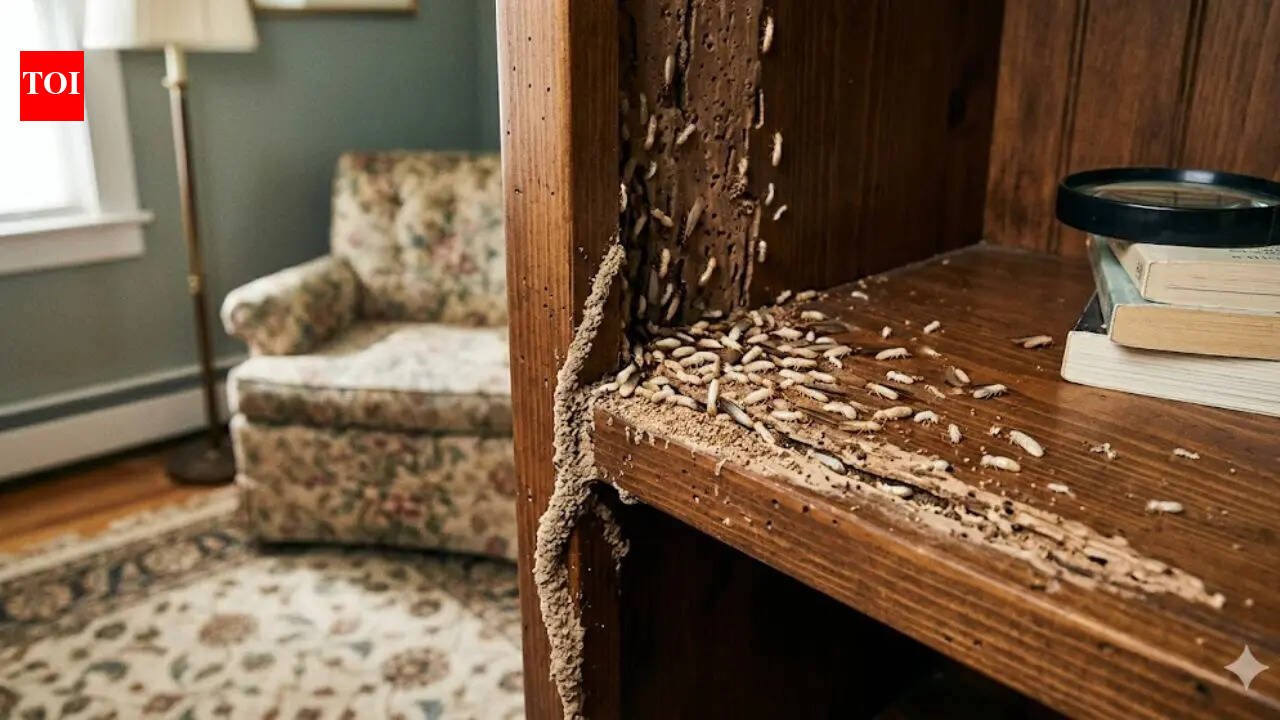
Termites rarely appear all at once. Furniture usually gives small signs first, faint powder near wooden legs, hollow sounds under the surface, tiny cracks along corners that were not there before. By the time visible damage becomes obvious, the insects have often been active for weeks inside the wood itself. Chemical treatment is commonly used for larger infestations, though many households still rely on simpler methods when the problem is caught early.Some remedies focus on dryness because termites struggle in damp conditions. Others work by disturbing their movement through wood or making furniture less suitable for nesting. None of these methods acts instantly, and heavily damaged furniture may still require professional treatment, but a few routine measures can slow activity and protect wooden surfaces from further spread indoors.
Home remedies to remove termites from wooden furniture
1. Neem oil on affected cornersNeem oil is often used on small patches where termite marks first appear. The oil is brushed carefully into cracks, joints,s and hidden corners of wooden furniture, especially near the base where insects usually travel unnoticed. It leaves behind a bitter coating that interferes with feeding activity over time rather than killing termites immediately.Repeated application matters more than quantity. Light coatings every few days tend to work better than soaking the wood once and forgetting about it. Many people also wipe surrounding shelves and skirting boards because termites rarely stay confined to a single visible spot for long.2. Sunlight and open air exposureWooden furniture kept in dark or damp spaces often becomes easier for termites to occupy quietly. Moving smaller items into direct sunlight for several hours can help reduce moisture trapped inside the surface layers of wood. Heat and dryness disturb termite movement, especially near shallow tunnels hidden beneath thin panels or polish.This method is mostly used for stools, side tables, es or loose wooden drawers that can be shifted outdoors without damage. Larger furniture is sometimes placed near windows with steady airflow instead. The change is gradual, though regular ventilation inside the room usually helps prevent moisture from building up again.3. Vinegar mixture for narrow gapsWhite vinegar mixed with lemon juice is sometimes applied inside tiny openings where termite dust appears repeatedly. The liquid is usually sprayed or injected carefully into narrow wooden gaps rather than poured directly across the furniture surface. People tend to use it on shelves, cabinets, and storage units where small tunnel marks become visible around edges.The sharp acidity does not repair damaged wood, but it may disturb insects occupying shallow channels near the surface. Because the smell fades fairly quickly, repeated use is common over several days. Many households also clean nearby wooden areas at the same time to remove loose particles left behind by termite activity.4. Salt treatment around wooden basesSalt is occasionally used around furniture legs and lower wooden edges where termites enter from the flooring or nearby walls. Some people dissolve salt in warm water before applying it into cracks, while others place dry salt close to affected sections to keep the area less hospitable for insects that prefer moisture-rich surroundings.It is usually treated as a supporting remedy rather than a complete fix. Excess water should be avoided because dampness can worsen conditions inside wooden furniture instead of improving them. A small, controlled application works better than saturating the surface repeatedly.5. Clove oil and strong-smelling oilsStrong-smelling oils such as clove oil are sometimes dabbed onto termite-prone areas because the scent interferes with insect activity inside the wood. Cotton buds or cloth pieces are often used for precise application around cabinet joints, drawer edges, and narrow wooden seams where signs of movement first appear.The smell can linger indoors for a while, especially in closed rooms, so people usually apply small amounts rather than coating entire surfaces. Some also combine this with routine dusting and dry cleaning because neglected wooden furniture tends to attract hidden insect activity more easily over time.6. Reducing moisture around furnitureMany termite problems indoors become worse when furniture stays close to damp walls, leaking pipes,s or poorly ventilated corners. Even simple habits such as wiping water spills quickly, improving airflow, ow and keeping wooden cabinets slightly away from walls can reduce conditions that encourage infestation indoors.Storage spaces often need attention, too. Closed cupboards filled with unused papers, cardboard, or old fabric create dark areas where termites remain unnoticed for long periods. Regular cleaning and occasional inspection around hidden corners usually help spot early signs before structural damage spreads deeper into the furniture itself.


