



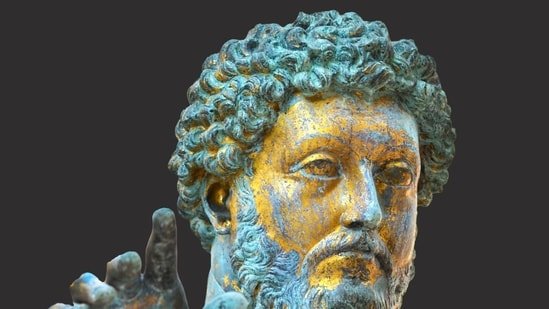
Long before journaling became a popular wellness practice, Roman emperor Marcus Aurelius was quietly filling the pages of a notebook that would later become Meditations. Written as a private record rather than a book for publication, these reflections reveal how the Stoic philosopher examined his thoughts, emotions and actions in his search for wisdom and inner peace.


What is Stoicism?
Stoicism is an ancient philosophy that teaches people to stay calm during difficult times. It encourages people to focus on what they can control rather than worry about what they cannot change. The goal is to live with kindness, honesty, patience and self-control, no matter what life brings.
If you’re looking to start a meaningful journaling habit, here are five lessons inspired by Meditations.
Also Read 5 Stoic lessons from Marcus Aurelius that can help you handle everyday stress
Focus on what you can control
One of the most quoted ideas from Meditations appears in Book 8:
“You have power over your mind—not outside events. Realize this, and you will find strength.”
Instead of filling pages with worries about situations beyond your control, Marcus Aurelius encouraged himself to focus on his own thoughts and actions. A Stoic journal begins by asking what is truly within your power.
Try writing: What can I control today, and what must I learn to accept?
2. Reflect on the person you are becoming
Marcus Aurelius believed that philosophy should be practised, not merely discussed. In Book 10, he reminds himself:
“Waste no more time arguing what a good man should be. Be one.”
His journal was a daily reminder to live according to virtues such as honesty, courage and kindness.
Try writing: Did my actions today reflect the person I want to become?
Also Read How to practice Stoicism in a stressful world, according to Marcus Aurelius
3. See obstacles as opportunities
Challenges were never something Marcus Aurelius wanted to avoid. Instead, he viewed them as opportunities to practise resilience. In Book 5, he writes:
“The impediment to action advances action. What stands in the way becomes the way.”
Rather than complaining about setbacks, he encouraged himself to learn from them.
Try writing: What obstacle did I face today, and what did it teach me?
4. Stay present instead of fearing the future
Much of Meditations reminds readers to return to the present moment. In Book 7, Marcus Aurelius writes:
“Confine yourself to the present.”
For the Stoics, peace comes from giving full attention to what is happening now rather than worrying about what may happen tomorrow.
Try writing: What am I experiencing right now that deserves my full attention?
5. End each day with gratitude and perspective
Marcus Aurelius often reflected on life’s temporary nature, reminding himself not to take ordinary moments for granted. In Book 2, he begins with gratitude, acknowledging the people who shaped his character and the lessons they taught him.
Instead of ending the day by focusing on mistakes, he used reflection to appreciate growth and prepare for tomorrow.
Try writing: What am I grateful for today, and what lesson will I carry into tomorrow?


