






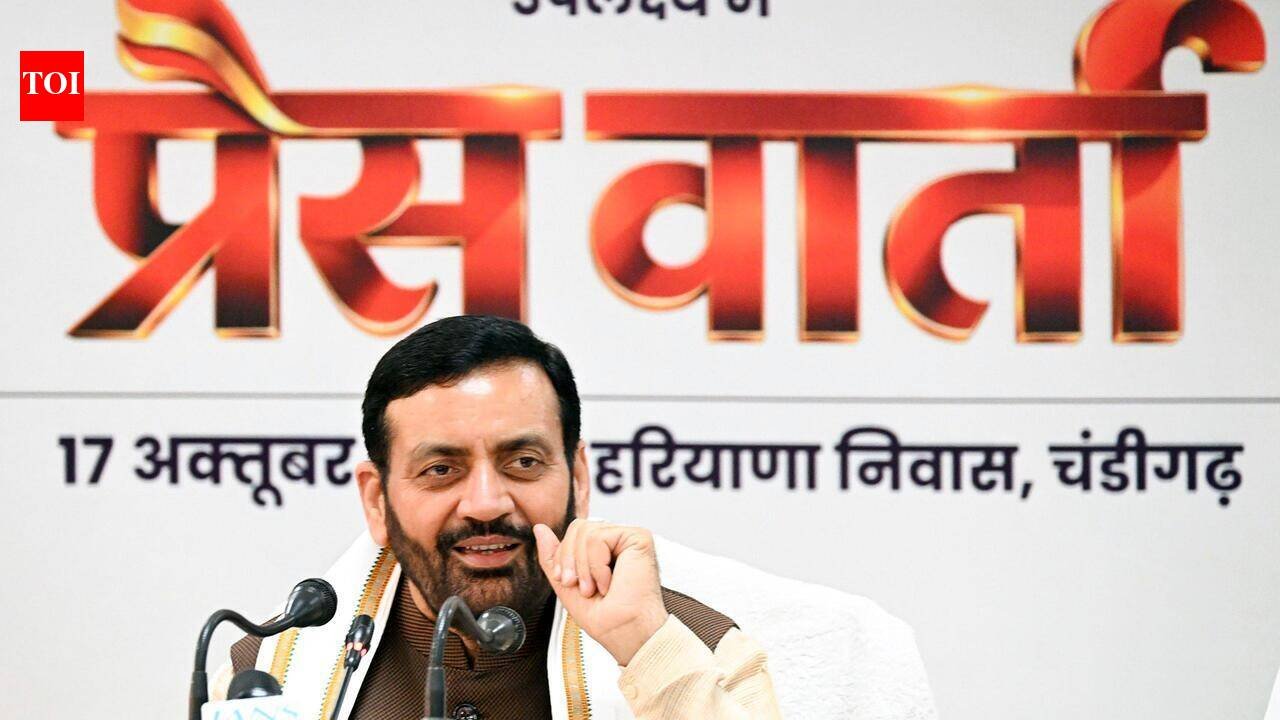
Chandigarh: Marking the completion of two years of the BJP govt’s third consecutive term, Haryana chief minister Nayab Singh Saini said 46,500 youth had been recruited to govt services through a transparent, merit-based system.Highlighting key policy decisions, Saini announced 20% horizontal reservation for former Agniveers in direct recruitment to identified govt posts, including those of police personnel, forest guards and mining guards. Eligible candidates will also be exempted from written examinations for certain Group-C posts.He said 2.7 lakh youth had received around Rs 657.2 crore under the Saksham Yuva Yojana, while placement drives had provided jobs to more than 11,000 youth in the private sector.Focus on sports and youth developmentHighlighting Haryana’s sporting achievements, Saini said the state had distributed Rs 147.1 crore in cash awards to 1,319 medal winners over two years and established 2,000 sports nurseries in rural areas.He also highlighted the performance of Haryana athletes at international sporting events, claiming that they won 32 of India’s 85 medals at the Asian Games in Japan and 11 medals at the 2026 Commonwealth Games in Glasgow.Women’s empowermentSaini said more than 10 lakh women had benefited from the Deen Dayal Lado Lakshmi Yojana, which provides Rs 2,100 per month, with Rs 2,466.63 crore disbursed under the scheme. Additionally, around 2.9 lakh women had become “Lakhpati Didis,” while 33% reservation had been provided to women in ration depot allotments.Healthcare expansionThe number of medical colleges in Haryana has increased from six in 2014 to 18, Saini said. Free dialysis services are now available at all district hospitals and medical colleges, while the Ayushman Bharat-Chirayu scheme has been expanded to cover higher-income families.Education boostThe govt has established 250 Chief Minister Excellence and Early English (CM-EEE) schools, while information and communication technology (ICT) labs have been approved for 900 govt schools under the PM SHRI initiative.Saini reiterated that merit-based governance, accessible healthcare and women’s economic self-reliance would remain key priorities for the state govt.


