



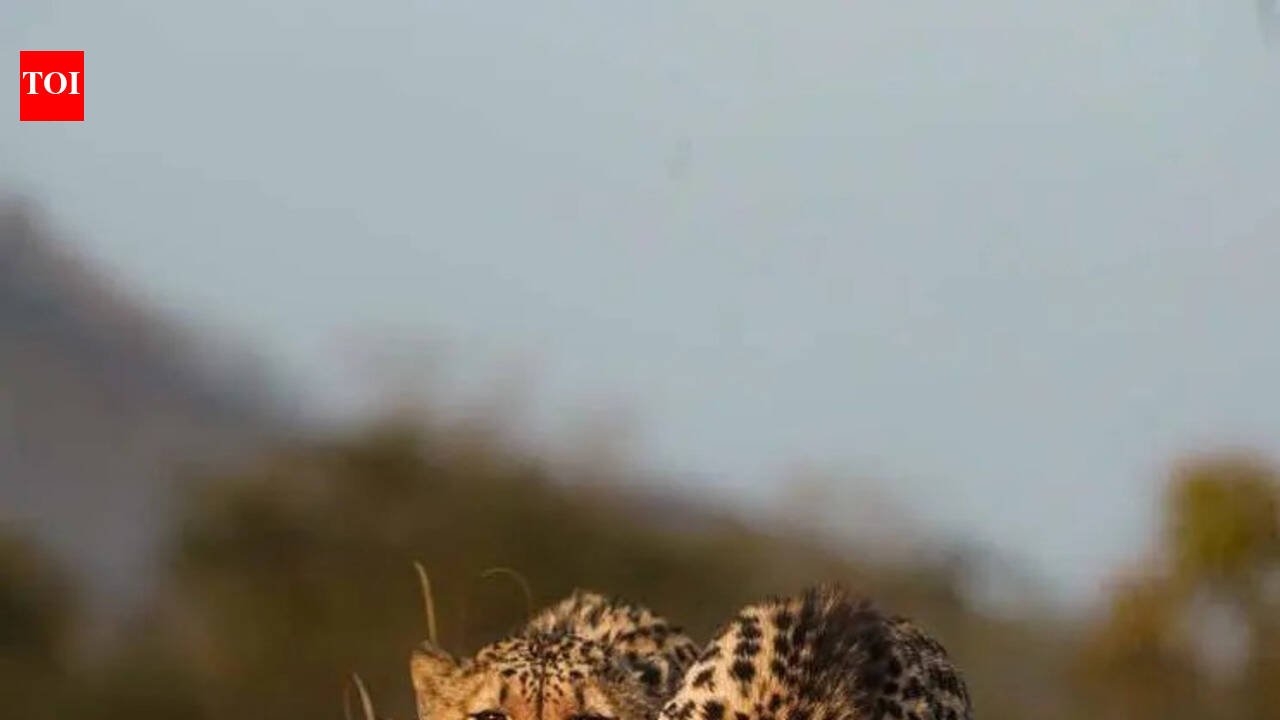
Ahmedabad: The long wait to bring the world’s fastest land animal — the cheetah — to Gujarat will end soon, with the National Tiger Conservation Authority (NTCA) greenlighting the translocation of four of these magnificent cats to Banni in Kutch. Officials say the felines — two male-female pairs — will likely arrive in July or Aug, pending a final decision by the Union govt.The move is being seen as a landmark wildlife event making Gujarat only the second home for cheetahs after Kuno National Park in Madhya Pradesh (MP). In all, 12 cheetahs are planned to be brought to Banni within a year of the first arrivals, setting the stage for an ambitious rewilding push, official sources said.The state forest machinery hopes to hit the ground running on their reintroduction and conservation efforts, and has been preparing the area on a war-footing to give its foreign inhabitants a savannah-like environment. An NTCA team recently spent two days in Banni to assess the site on habitat suitability, enclosure readiness, veterinary arrangements and logistics for the animals’ arrival. “We are ready,” said principal chief conservator of forests (wildlife) Jaipal Singh, adding, “The Union govt will decide the date of their arrival in Gujarat. We expect it will be soon.”Gujarat’s cheetahs will be translocated from Kenya, bringing in a new genetic and ecological lineage, different from MP’s cheetahs, which are from Namibia. A senior official said the cheetahs will first arrive in Bhuj and then transported to the Banni facility, India’s first cheetah conservation breeding centre. Here, they will be quarantined for about a month before being released into the purpose–built enclosure. The overall 500-hectare main enclosure is designed as a rich Kenyan savannah-like open habitat to support both acclimatisation and breeding. Namibian cheetahs, on the other hand, move through private farmlands and dry, sparse landscapes, a senior official said, highlighting why Banni is the best habitat choice. The cheetah territory has ample room, crucial for a species built for explosive speed and wide-ranging movement.A strong chain-link fencing along an approximately 9,830m boundary is in place to prevent escapes and stop other large carnivores from entering and triggering dangerous encounters, a critical safeguard in this high-stakes conservation experimentForest authorities say the large enclosure model has a precedent in Gujarat’s Devalia Safari Park, where expansive protected space has been used effectively for lion conservation breeding.The breeding centre is also being tailored around cheetah instincts and behaviour, with separate enclosures for males and females, a dedicated den and cub-raising capsule for females, an additional chamber for alternating use by males and females, and a veterinary zone. Conservationists say that separating males and females initially is important for breeding success. Open-to-air isolation enclosures are being built to allow natural courtship and mating with minimal human intervention.“With groundwork advancing and central approval in place, Gujarat is now preparing for a landmark wildlife event that could make Banni the country’s second major cheetah destination after Kuno,” said the senior officer.


