



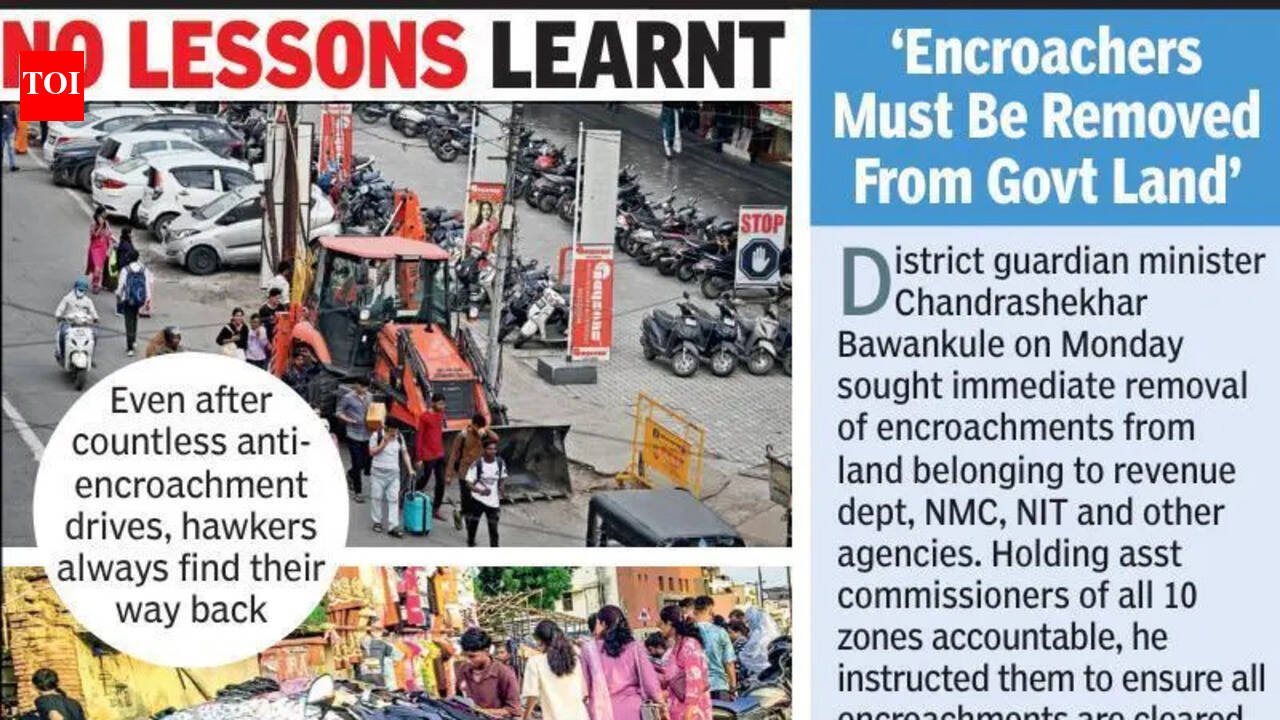
Nagpur: In 100 days of its anti-encroachment campaign, the Nagpur Municipal Corporation (NMC) carried out action at 309 drives, removed almost 950 encroachments, cleared nearly 829km of footpaths, seized 890 handcarts besides thousands of tables, chairs, banners, iron poles, plastic stools and other materials, registered 890 cases, and recovered 3.49 lakh in penalties. Yet, despite the extensive enforcement across all 10 zones, unauthorised hawkers and roadside eateries have returned to many of the city’s busiest roads and footpaths, exposing the limited long-term impact of the civic body’s much-publicised Mission 100 Days.From VNIT Road and Futala to Sitabuldi Main Road, Jhansi Rani Square, Gandhibagh, Itwari, Mahal and Jaripatka, vendors have reoccupied locations repeatedly cleared by civic squads, often within hours of enforcement action. As a result, pedestrians continue to be forced onto roads while footpaths remain blocked by stalls, makeshift businesses.Reclaiming roads and footpaths was among the priorities set by municipal commissioner Vipin Itankar after he assumed office in March. Acting on his directive, NMC launched the citywide Mission 100 Days on April 18 following Supreme Court observations emphasising that footpaths should remain free for pedestrians. Each of the 10 zones was assigned a daily target of clearing at least 2km of encroached footpaths.According to official data, Laxmi Nagar carried out highest number of anti-encroachment operations, removing 279 encroachments, while Ashi Nagar, Gandhibagh and Dharampeth followed with 240, 200 and 199 actions respectively. The drive also led to demolition of 17 unauthorised constructions, action against one dangerous structure, and demolition of 3 houses obstructing road-widening works. Civic squads additionally removed encroachments, including tea stalls and paan kiosks, from outside 9 schools and colleges.The seized material included 673 handcarts, nearly 700 tables, hundreds of chairs, banners, signboards, iron poles, benches, wooden platforms, plastic stools and weighing machines, reflecting the scale of the operation undertaken over the three-month period.Despite sustained deployment of enforcement squads, excavators, trucks and police personnel, the campaign has failed to produce lasting results. Civic officials continue to revisit the same stretches as hawkers return after every eviction drive. The situation remains particularly visible around Futala, VNIT Road, Sitabuldi, Gandhibagh, Itwari, Mahal and other commercial hubs where pedestrian movement continues to be severely affected.The drive has also witnessed resistance from vendors. During the campaign, NMC lodged several FIRs against those obstructing anti-encroachment operations. The latest incident occurred on Sunday on Sitabuldi Main Road, where an allegedly intoxicated clothes vendor assaulted an enforcement squad leader and allegedly chased him with a knife after his goods were seized. Cops later arrested the accused.Officials admit enforcement alone can’t provide a permanent solution. Sources said Nagpur has only 43 notified hawking zones, whereas number of street vendors is estimated to exceed 1 lakh. Experts believe unless the city creates more authorised vending zones and rehabilitates eligible vendors under Street Vendors (Protection of Livelihood and Regulation of Street Vending) Act, the cycle of eviction and reoccupation is unlikely to end.


