



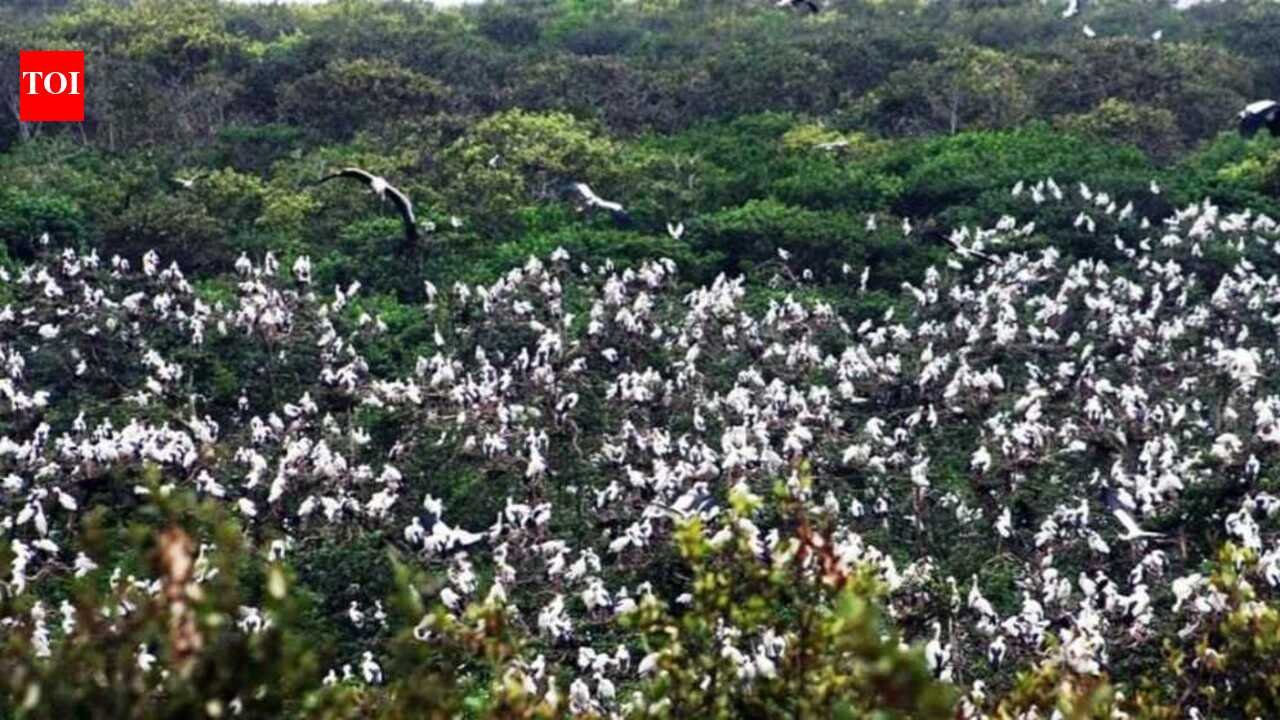
Kendrapada: A three-day monsoon bird census began at Bhitarkanika National Park on Thursday with forest department undertaking the exercise to create a scientific database of the park’s bird population. The census aims to identify bird species visiting the park during the monsoon, document their preferred nesting season and scientifically record the types of vegetation favoured by them, said Varadaraj Gaonkar, divisional forest officer.Forest department data showed officials counted 1,30,796 birds of 10 species in 27,646 nests spread across 1,409 trees in 2025. In 2024, 1,30,123 monsoon birds belonging to 10 species were recorded in 27,282 nests on 1,300 trees. Around 20 persons, including senior forest officials, were divided into four groups to monitor Mathadia, Durgaprasaddia and Laxmiprasaddia forest blocks, where resident birds arrive during the monsoon to lay eggs. The teams will visit water bodies and mangrove areas across Bhitarkanika. Tourists will continue to be allowed to visit the park during the census, Gaonkar said.Conducting the avian census during the rainy season is challenging and risky because of the presence of crocodiles in the water bodies and mangrove areas. Despite the risks, forest personnel are carrying out the survey meticulously by navigating through the waterways and counting the birds, the DFO said.The monsoon is the breeding season for several resident species in Bhitarkanika. The monsoon has brought renewed activity to Bhitarkanika, with birds gathering on mangrove trees for nesting. Resident birds arrive to breed during the monsoon, while migratory birds from regions beyond the Himalayas visit during winter.According to the DFO, the rich avifauna of the three forest areas is attributed to diverse habitats providing suitable nesting grounds. Bhitarkanika is renowned for its large heronries. Abundant fish in rivers and creeks, along with the distance from human habitation, makes it an ideal breeding ground.Environmentalist and secretary of Gahirmatha Marine Turtles and Mangrove Conservation Society, Hemant Rout said the availability of adequate food encourages birds to engage in courtship and mating. Mangrove and other trees are densely covered with thousands of nests, which are built using loosely piled reeds and water weeds to keep the eggs above the water and protect them from getting wet.


