



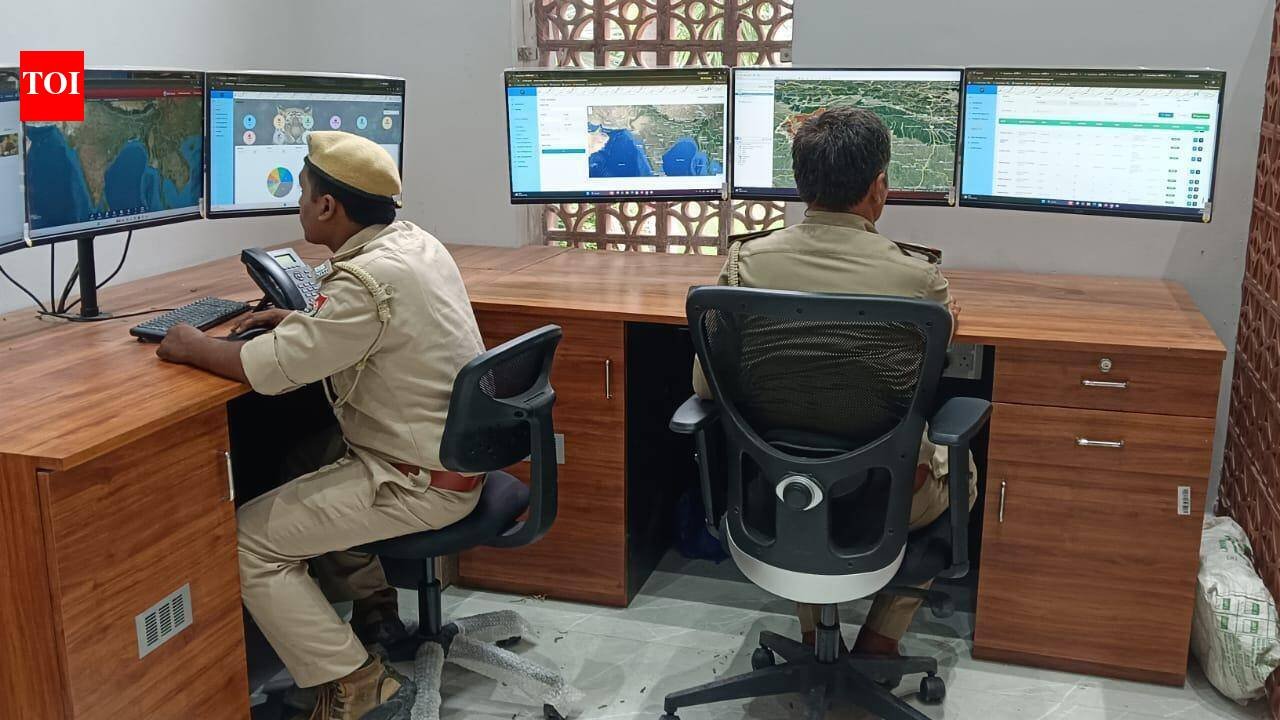
Artificial intelligence is helping foresters at Valmiki Tiger Reserve (VTR) tackle human-wildlife conflict by providing early warnings of animal movement and human presence along vulnerable forest boundaries. Smart cameras installed on the eastern periphery of Division I between May and Aug are helping field teams monitor wildlife activity and identify potential conflict zones.In the past two months, only four incidents of sloth bear attacks resulting in injuries have been reported from this side, where 35 AI cameras are monitoring animal movement and human activity. In contrast, four people have been killed in tiger attacks in Division II, on the western side, in recent months. The forest department has now begun installing cameras there as well.The surveillance dashboard recorded 68 bear detections, 26 tiger detections, 23 human detections and three leopard detections over the past two months. The system is designed to identify movement patterns and locations where wildlife and people could come into contact, allowing forest personnel to plan preventive measures.Linked to an integrated control room, the AI-enabled network generates real-time alerts when animals approach human settlements or people enter areas bordering the forest. The aim is to enable staff to respond before an encounter escalates into a conflict.“The idea is to reduce response time during man-animal conflicts. That is why we are using AI cameras. We started installing them on the eastern side as most tiger-straying cases are reported from there. We have also started installing the cameras on the edge of Division II, the western side,” said Vikas Ahlawat, former deputy director of Division I, VTR, who is now posted in Division II.“The biggest advantage is that we are no longer dependent only on reports reaching the forest staff after an animal has moved into a vulnerable area. The cameras can detect movement on the forest edge and give us an early indication of a possible conflict situation,” said an official.Ahlawat said the cameras helped forest staff understand wildlife movement, human activity and areas where the two could overlap, making it easier to take preventive action along the forest boundary.The technology also forms part of a wider surveillance network. Pole-mounted cameras track wildlife near settlements, while AI-powered systems detect smoke and provide early warnings of forest fires. Information is relayed to the integrated control room, which coordinates patrols and response teams.“We are looking at the technology as an early-warning and conflict-prevention tool. The experience from Division I is helping us assess how the system can be expanded to other vulnerable areas,” Ahlawat said.
