



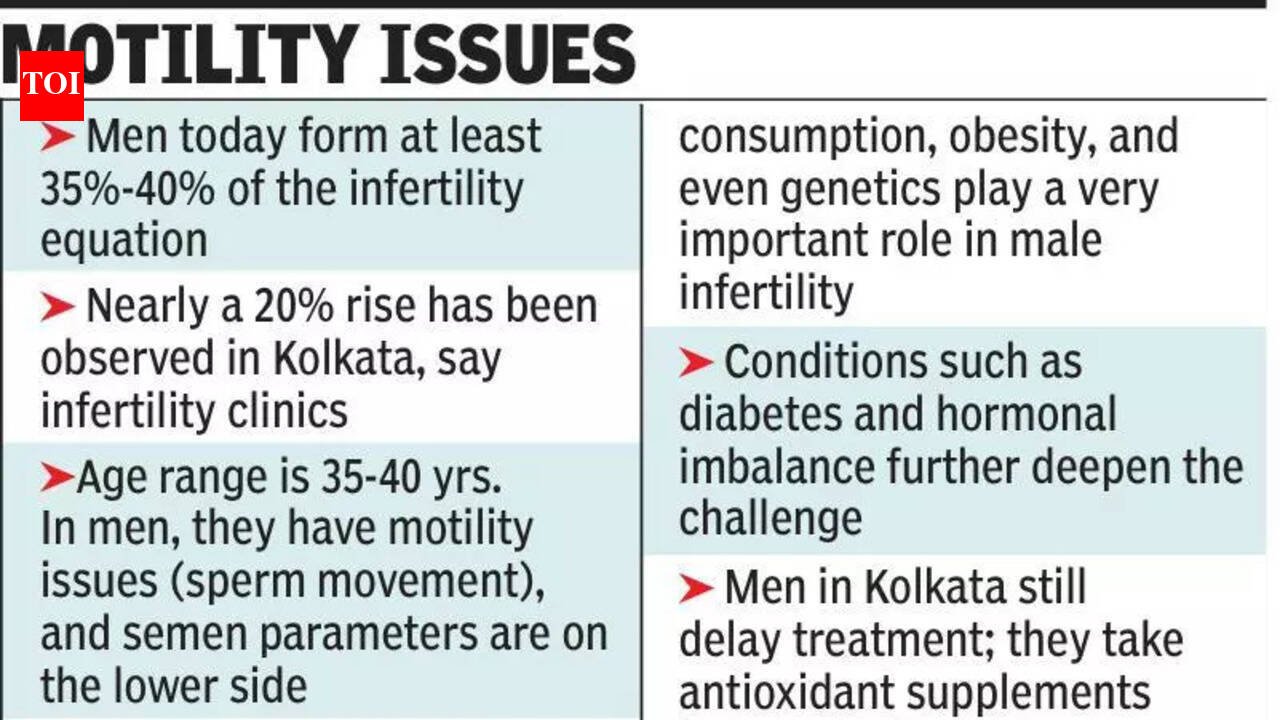
Kolkata: While infertility is associated mostly with women, nearly a 20% rise in male infertility has been observed in Kolkata over the last decade, say fertility experts, confirming a finding by the Sample Registration System Statistical Report (SRSSR) of 2023. Men today form at least 35%-40% of the infertility equation, according to a study by IVF centres in the city. Bengal’s TFR (total fertility rate) has fallen to 1.3, down from 1.7 in 2013, an 18% decline and far below the replacement level of 2.1, said the SRSSR report.Recent national studies suggest only about a fourth of Indian men meet normal semen parameters, while sperm count has dropped from 60 million per millilitre 30 years ago to just 20 million now. The age range observed is 35-40 years. Most men with infertility have motility issues (movement of sperms), and their semen parameters are on the lower side. Sexual disinterest led to delays in seeking professional help, said fertility experts. More couples now sought help after over five years of marital life, with absent or almost non-existent sexual life, now desiring a child.There is also a rise in sexual dysfunction-led infertility issues, like erectile dysfunction, premature ejaculation. Sexual dysfunction is seen in at least 15%-20% of the men, says the study. Conditions like azoospermia (zero sperm count) are also being observed. Male infertility was on the rise globally, agreed Charnock Hospital gynaecologist Dibyendu Banerjee. “The primary reasons are stress, unhealthy diet, smoking, hypertension, diabetes and hypothyroid in men. Today, men are behind 30%-40% of all infertilities. But women are still held responsible if a couple can’t have a child. We advise men to check sperm count if a couple can’t conceive for a year,” he added.As medicines can’t cure it, IVF is the most frequently opted-for solution, according to Bani Kumar Mitra, founder & chief consultant, Abha Surgy Centre, an assisted reproduction centre. More intensive methods, like intercytoplasmic sperm injections are being used now. “It is essential for those with a sperm count of less than 10 million or below the desired count,” said Mitra.Kolkata clinics are finding men represent 35%-40% of all cases of infertility, says Rohit Gutgutia, medical director of Nova IVF Fertility. “Nearly a 20% increase in male-factor infertility is seen among those aged 35-40 years. The most common conditions are associated with poor sperm motility, abnormal sperm shape and low sperm count,” he said.While genetics has a role to play in infertility in men, lifestyle is a major contributor. Smoking, alcohol, obesity, stress, and poor sleep can affect male reproductive health, while conditions such as diabetes and hormonal imbalance further deepen the challenge. “Many men delay seeking medical help, opting instead for antioxidants and supplements; then, when everything fails, they come back to us, but by then women’s age would have increased, thus reducing the success of the treatment,” he added.


