



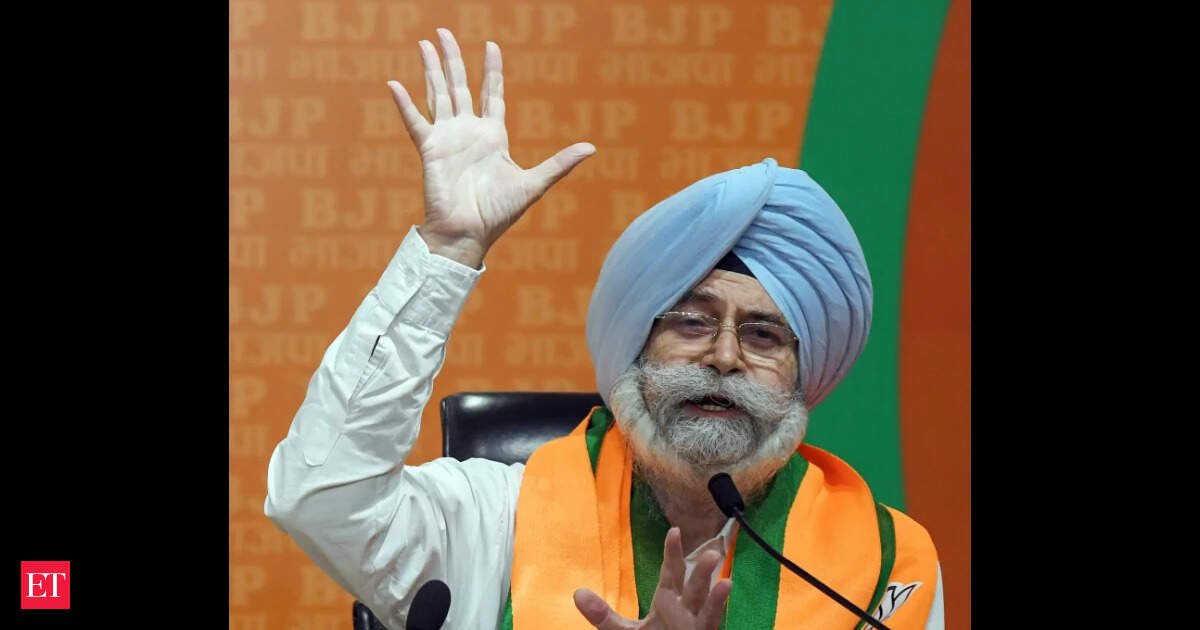
The move is being seen as a shot in the BJP’s arm as it gears up to oust the AAP government from Punjab in the Assembly polls due next year.
Phoolka joined the party in the presence of Union Minister Hardeep Singh Puri, Delhi minister Manjinder Singh Sirsa, BJP national general secretary Tarun Chugh, Punjab unit chief Sunil Jakhar and party chief spokesperson Anil Baluni.
Also Read: Tennis legend Leander Paes joins BJP as Bengal 2026 poll battle heats up
Welcoming Phoolka into the BJP fold, Puri said his induction would add strength to the party.
“His joining will further strengthen the party and our efforts in Punjab,” he said, describing Phoolka’s entry as a significant addition to the party’s commitment to justice and accountability and citing his contribution in helping victims of the riots get justice.
Chugh also expressed confidence that his entry would bolster the BJP’s organisation in the state.The BJP, Phoolka said, had consistently backed his legal fight for the victims of the 1984 anti-Sikh violence. Only the BJP under Prime Minister Narendra Modi can address the challenges Punjab is facing under the AAP rule, he added.
“The prime minister has shown personal interest in Sikh issues. Because of my work on 1984, he has always appreciated those efforts,” Phoolka said.
Leaders like Madan Lal Khurana, Sushma Swaraj and Vijay Kumar Malhotra stood with the cause and the BJP, particularly in Delhi, fought the issue as if it were their own, he said.
“Because the BJP did so much on this issue, I also contributed as much as I could. I headed the party’s legal team without holding any post. From 2003 to 2013, I guided their legal efforts in elections after resigning from my position with the Election Commission. That is why I have decided to formally join the party,” he added.
Phoolka contested the 2014 Lok Sabha elections as an AAP candidate from Ludhiana in Punjab but lost to Congress’ Ravneet Singh Bittu, now a BJP leader and a Union minister.
Also Read: Humiliated, made to feel persona non grata within Congress: Pradyut Bordoloi on why he joined BJP
In 2017, he won the Dhaka assembly seat in Punjab. Phoolka was leader of opposition in the Punjab assembly for about three months in 2017.
He then quit the post to fight 1984 anti-Sikh riots cases in the Delhi High Court.
Addressing a gathering on Wednesday, Phoolka termed his association with the AAP a “mistake”.
“In 2014, I thought that party had come to change the country, given the anger against corruption. But after going inside, I realised things were different. It was a mistake to join them,” he said.
Raising concerns over Punjab, he said the state was facing multiple crises.
“Today, looking at the condition of Punjab, I feel pained and even guilty for having stayed away. The situation is very serious – law and order issues, extortion, widespread corruption, drugs and a deep agrarian crisis. Reports suggest that by 2039, Punjab’s groundwater may become unusable,” he said.
“If Punjab has to be brought back on track, only the BJP can do it… I am committed to working fully towards improving the situation in Punjab,” Phoolka said.
Targeting the Congress over the 1984 anti-Sikh violence, he alleged that the killings took place during its rule and were part of a larger conspiracy.
“What happened in 1984 was not a riot but a genocide. It was not Hindu versus Sikh – it was Congress versus Sikhs,” he said.
The genocide was planned during Indira Gandhi’s lifetime and executed after her death, he alleged.
“It was not a spontaneous reaction to any single event but the result of a deeper and deliberate design. The scale and pattern of the violence show that preparations had already been made and an opportunity was being awaited. Her assassination only became the trigger, but the intent and groundwork for targeting Sikhs existed much earlier,” Phoolka said.


