



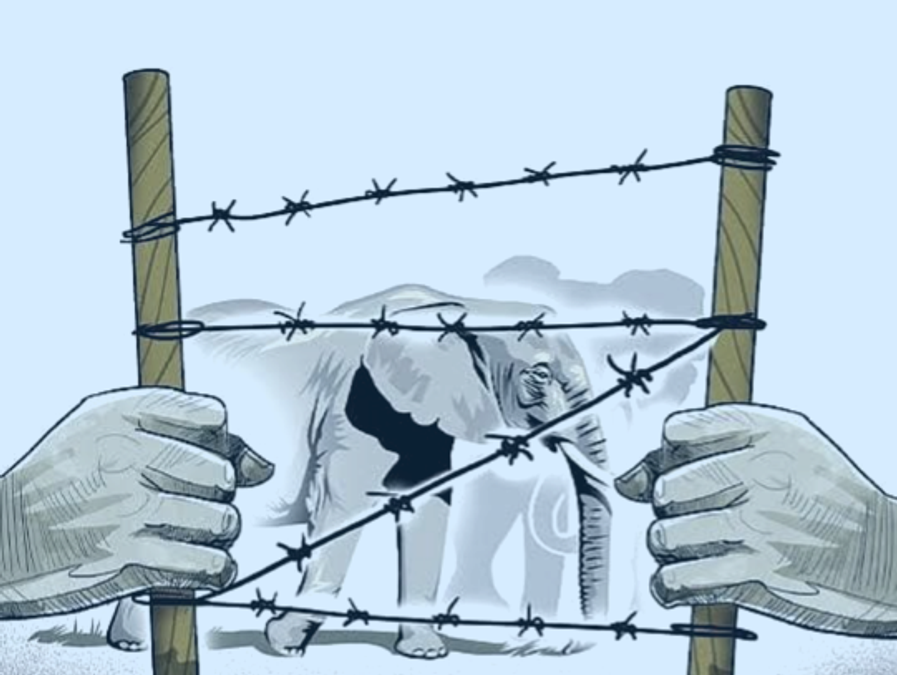
Srinagar, Aug 18: The Wildlife Department in Kashmir has received around 1,700 distress calls related to human-wildlife conflict this year, with teams responding to all such complaints, Regional Wildlife Warden, Kashmir, Tawheed Ahmad Deva, said.
Speaking to Rising Kashmir, Deva said the department has been responding promptly to distress calls and has dedicated teams to deal with incidents involving wild animals.
“Whenever we receive these distress calls, we act immediately. We have proper teams for responding to such complaints,” he said.
He further said that over the past six to seven years, the department has received more than 14,000 distress calls related to human-wildlife conflict, and teams have attended to all of them.
According to Deva, the department currently has 24 fully active control rooms across Kashmir to receive and respond to complaints, while more such facilities have also been proposed.
“There are occasions when the department receives a huge volume of calls simultaneously, making it important for people to take necessary precautions at their own level to minimise the risk of attacks,” he said.
Deva described human-wildlife conflict as a “negative interaction” between humans and animals that can result in human injuries and deaths, animal loss and crop damage.
He said Kashmir is currently witnessing such conflicts, with two people losing their lives and nearly 30 sustaining injuries in such incidents this year.
“In the last seven years, around 70 people have died and nearly 700 have been injured in human-wildlife conflict incidents,” he said.
On the reasons behind the increasing conflict, Deva said changes in habitation patterns and encroachment into wildlife habitats have brought humans closer to forest areas, increasing the chances of encounters with wild animals.
“Habitation has changed. We have encroached upon their habitat and are living close to forests. This has become a kind of threat, and people living in such areas have to take precautions,” he said.
He said that whenever wildlife teams visit conflict-prone areas, they also sensitise local residents and make them aware of necessary precautionary measures.
The Regional Wildlife Warden advised people to avoid unnecessary movement during early morning and evening hours, when wild animals are more likely to be active.
“If people have to go out during these hours, they should move in groups and carry sticks. Children should not be allowed to go out unnecessarily,” he said.
Deva said wild animals generally venture out in search of prey or food, but encounters with humans can result in injuries, deaths and other losses.
He also identified changes in agricultural practices as another factor contributing to the problem, saying paddy fields in several areas have been converted into fruit orchards, attracting wild animals towards residential areas in search of fruit.
Deva appealed to the public to follow the precautionary guidelines issued by the Wildlife Department to reduce the risk of human-wildlife encounters and ensure the safety of both people and animals.


