






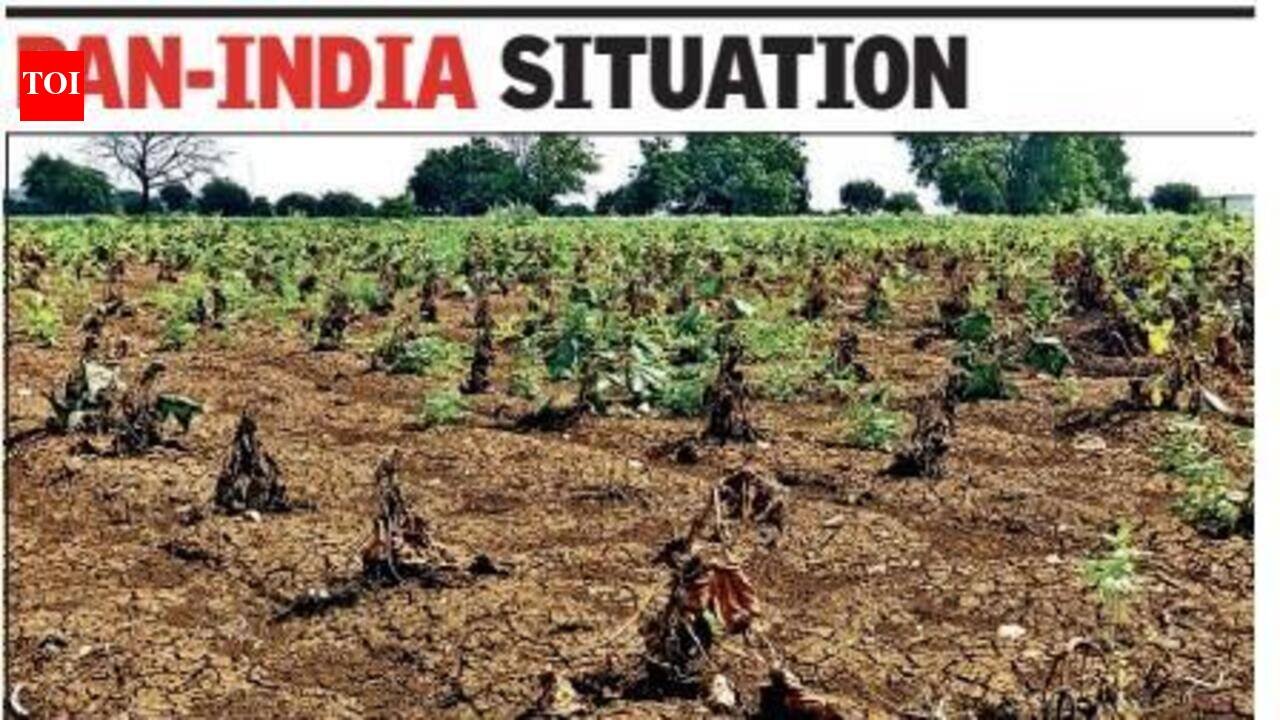
Pune: Maharashtra’s drought isn’t the result of one dry spell — it’s the cumulative effect of a faltering monsoon, week after week, since June.An analysis by India Meteorological Department (IMD) shows the state has now logged a rainfall deficit of 18%. The shortfall was concentrated overwhelmingly in two regions — Marathwada and Vidarbha.As of Sept 25, Maharashtra received 798.2mm of rain against a normal of 970.9mm. Marathwada’s deficit stood at 38% and Vidarbha’s at 23%.Satyaban Bishoyi Ratna, head of climate application and user interface at IMD Pune, said the pattern behind those numbers made this drought different from a typical bad monsoon year.“Of the 17 weeks tracked so far, Marathwada recorded deficient to large-deficient rainfall in 12 of them, and Vidarbha in 11. Marathwada has stayed continuously deficient to large-deficient from mid-Aug onward. Vidarbha has followed almost the same trajectory, broken only by a single week of excess rain in Sept,” Ratna said.The picture has been far from uniform even within the worst-hit regions. In Marathwada, the deficit ranges from 33% in Nanded to 45% in Dharashiv. In Vidarbha, it spans from 39% in Amravati to 28% in Chandrapur.Elsewhere in the state, the contrast is starker. Pune recorded an 18% rainfall surplus and Nashik a 37% surplus over the same June 1–Sept 25 period.The inclusion of hilly and high-rainfall areas highlights the impact of prolonged gaps between rainy days despite intense spells of rainfall. The uneven distribution of rainfall has affected agricultural activities and left farmers vulnerable, although several dams in the region have reached full storage capacity. IMD data also showed that Maharashtra was among the worst-affected states so far in terms of rainfall deficiency.


