


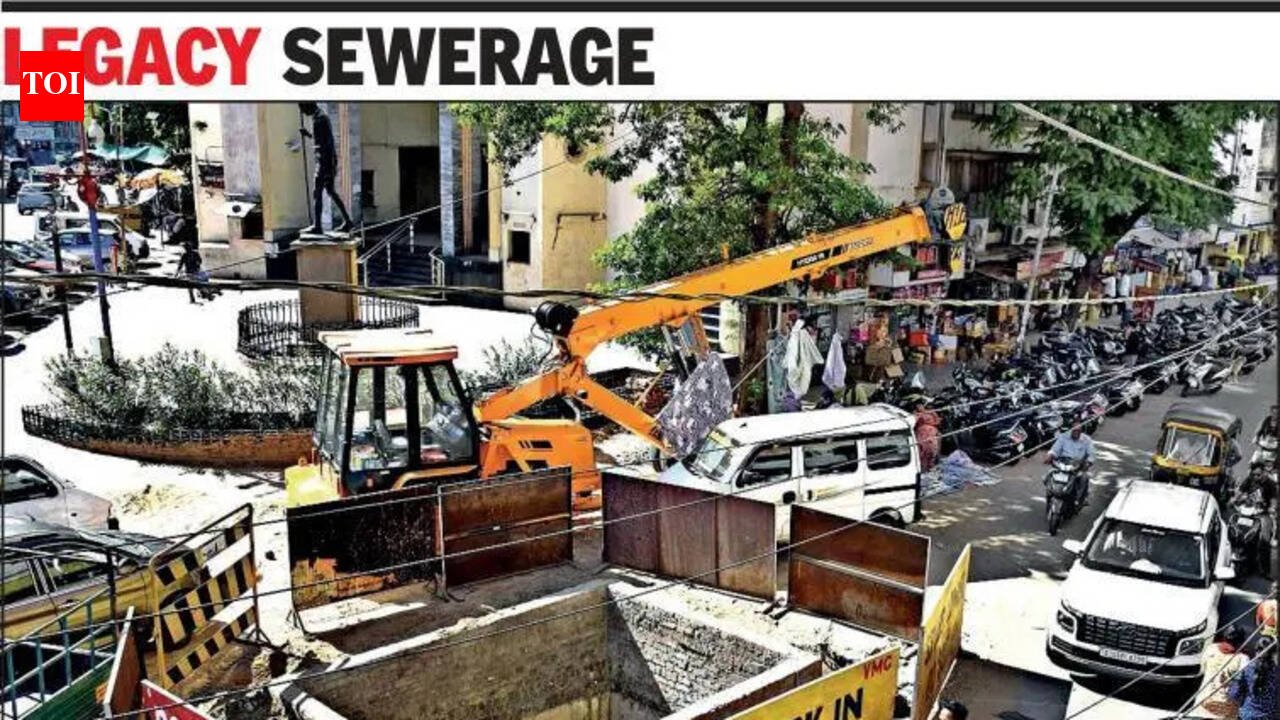
Vadodara: Vadodara: How long can a drainage line last? In Vadodara’s case, one served the city for nearly 125 years. It is now being replaced not because it failed, but because its small size can no longer meet the needs of a growing city.The sewage line stretching from Laheripura Gate to Chhatrapati Shivaji Atithigruh in Kalupura in the old city is currently being replaced. The line runs past Padmavati Shopping Center, Gandhi Nagargruh, Navabazaar Circle and Kalupura, and forms part of the drainage network installed during the reign of Maharaja Sayajirao Gaekwad III. The 240 mm drainage line ends at the Kalupura Auxiliary Pumping Station (APS), which was also constructed during the visionary ruler’s time.The Vadodara Municipal Corporation (VMC) has undertaken the replacement of the sewage line at a cost of Rs 13.62 crore, while the APS upgrade is estimated at Rs 5.43 crore. Work on the pipeline began in October and is expected to be completed by December this year.VMC engineers say the existing pipeline is still structurally sound, but its small diameter has led to congestion and occasional contamination of drinking water in some areas. “Once the new line is installed, these complaints should end,” said executive engineer Haresh Rathwa. The new drainage system will include pipelines of 400 mm, 600 mm and 900 mm diameters.The need for a drainage system in Vadodara was first felt after the city introduced piped water supply on March 29, 1892. An experimental stretch of pipeline laid in 1896 proved successful. However, progress slowed until the outbreak of bubonic plague in 1898–99, which revived the urgency of building a proper sewage network. Soon, large parts of the old city and Baranpura were covered.Expansion of the sewage system was briefly halted due to the famine of 1899–1900, but work resumed under the Baroda State in 1905–06.Known for bringing the best expertise to the princely state, Maharaja Sayajirao Gaekwad III enlisted Baldwin Latham from Britain for the drainage project. Latham, a renowned sanitation engineer, designed the city’s drainage network.Residents may still notice green shafts with arrows at several locations across the old city. These markers indicate the direction of the underground sewage lines — a small but enduring reminder of the city’s century-old engineering legacy.
