


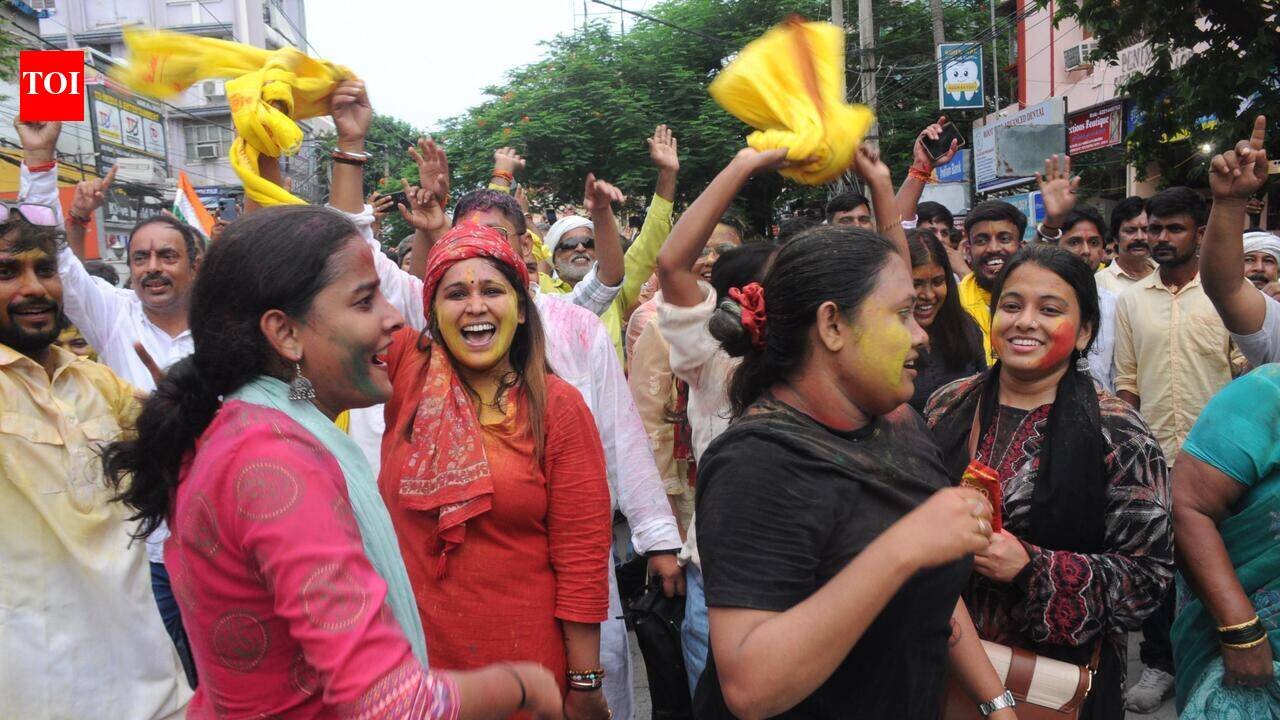
Patna: As soon as Jan Suraaj founder Prashant Kishor’s victory in Bankipur assembly byelection became official, groups of young supporters gathered outside the counting centre and at several locations across Patna, waving Jan Suraaj flags, raising slogans and celebrating what they described as a “victory of Bihar’s youth”.For many first-time and young voters interviewed by TOI, the result represented more than the election of a new MLA. Several said their voting decisions were influenced by concerns over alleged paper leaks, unemployment, delayed recruitment and the police action during recent student protests.While caste equations, local issues and anti-incumbency were key factors in the contest, the bypoll was also the first electoral exercise in Bihar after student protests over the alleged NEET paper leak and other recruitment-related issues. Some young voters said they viewed the election as an opportunity to convey their concerns to the political establishment.In recent months, students across the state have staged protests demanding fair examinations, transparent recruitment, timely govt jobs and accountability over repeated paper leak allegations. Patna witnessed large demonstrations.Political observers said Kishor’s campaign placed considerable emphasis on education, governance, employment and systemic reforms alongside local issues. Some young voters said these themes resonated with them more than traditional political messaging.A 22-year-old engineering student, Rajneesh Kumar, said, “This election was not only about choosing an MLA. We wanted leaders to understand that our biggest concern is jobs and fair examinations. We voted for change because our future is at stake.”For Zainab Abedin, a first-time voter, the election represented an opportunity to move beyond conventional political choices. “The recent student protests changed the mindset of many first-time voters. This was our chance to vote for someone who could work for our generation and those to come. Democracy is about giving new leaders an opportunity, and I wanted to support someone who deserved that chance,” she said.Another first-time voter, Ananya Singh, a college student, said, “Many of us participated in or supported the student protests. We wanted our vote to reflect our frustration. Employment, transparency and education mattered more to us than old political loyalties.”Bhagya Bharti, a 25-year-old student activist who was taken into police custody during protests over the alleged NEET paper leak, said the bypoll result reflected what she described as public resentment over the govt’s handling of the demonstrations.“This mandate is not only for Kishor but also a message from students and their parents. We were detained, tear gas was used against protesters, and even women were sent to jail. The govt should apologise for playing with our future. I voted in Bankipur, and the ink on my finger proves that if young people are suppressed, they know how to respond democratically through the ballot,” she said.Hemant Raj, a sociology student in Patna University, said issues such as alleged paper leaks, unemployment and the handling of student protests influenced the voting choices of many young electors. “Young voters wanted to protect their future. Instead of getting distracted by caste politics, many of us voted on issues that directly affect students. We supported Prashant Kishor because we believed he would raise our concerns in the assembly,” he said.Beyond campaign rallies, Gen Z volunteers also played an active role online, leveraging social media to circulate campaign messages, discuss local issues and encourage voter participation. Their digital engagement complemented on-ground mobilisation in coaching institutes, universities and residential neighbourhoods.
