



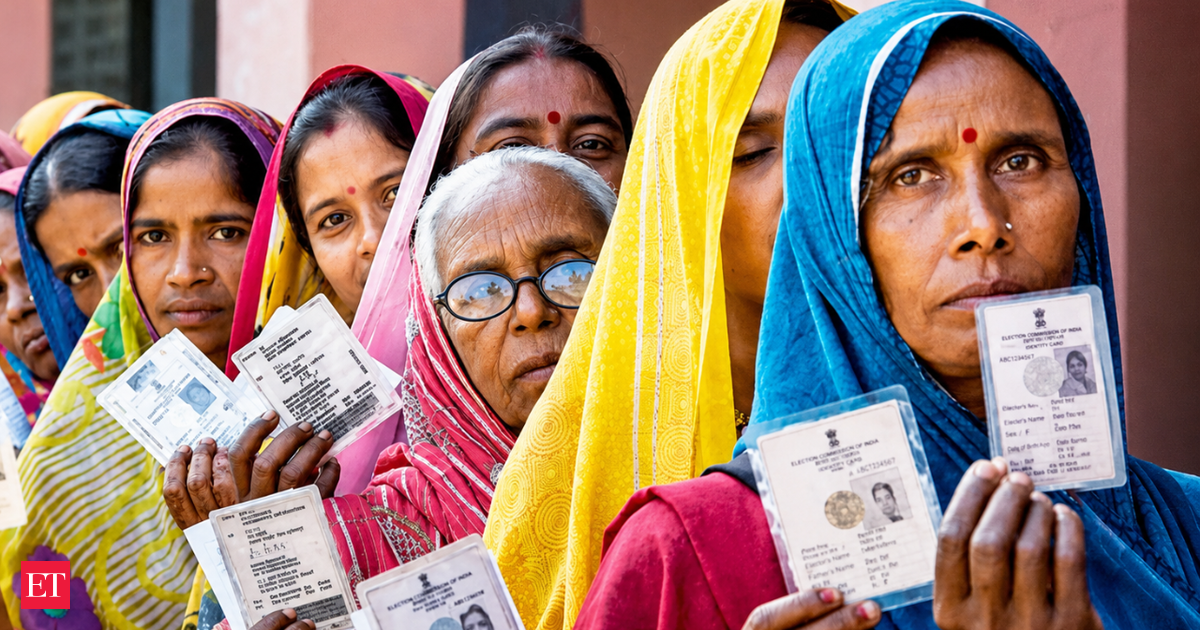
Recent assembly elections have shown that women voters increasingly cut across caste and social identities, often reinforcing-or upsetting-carefully crafted political calculations.
After the SP outperformed BJP in the 2024 Lok Sabha polls on its PDA (Pichhda, Dalit, Alpsankhyak) plank, caste had emerged as the principal faultline for the 2027 contest. At the same time, controversies such as the UGC row and the alleged theft of Ram temple donations dented the BJP’s Hindutva narrative. The latest announcements suggest both parties are now seeking to add a gender layer to their caste coalitions.
On Wednesday, the Akhilesh Yadav-led SP promised Rs 40,000 annually under the Stree Samman Samriddhi Yojana if voted to power. Within hours, CM Yogi Adityanath launched free bus travel for women above 60 under the Lokmata Ahilyabai Matrushakti Yatra and reiterated the rollout of the Rani Lakshmibai Scooty Yojana for meritorious undergraduate girls.
Both parties also embedded caste symbolism in their outreach. BJP invoked Ahilyabai Holkar, revered among the Dhangar community akin to Uttar Pradesh’s influential Pal caste, and Rani Lakshmibai, born into a Brahmin family in eastern Uttar Pradesh.
The SP unveiled its promise through Dimple Yadav, a Thakur by birth and married into the Yadav family, alongside its Muslim MP Iqra Choudhary and Dalit MP Priya Saroj, mirroring its PDA formulation.
Women-centric welfare has emerged as an electoral template — from Madhya Pradesh and Karnataka in 2023 to Maharashtra in 2024 and Bihar in 2025, despite concerns over fiscal sustainability.


