


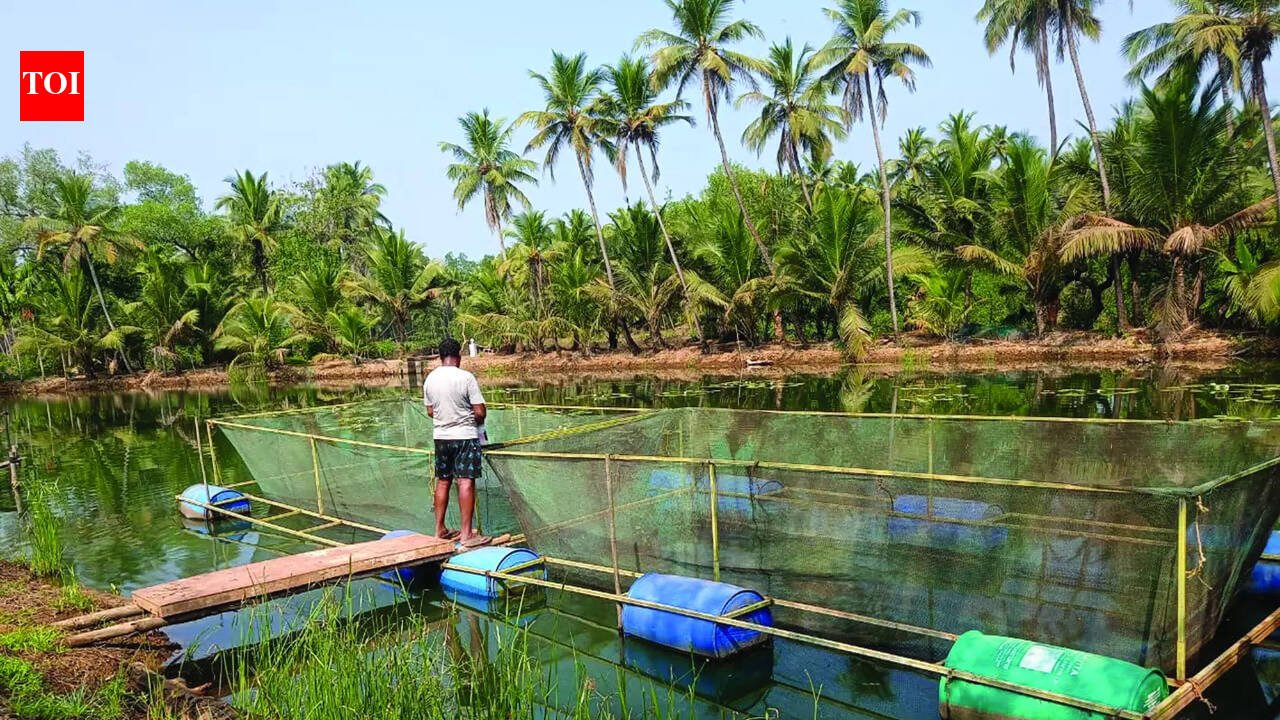
Panaji: Two women fish farmers, Maria Joana Rosaria Fernandes from Panchwadi, Ponda, and Silvia Fernandes from Curtorim, Salcete, embraced river cage farming under the Pradhan Mantri Matsya Sampada Yojana (PMMSY), turning stretches of river into thriving fish farms.Cage culture is an emerging aquaculture practice that allows fish to be farmed in open waterbodies such as rivers and lakes. By providing a controlled environment within flowing water, this method ensures steady yields, income, and employment for local communities.Maria installed six river cages in Muxer, Panchwadi, to farm Asian seabass (Chonak), a fast-growing species in high demand. “With careful planning and modern techniques, we wanted to show that river farming could be both sustainable and profitable,” a fisheries official said. Each crop is expected to yield around 2.5 tonnes, with fish harvested at 1–1.5kg, and supplies are directed to local markets to ensure freshness and fair pricing.“The cost of structure gets covered in the subsidy and the profits cover the cost of the inputs besides giving us fish who’s quality is assured. It is a win-win situation,” said Maria Joana Rosaria Fernandes.In Curtorim, Silvia installed 12 river cages at Ullando. “This is about creating opportunities for women and inspiring others in the community to explore modern, eco-friendly methods of livelihood,” the official said. Her project also focuses on Asian seabass, with similar production and market goals.“I have been stocking about 500 fish seeds per cage in 12 cages, where I culture pomfret and Asian seabass. The venture is performing well and I am proud of being among the few women in the sector. I encourage others, especially women, to utilise govt schemes, pursue entrepreneurship and become self-reliant,” said Silvia.Both projects received financial support under the women beneficiary category of PMMSY, with each receiving a subsidy of Rs 10.8 lakh from the state directorate of fisheries.“The success of these fish farmers is a shining example of how women can lead the Blue Revolution in Goa. These projects help provide fresh, high-quality fish to local communities while creating sustainable livelihoods,” the official said.“River cage aquaculture is a replicable, profitable, and environmentally responsible model. With the right support, technical know-how, and determination, small-scale fish farming can flourish while contributing to economic growth. We are hopeful that such initiatives can inspire other women across Goa to become self-sufficient, thus embracing the Swayampurna Goem model,” the official added.


