


Most workplace discussions online are about layoffs, burnout, or demanding managers. That is why a recent LinkedIn post has caught the attention of thousands of people. It is not because of a promotion or a resignation, but because of how a manager responded when an employee admitted she was struggling.Mumbai-based startup founder Dhruv Mukherjee shared that one of his employees asked him to reduce her salary after a difficult month at work because she felt she had not performed well enough. But instead of accepting her request, he chose a very different approach. His post has now started conversations about empathy, leadership, and how workplaces can support employees during challenging times.
It started with a drop in performance
In his LinkedIn post, Mukherjee said Aarya, the Content Operations Lead at Blue Lobster Media, had been facing a difficult few weeks.He noticed that content approvals were getting delayed, tasks that earlier took about an hour were now taking nearly four hours, and the quality of work had also been affected.At first, Aarya told him she would improve. But when the situation remained the same, Mukherjee started wondering whether the role had become too demanding. He even suggested that it might no longer be the right fit for her.
She offered to take a pay cut
The conversation became more personal when Aarya admitted that she was disappointed with herself.Mukherjee said she asked for one more chance to prove herself and even offered to take a salary cut because she believed she had not done justice to her role.As they continued talking, he learned that she had been dealing with personal challenges that were affecting her ability to focus, even though she was putting in her best effort.
Support came instead of punishment
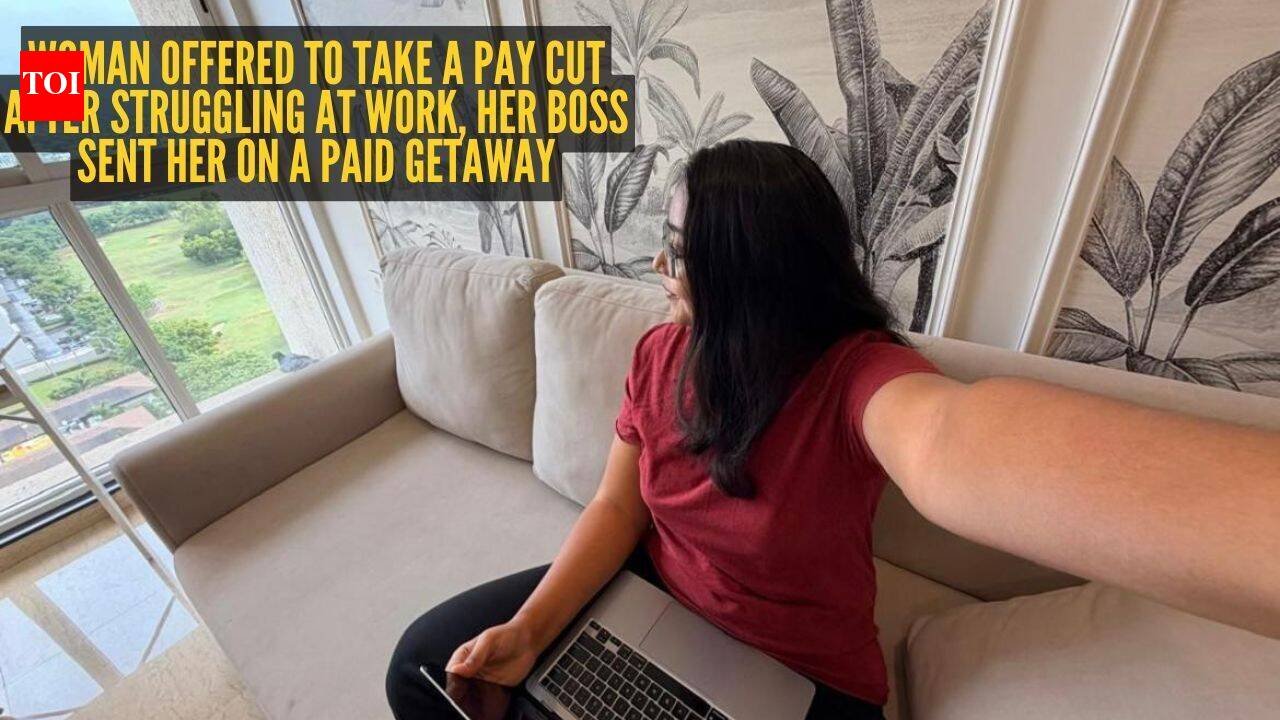
Mukherjee felt the issue was not about commitment, so he decided not to reduce her salary.Instead, the company paid for a three-day Airbnb stay. She spent two uninterrupted days working from a different place and one day taking a break. Mukherjee also arranged a desk for her at a co-working space close to her home so she could work without distractions.While he admitted that the decision added to the company’s expenses, he said it was worth it. According to him, Aarya now enjoys coming to work again, feels proud of her work, and her renewed motivation is reflected in her performance.Concluding his post, Mukherjee wrote that employers often forget employees are “people first, professionals second,” adding that “a little empathy goes a long way” in building stronger careers and teams.
LinkedIn users appreciated the gesture
The post quickly drew reactions from LinkedIn users, many of whom praised Mukherjee’s decision. Several people said employees always remember leaders who support them during difficult times, while others said empathy and accountability can exist together.One user wrote, “Love this Dhruv Mukherjee you created psychological safety that rarely shows up on a balance sheet, but it quietly changes how people perform. When someone feels safe enough to admit they’re struggling, the real problem becomes much easier to solve.”Another commented, “Great call, Dhruv. Leading with empathy like this is what builds real loyalty and long-term performance. People remember how you showed up for them when things were hard.”A third said, “Empathy isn’t lowering standards, it’s removing barriers so people can meet them. Great cultures are built by knowing when someone needs coaching instead of consequences. The key is pairing compassion with accountability, exactly as you did.”Disclaimer: This article is based on a social media post and online reactions. The Times of India has not independently verified the claims made in the post.Thumb image: LinkedIn
