


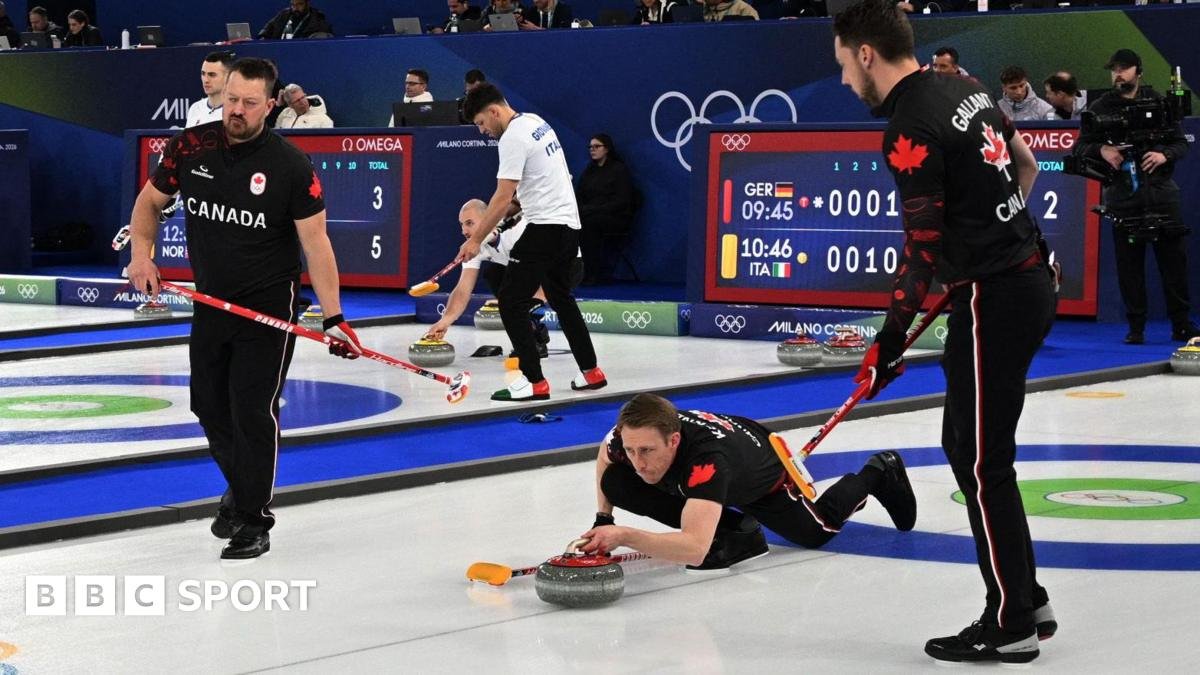
Each stone has a sensor on it to ensure players release their grip on the handle before the thick green line that runs across the ice, known as the hog line.
If they do, the sensor flashes green. If not, a red light shows.
Kennedy’s stone showed green, but Eriksson and his Swedish team-mates thought they saw the Canadian give the stone an extra push with his finger after letting the handle go. The video evidence appears to back that up.
But, as BBC Sport curling commentator Steve Cram asked former world champion Jackie Lockhart, is it actually cheating and does it make a difference?
“You should not be touching the stone after you’ve released it,” Lockhart said. “If you touch it with a broom, it’s burned and removed.
“He’s released that stone, then poked it with his finger – I’m not sure why. Is it to push it a little bit harder because he felt he didn’t give it enough?”
But will anything come of it?
When the teams came off the ice, they would have signed a declaration saying they are happy with the result. So, unless a protest was submitted at that stage – and as far as we know there wasn’t – the result will stand.
But what will this mean for the Canadians – who are considered medal contenders and have won their first three matches – in the rest of the Games?
“The question we should be asking is if Oskar is challenging him, has he [Kennedy] done it before?” Lockhart added.
“Have they been doing it at other Championships and now they’re being called out on it?
“I’m a bit disappointed with the Canadians if that’s what they’re doing. We’ll all be looking now.”


