


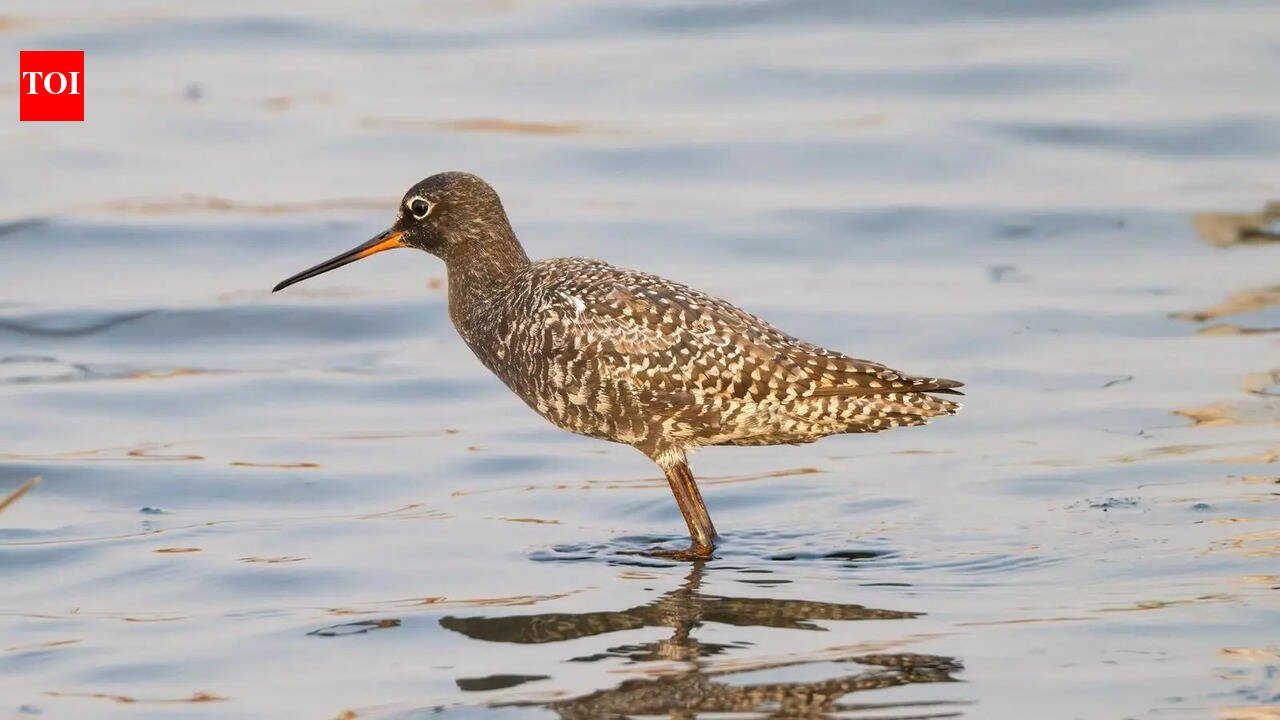
Gurgaon: Even as temperatures rise across the NCR region and humans retreat indoors, wetlands and green patches have been buzzing with activity because of a brief but striking ecological transition — winter migratory birds are checking out and the first wave of summer birds are making the region their home for the coming weeks. This overlap makes early April one of the most dynamic phases on birdwatchers’ calendars.Waders such as sandpipers and godwits — all winter guests — still linger across the marshes in their bright breeding season plumage but their numbers are thinning since many have already begun their northward journey.At the same time, summer visitors have started making their presence felt. Species such as the Indian golden oriole, common hawk cuckoo, Indian paradise flycatcher and blue‑cheeked bee‑eater have already been sighted from multiple pockets while birders expect pittas and bitterns to arrive in greater numbers in the upcoming days.“We are in a transition period: winter migrants are leaving in full breeding plumage while summer migrants are beginning to arrive. It’s a rare moment when both seasons overlap, offering birdwatchers a spectacular view,” said Pankaj Gupta, a bird expert from Delhi Bird Society.
A pair of blue-cheeked bee-eaters. This summer bird has already been sighted in multiple pockets across NCR
There is enough happening in the world of birds in summer for enthusiasts to brave the heat. “Summer in Delhi NCR is often reduced to a single, overwhelming number — 45°C and rising. The blazing sun, dry winds, and shimmering roads dominate most conversations. But for those who pause and look beyond the heat, summer quietly unfolds a completely different story — one written in feathers, songs and life,” said Mohit Mehta, a local birder. “For a birdwatcher, summer is not just a season of survival; it is a season of transformation.”Experts say the songs heard during this period are as significant as the sightings. Cuckoo calls echo across wooded patches while quails and francolins announce their territories from grasslands. These vocalisations, birdwatchers point out, are closely tied to breeding behaviour and signal heightened activity among resident species as well.“Resident birds are busy courting, nesting and defending territories. What we hear in the mornings are not random sounds but clear biological signals,” said Mehta.
An Indian paradise flycatcher, a summer migratory bird, captured in Bhondsi
Urban wetlands and scrub‑forest mosaics play a crucial role during this phase, offering food, water and nesting sites at a time when resources begin to shrink. Regular birdwatching walks during the transition period, such as one scheduled in Chandu on April 12, aim to document both the tail-end of winter migration and the early summer arrivals.
The sighting of an Indian golden oriole with its eye-catching yellow plumage is a signal that the seasonal shift has begun
With water bodies already under pressure and temperatures climbing, conservationists say this short window highlights how fragile—and vital—these habitats are. “Nesting success is quite low in the wild, often only a couple of nests survive out of several, so this phase is crucial for sustaining bird populations. Protecting these habitats from disturbance, especially during breeding season, is essential because even minor human interference can impact nesting success and long-term bird diversity,” said Rakesh Ahlawat, a birder.
