


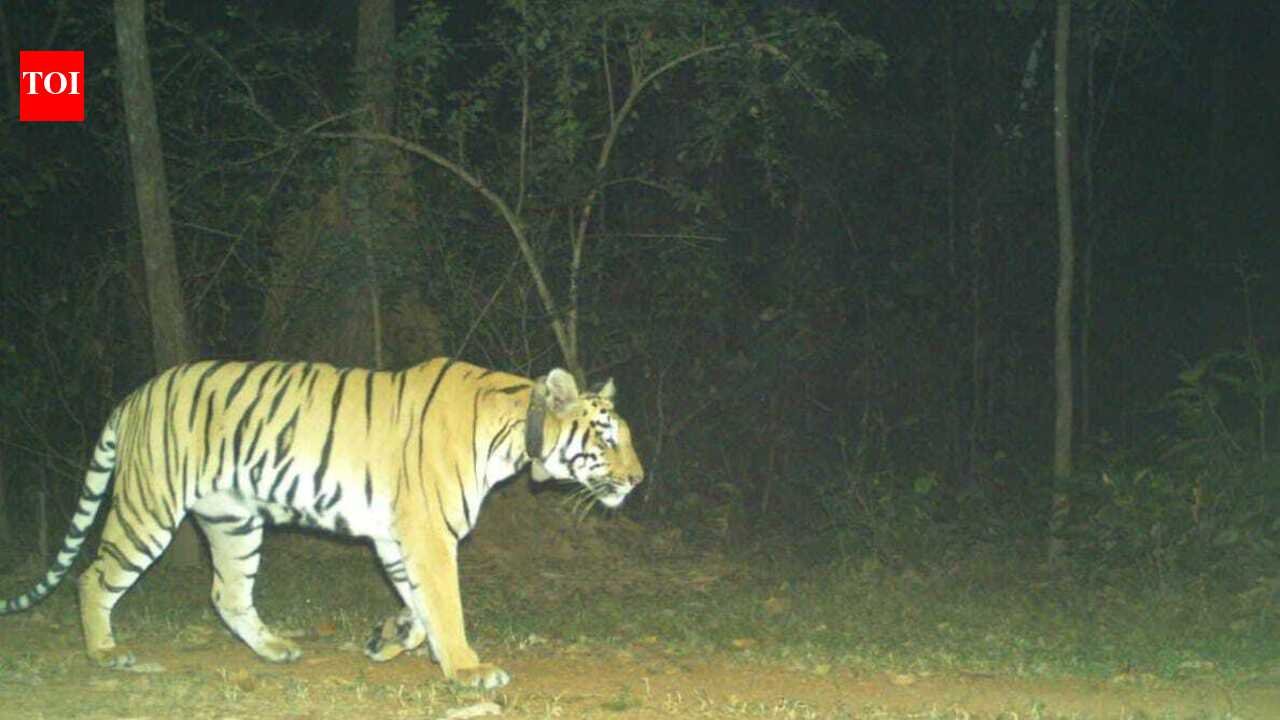
Bhubaneswar: With tigress Yamuna not encountering a mate even after close to two years of its release, wildlife authorities have planned either to introduce a male tiger in Kuldiha wildlife sanctuary or bring Yamuna back to Similipal Tiger Reserve.Wildlife authorities said Kuldiha being a small sanctuary and part of the larger Similipal biosphere, there is no tiger except Yamuna. If Yamuna is left to its fate alone, the very purpose of translocation won’t be served. Yamuna had been released in Similipal’s south division in Oct 2024 and since then it was never seen in Similipal.PCCF (wildlife) Prem Kumar Jha said predators like tigers, once introduced in a new habitat, where there are already tigers, try to look for fresh and new forest. “There was already dominance of tigers having territory fixed. To avoid territorial fights, tigers disperse a bit. Luckily, Yamuna found Kuldiha its safe territory but in the process of dispersing, Zeenat had gone too far to West Bengal,” Jha said.In case of Yamuna, which has stayed quite a long time in Kuldiha, hunting animals freely without territorial dispute, the wildlife will make effort to introduce a male in Kuldiha. “In Oct, when we proceed for the second phase of tiger translocation, coinciding with that we will try to introduce a male tiger in Kuldiha, if everything goes as planned. Another option left is bringing Yamuna back to Similipal,” Jha explained.Wildlife authorities are also mulling use of pheromone chemical to attract mates. It is a kind of perfume, which forest dept uses in case of several species to trigger a chemical courtship. “We also have the option to use pheromone. But it is the last option and after taking advice from scientists on its use, we may go for it to deal with Yamuna,” Jha further said.The last time the tigress was in Similipal’s core was when it was lodged in a soft enclosure for 10 days before its release into the wild. Currently, Yamuna’s movement is being traced through radio collar and camera traps. Since the battery of the radio collar will get exhausted soon, tracking through radio collar may not be possible any more, wildlife officials said.
