


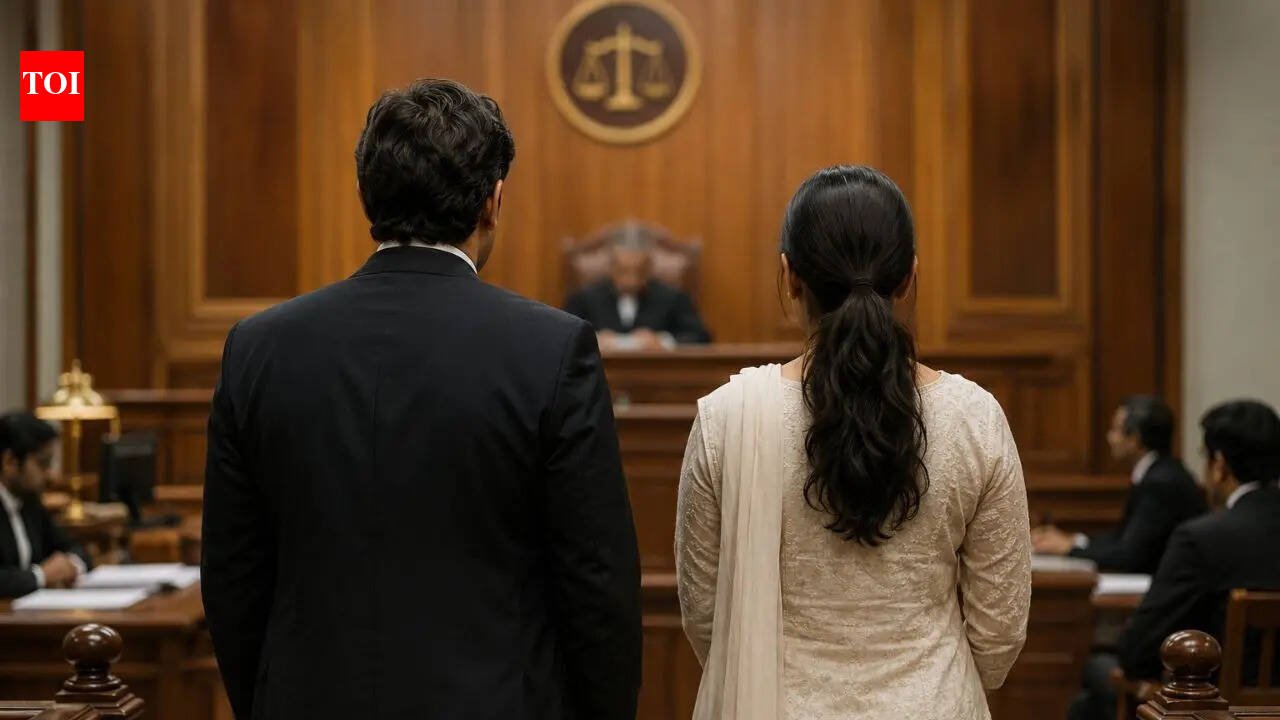
NEW DELHI: The Rajasthan high court has quashed criminal proceedings against a man and his elderly parents, holding that the ex-wife abused the process of law by continuing to pursue a criminal case against her former husband’s family even after consenting to a divorce and accepting Rs 20 lakh as permanent alimony.Justice Anoop Kumar Dhand of the Rajasthan high court, passed the order allowing a petition filed by Satyapal Sharma, aged 65, and his wife Sita Devi, aged 62 — the parents-in-law of the complainant Prachi. The court made it clear that once the marriage had been dissolved and the woman had walked away with a full and final settlement, persisting with criminal proceedings against the family served no purpose other than harassment.What was the disputeThe marriage between the complainant and the petitioners’ son had taken place on 27 November 2009. After the marriage ran into trouble, the complainant filed an FIR in 2013 against the entire family, including her husband and his parents, for offences under Sections 498A, 406, 302 and other provisions of the IPC.In 2018, a chargesheet was filed and charges were framed against the petitioners and their son before the Additional Chief Judicial Magistrate. During the pendency of the criminal trial, the husband filed for divorce.Family court in Jaipur dissolved the marriage on 18 October 2019. The complainant challenged this before the Rajasthan high court, where a compromise was reached.Under the compromise, the husband agreed to pay Rs 20 lakh as permanent alimony, and the wife’s appeal was dismissed by the Division Bench on 12 December 2024. A decree of divorce was thereafter formally prepared on 17 February 2025.Despite receiving the full alimony amount and consenting to the divorce, the complainant neither appeared before the trial court to record her evidence nor withdrew the criminal case. The court observed that since 2018, neither the complainant nor any of her witnesses had appeared in the witness box despite several summons being issued to them.What did the court ruling saysThe high court observed that the complainant, “having received the decree of divorce from the husband without contest on the basis of the terms of the compromise, cannot now be allowed to go back upon their proclaimed stand and take a somersault.”The court further found that the settlement clearly covered both the matrimonial and criminal proceedings. It observed that “from the agreements entered into between the parties and which are confirmed by her in Court, no doubt is left that this was a compromise/settlement for divorce by consent decree as well as for quashing the criminal proceedings.”By refusing to honour that agreement, the court said, the complainant “is certainly misusing the process of the Court.”“This clearly indicates a reverse trend where the wife despite having compromised the dispute with her husband and on that basis obtained decree of divorce by mutual consent, yet want the prosecution against the husband and his family members to continue so that they are compelled to go through the ordeal of attending the protracted proceedings in the criminal cases, and suffer ignominy of facing the whole process of trial.“The court also cited the Supreme Court’s observations in Preeti Gupta v. State of Jharkhand (2010), which had noted “that many complaints under Section 498A IPC are filed in the heat of the moment over trivial issues without proper deliberations” and that courts must be “extremely careful and cautious in dealing with these complaints.” It reiterated that “court proceedings ought not to be permitted to degenerate into a weapon of harassment or persecution.“The court concluded that “continuation of the proceedings against the petitioners tantamounts to abuse of process of law” and quashed all criminal proceedings pending against the two petitioners — the husband’s parents — and allowed the petition.
