






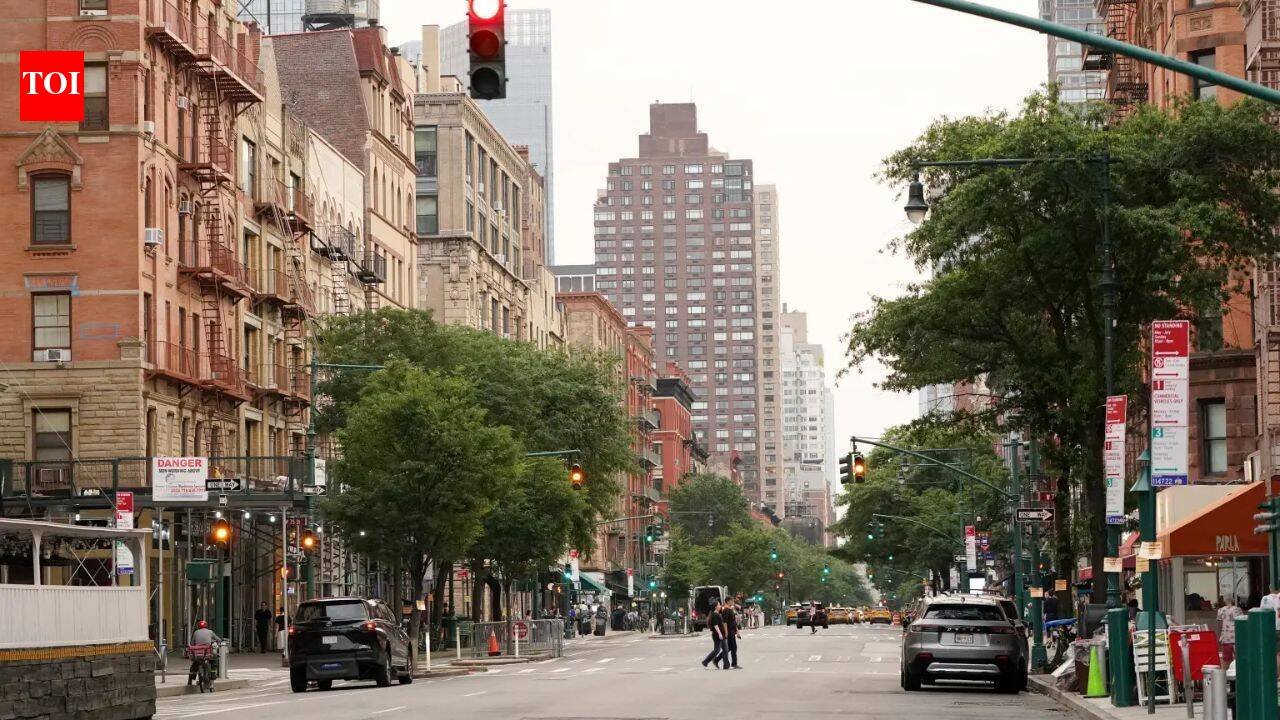
Thousands of New York City homeowners are scrambling to prove that their properties are their primary residences after receiving notices that they could be subject to the city’s new pied-à-terre tax.The New York City department of finance sent the notices to owners of high-value residential properties identified as potentially not serving as primary residences. Homeowners who believe they have been wrongly classified must apply for a primary residence exemption by submitting documents proving they live in the home.The New York Post cited case of Manhattan resident Karen Young, who said she has lived in her apartment for years but was still required to go through the exemption process. Without an exemption, she could face an additional annual tax bill of about $42,824.“It’s a cumbersome process to prove that I’m a primary resident, which just seems absurd. My jury summons come here, I pay my taxes from here, my utilities,” Karen said.What is the pied-à-terre tax?The pied-à-terre tax is a new annual surcharge on certain high-value residential properties in New York City that are not used as the owner’s primary residence. The measure, often referred to as the “pied-à-terre tax”, became law after it was included in the New York State budget legislation.The proposal was announced jointly by New York City Mayor Zohran Mamdani and New York Governor Kathy Hochul in April 2026 and was later enacted through the New York State budget legislation in May 2026.Under the law, the surcharge applies to one-, two- and three-family homes, condominiums and co-operative apartments that exceed specified value thresholds and do not serve as the primary residence of the owner, an immediate family member or a tenant.For the 2026-27 and 2027-28 tax years, it applies to one-, two- and three-family homes valued at more than $5 million, while separate value thresholds apply to co-ops and condominiums. Owners whose properties qualify as their primary residence can apply for an exemption.The Mamdani administration has said the tax is intended to ensure that owners of luxury second homes “pay their fair share” and to raise an estimated $500 million annually to help fund city services and reduce New York City’s budget deficit.What are homeowners doing to avoid the tax?Homeowners who believe they have been wrongly identified as owners of non-primary residences are applying for a primary residence exemption with the New York City department of finance.To qualify, property owners must submit documents proving the home is their primary residence. These include their most recent federal or state tax return, or, if unavailable, a combination of documents such as a driver’s licence, voter identification card and other proof of residency. Additional documentation may be required if the property is occupied by a tenant, an immediate family member or is owned through an LLC, corporation or trust.Many homeowners have also reportedly hired tax attorneys and real estate professionals to help navigate what they describe as a complicated exemption process. Some have complained about technical glitches in the online portal, extensive documentation requirements and confusion over the appeals process, prompting the city to extend the deadline for filing exemption applications.


