



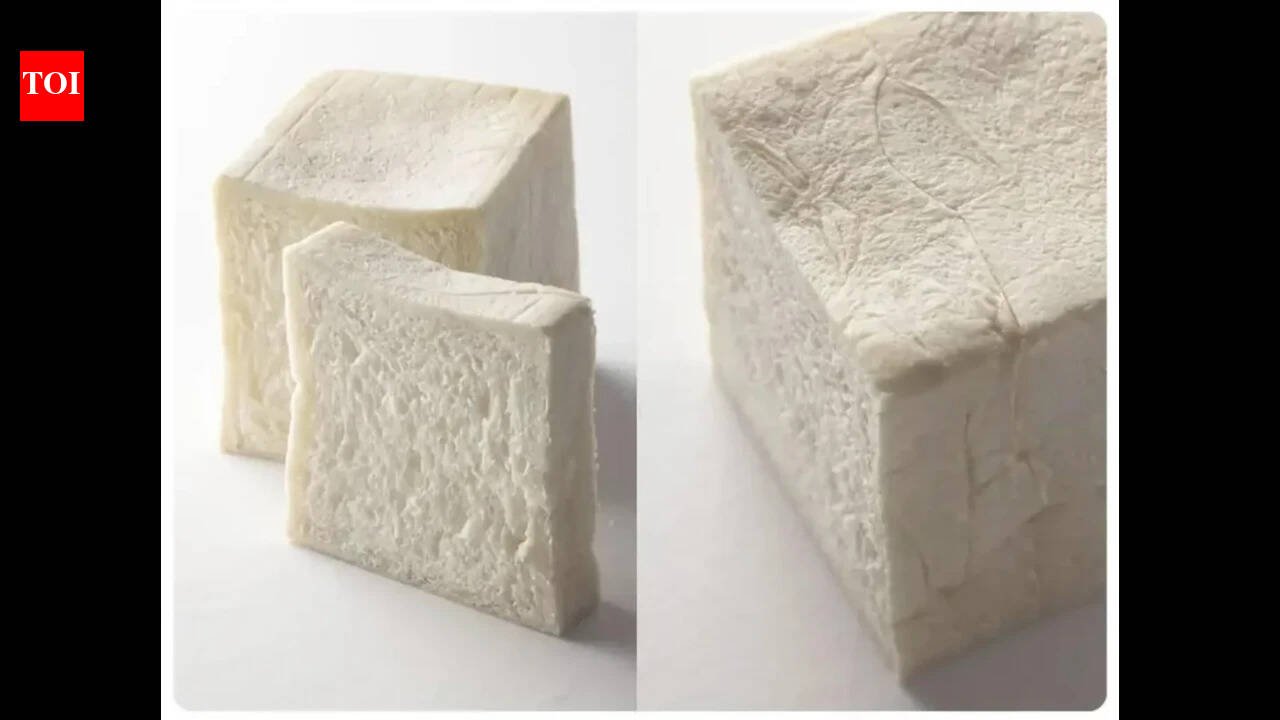
For most of us, a loaf of bread isn’t complete without its golden-brown crust. That crisp outer layer is often seen as a sign of perfect baking, adding both flavour and texture. But in Japan, there’s a unique variety of bread that breaks this rule entirely. Known as white crust bread or mukashi pan in some bakeries, this soft loaf emerges from the oven with a pale, almost snow-white exterior, leaving many first-time visitors wondering how it is even possible. The answer lies not in unusual ingredients but in an ingenious baking technique. Scroll down to read more…
It’s baked differently
The signature white crust is created by baking the dough inside a covered Pullman loaf pan, also called a lidded bread tin. As the dough rises, it fills the enclosed space, preventing the surface from being directly exposed to the oven’s hot, dry air.Without direct heat reaching the outside of the loaf, the crust remains soft and pale instead of developing the familiar golden-brown colour.
The Maillard reaction never fully kicks in
Most bread turns brown because of the Maillard reaction, a chemical process in which amino acids and natural sugars react under high temperatures, usually above 140°C. This reaction produces hundreds of flavour compounds responsible for the toasted aroma, darker colour and crisp crust associated with freshly baked bread.
In a covered loaf pan, however, moisture is trapped around the dough, keeping the surface cooler and more humid. These conditions slow down the Maillard reaction, allowing the loaf to stay white while still baking through completely.
The result is an incredibly soft loaf
Japanese baking places great emphasis on texture, and white crust bread is prized for its cloud-like softness. Because the crust never hardens, each slice remains tender from edge to edge, making it ideal for sandwiches, fruit sandwiches and the famous Japanese egg salad sandwich.Many bakeries also use techniques such as the yudane or tangzhong method, in which flour is mixed with hot water before the dough is prepared. These methods help the bread retain moisture, creating an even softer crumb that stays fresh for longer.
It’s designed for delicate flavours
Unlike artisan sourdough or rustic country loaves, Japanese white bread is intentionally mild. The absence of a toasted crust allows fillings such as fresh cream, strawberries, custard, pork cutlets or fluffy egg salad to take centre stage without competing with strong roasted flavours.This subtle taste has made the bread a staple in Japanese cafés and convenience stores, where beautifully layered sandwiches are as much about texture as they are about flavour.
It reflects Japan’s attention to craftsmanship
Japanese baking is known for precision, consistency and attention to detail. Producing a loaf with a perfectly white crust requires careful control of temperature, humidity and baking time. Even slight changes in heat can trigger browning, so bakers closely monitor every stage of the process. The result is a loaf that may appear simple but showcases remarkable technical skill.At first glance, white crust bread may seem unfinished, especially to those accustomed to dark, crusty loaves. Yet its pale appearance is entirely intentional. By limiting browning and preserving moisture, Japanese bakers have created a bread that is exceptionally soft, subtly flavoured and perfectly suited to the country’s delicate culinary traditions. Sometimes, breaking one of baking’s oldest rules is exactly what makes a loaf unforgettable.


