



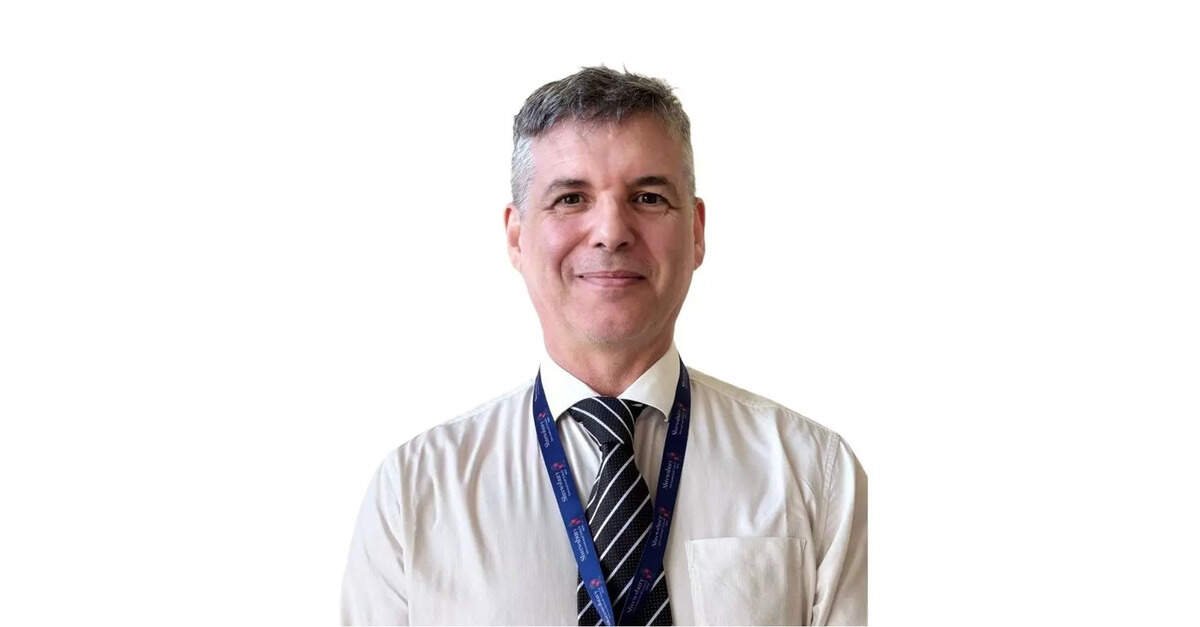
By Neil Pettitt.
As I look at the cursor blinking in front of me on my screen and consider where to begin this evaluation of my philosophy on science teaching, I think of my Grade 7 class who just left the room. They have been preparing for a practical class tomorrow. They are going to be burning different foods to try to work out how much energy is contained in them. In preparation they have been writing out what they think will happen and preparing how to record their results. Like many pupils new to international schooling, they are still getting used to the idea that science is a practical subject.For many of my pupils, their previous experience of science prior to international schooling has been a lesson where they open a textbook at the beginning of the academic year, read the chapters, learn the facts and parrot the answers during their exams. I haven’t used a textbook in my teaching for over 15 years, so for my pupils, there comes a period of adjustment where they are relearning what science really is. The feedback I get mostly is that this method, whilst sometimes challenging, is a positive shift.
Science is not about being able to memorise a series of facts; it’s about understanding the process of the scientific method, being able to observe, analyse and evaluate. Knowledge is fine but it is very superficial. Everyone who went to school in the UK when I was a student learnt that the Battle of Hastings was in 1066. That year is etched into our brains, but what use is that information without any context of why it came to pass or what happened as a result of it? Knowledge can be the basis of developing skills and understanding, but it is just that, a beginning. The correct application of knowledge to enhance experiential learning is what makes the difference between someone who can recite information and someone who can solve a novel problem.
My current Grade 7 pupils will leave school in 2031. They will hopefully leave us with a holistic education that will be a gateway to higher education. This could mean they won’t enter the workforce until almost 2040. How can we possibly prepare them now for specific jobs that will exist in 2040, considering the pace at which the world is changing? There is simply no way to know what jobs will exist by then and how they will be carried out. Let’s count backwards. Our current A-Level pupils will leave us next June, in 2027. Among them will be my son, who started his schooling in 2011 in an international school nursery and has been fortunate to have his whole education delivered internationally. The world has changed immeasurably in that time. I am grateful for the international education that he has received, which has allowed him to have a growth mindset, be a critical thinker and be well on the way to becoming a strong, independent young man. So the ability to deconstruct, to be objective, to collect data and effectively analyse it, to identify outlying information and propose causation, to know when correlation is not causation are skills that remain constant even when the specifics and the context of the problems change. None of these skills is found in a text book.
Now this is all well and good, but what does this mean in practice for international school pupils? It means first and foremost that science is an inherently practical subject. Wherever possible, pupils are carrying out practical science on a regular basis, both in the lab but also in the world around us. Practical learning builds upon the theoretical content, and that is the starting point. This gives them the chance to develop the very skills we are discussing. Not simply the skills to manipulate the equipment but the skills to plan effectively to test a specific hypothesis, to collect data in an appropriate manner and volume, gather and analyse this data and represent it graphically with articulation and clarity.
They also learn the skills to reflect on the limits of their experimental technique and evaluate how to improve on this should they repeat the process. In allowing these skills to develop in an age-appropriate environment, we allow the depth and scope of the learning to become increasingly complex as the pupils progress through the school. Eventually, they are able to work independently and find solutions through peer discussion, with the teacher only supporting where necessary. They are also encouraged to make mistakes and be comfortable in articulating ideas even when they aren’t sure of their validity. This is a really key mindshift from some of the more traditional approaches to schooling. It is only through mistakes that we learn. My late father was an architect for over 50 years. He always told me, ‘Nobody learns anything from the buildings that stay standing. We learn from the buildings that fall down’. By allowing our pupils’ metaphorical buildings to fall down in the safe environment of the school, we can ensure that they are better prepared when it really matters, be that in the exam room or in the real world. Independent thinking and learning becomes a natural process and as such, can be applied beyond the classroom. This then is where the lines between the learning of science and the learning of life skills join, not becoming blurred but becoming one and the same.
As educators, it is our responsibility to stay apprised of the changing world around us, be it tools for learning, the application of AI or seeing how developing active learning can create individuals who can thrive in a mercurial global environment. Soon, I will enter my fourth decade as an educator, and it would be easy for me to look at the years of achievement behind me and think that I have all the skills I need to be able to do my job. That would be foolish. Teaching is an organic, dynamic and relentless pursuit. There are fashions that repeat every few years, like many professions, but there is also constant innovation, and there is never that one single solution that serves all needs. Educators who are open to change, flexible in their approach to pupils and colleagues alike and are able to see that they have as much to learn as the pupils in their classrooms and laboratories, really understand the tenet of lifelong learning.
Science needs us to think laterally; it needs us to experience and dissect. The world around us is infinitely complex, and science constantly proves to us over and over that there is no one single answer and that observations and discussions need to be continuous. The ability to communicate, reflect and improve is essential to the way we resolve conflicts and approach the problems of the 21st century. In teaching these skills; abstract in their aim; tangible in their connection to the curriculum, we arm our children with the skills to look at the world and society, critique it and ensure that tomorrow’s leaders do not simply repeat what they were told by a previous generation. That they have the cognisance and confidence to always question what is around them. That is the way that societies advance, and objectivity is maintained.
As international educators, we are looking to a whole person education that encompasses all the ideas I have discussed here. In the manner in which the science department is being developed and the educators we choose to put in place to achieve this, I believe that I am drawing on every one of the years of my experience in teaching to build something world-class and unique.
Charles Darwin is often cited as one of the most influential and easily identifiable of scientists from history, so perhaps it is most apt that I leave the closing words to him:
“It is not the strongest of the species that survives, not the most intelligent that survives. It is the one that is the most adaptable to change.”
As the world changes around us at such speed, I hope to be helping to create young people who are able to adapt with it and continue to contribute to its well-being.
The author Neil Pettitt is the Head of Science at Shrewsbury International School India.
DISCLAIMER: The views expressed are solely of the author and ETEDUCATION does not necessarily subscribe to it. ETEDUCATION will not be responsible for any damage caused to any person or organisation directly or indirectly.


