



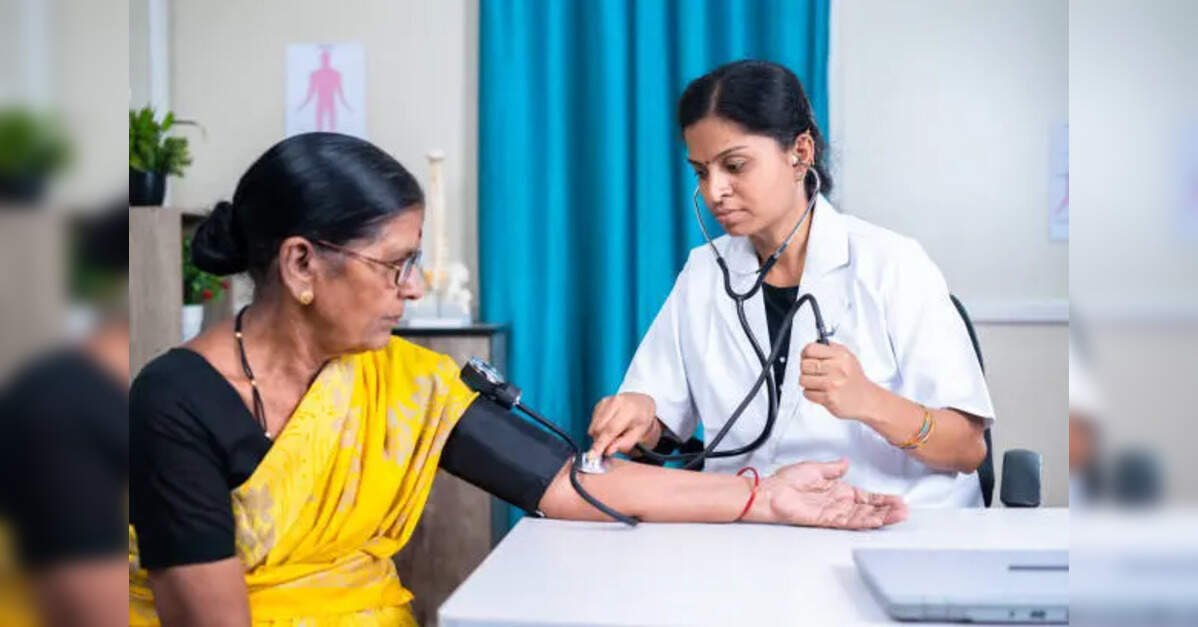
Early detection is still a crucial area in the Indian healthcare system when it comes to rural areas and small towns because the problem is that patients usually delay getting treatment owing to costs and distances. This problem is not limited to just going to the hospital, but also demonstrates that healthcare facilities are still designed for metro cities rather than Tier 2 and Tier 3 towns.
In order to resolve this issue, the healthcare system needs a revamp. Otherwise, the system will become inefficient and unused.
The Distribution Challenge
The health care system challenge in India is not one of scarcity but of inequality. Out of the estimated 1.14 million allopathic physicians in India, almost 80% work in cities that cater to just 30% of the population. It means most Indians have difficulty accessing quality healthcare services.Super-specialists are even more scarce and exist in no more than 15-20 big cities. Although infrastructural support could be easily replicated in smaller cities, the entire network of super-specialists, referral systems, knowledge sharing, and career development cannot be easily duplicated. Therefore, constructing metro-like hospitals alone would not assure access to super-specialists.
A Different Demand Pattern
Healthcare demand in smaller towns is postponed, price elastic, and based on trust, with people seeking healthcare services later due to economic and accessibility issues. Unlike urban strategies that rely on early detection, this area requires preventive strategies.The community-based program Sehat Chaupals can promote early detection and lower long-term costs through preventive care.
Economic Realities
Financial models developed for hospitals in metro regions cannot be easily duplicated in smaller cities because there is less potential to pay. Copying the same type of setup usually leads to either high costs or financial insolvency. For sustainable healthcare, models that emphasize efficiency through standardization are needed instead.
Payer Mix Constraints
The payer composition in Tier 2 & Tier 3 cities in India is very different from the metropolitan setup. Hospital incomes in such cities are heavily reliant on government schemes like Ayushman Bharat, whose benefits reach millions of people. However, the fixed payment system and slow payouts make them problematic for hospitals.It is vital for hospitals to structure themselves according to the peculiarities of this system because a strategy based on high-profit margins will not work in this case.
Quality Gaps
India has around 80,000 hospitals, but only some 4,000 of them have complete NABH accreditation. These are mostly located in cities due to their accessibility issues and the belief that achieving such accreditation is resource-consuming.
Without customizing health care delivery according to local conditions, the disparity could escalate further. It is important that the emphasis is shifted toward building quality within the system instead of concentrating on expensive facilities alone.
Human Resource Constraints
Hiring and keeping competent physicians in rural locations has been an ongoing issue. Most doctors would rather work in cities because of the improved facilities and career prospects.
To solve this problem, more than just growing needs to be done. Creating an environment that includes telemedicine, continuing education, and proper clinical governance is necessary. This will help make up for deficiencies and sustain practice outside metropolitan areas.
The Role of Frugal Innovation
The healthcare system in small towns needs to be based on efficiency, not abundance. It involves the efficient use of diagnostic tests, standardization of treatment paths, and operational efficiency.
Innovations need to concentrate on cost-effectiveness, not sophistication. The objective is to ensure that quality healthcare is provided without breaking the budget. Frugal innovation is, therefore, indispensable.
Trust as the Foundation
Trust becomes the main force behind healthcare decisions in the case of small towns. It should be noted that in metropolitan cities, such things as marketing and branding affect decisions, while, in the case of small towns, decisions are based on trust.
Such projects as Sehat Chaupals become the basic element in fostering trust. They help in establishing better care-seeking behaviors by people through direct community involvement.
Conclusion
Tier 2 and Tier 3 India constitute the future of healthcare, not due to their status as emerging markets, but rather due to the need for an entirely new model.
If metro-centric solutions continue to prevail, then failure would be certain both in terms of economic sustainability and ethics. Through the creation of healthcare solutions that are well-designed, community-oriented, and scalable, it will be possible to create a healthcare solution that works for all of India.
The article is written by Dr Shuchin Bajaj, Founder and Director, Ujala Cygnus Healthcare Services.
(DISCLAIMER: The views expressed are solely of the author and ETHealthworld.com does not necessarily subscribe to it. ETHealthworld.com shall not be responsible for any damage caused to any person/organisation directly or indirectly)


