


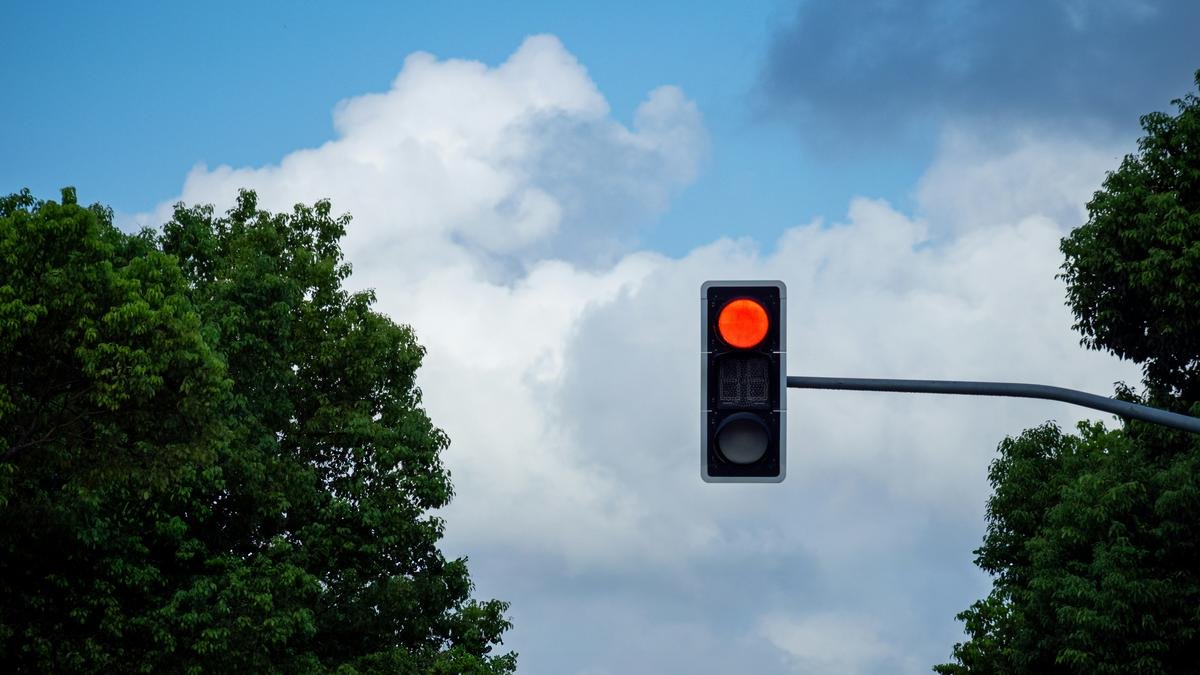
On the earth, red makes a stark contrast to the natural environment, most of which is blue or green.
| Photo Credit: Declan Sun/Unsplash
Red has the longest wavelength of any colour in the visible spectrum, so it is scattered the least by particles in the air, such as fog, rain or dust. Thus, you can see a red sign from further away than, say, one in blue or green.
Humans are also hardwired to notice red. It is the color of blood and fire, two of our ancestors’ greatest indicators of harm. The sight of red often triggers a subtle fight-or-flight response, increasing heart rate and sharpening focus.
On the earth, red also makes a stark contrast to the natural environment. Most of the planet is blue (the sky and ocean) or green (foliage). A bright red sign ‘pops’ against these backgrounds ensuring it isn’t easily missed. This is why early railroad and automotive engineers adopted red as the standard for stop signs.
On Mars, a red stop sign would be ineffective as the landscape is dominated by reddish-orange dust and the sky often has a pinkish hue. So danger signs on Mars would likely be bright cyan or deep blue, which are the opposite of red on the colour wheel.
Can you work out the best ‘danger’ colours on Mercury and Venus?
Have a question you’d like answered? Write to science@thehindu.co.in with ‘Question Corner’ as the subject.
Published – July 09, 2026 10:00 am IST
