



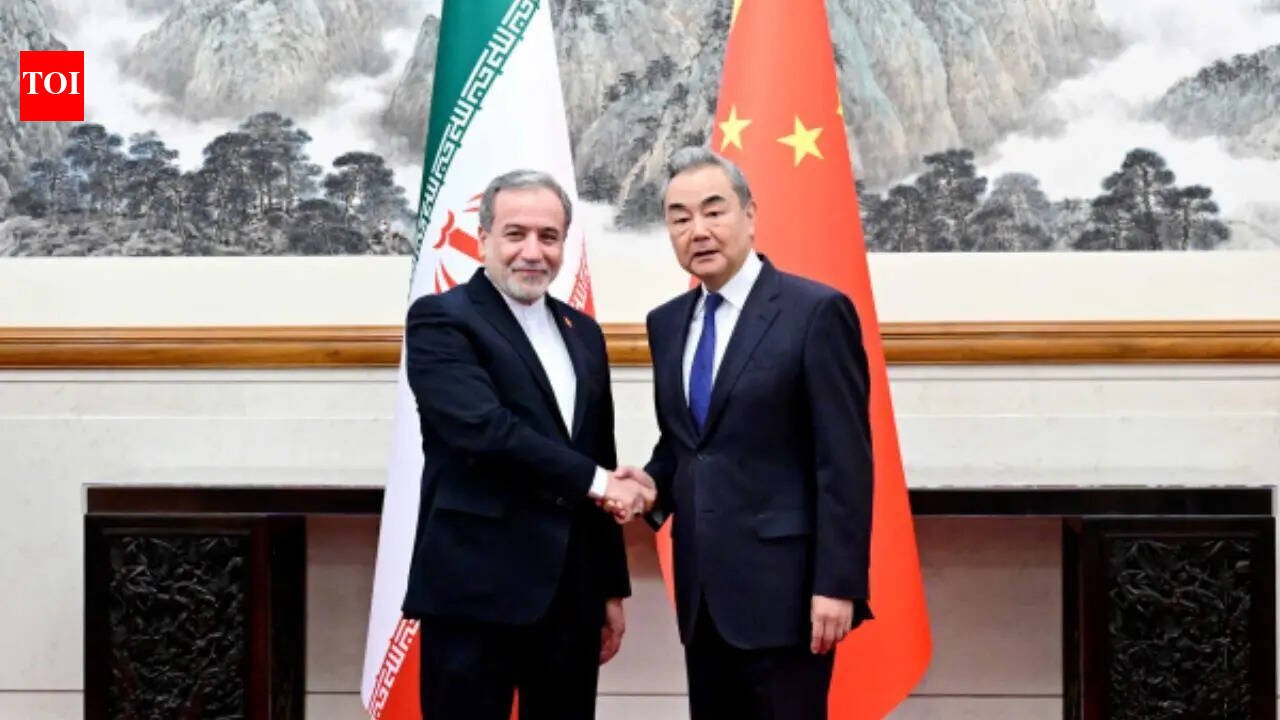
China and Iran have maintained diplomatic ties for decades. Yet Beijing’s response to the ongoing conflict in the Middle East has been notably measured: diplomatic support for Tehran, criticism of US and Israeli military actions, and repeated calls for de-escalation — but no indication of a willingness to intervene more forcefully.This cautious approach raises an important question: if Iran is such an important partner, why has China not done more to support it during the conflict?The answer lies in the nature of the relationship itself. While Beijing is reluctant to become directly involved in Iran’s conflicts, it has strong reasons to ensure Tehran remains stable and aligned with its interests. From discounted oil supplies and trade corridors to its broader rivalry with the United States, Iran occupies a strategic position in China’s calculations that would be difficult to replace.The conflict has therefore highlighted both the importance and the limits of the China-Iran relationship. Beijing may not be willing to fight for Iran, but it cannot afford to lose it.
China and Iran: A relationship built on interests
The two countries established diplomatic relations in August 1971. Unlike China’s “all-weather” ties with Pakistan, however, its relationship with Iran has largely been shaped by strategic interests rather than deep political or security alignment.Chinese President Xi Jinping last visited Iran in 2016 during his first term in office. In contrast, Xi has visited several of China’s other key partners more frequently, underscoring that the relationship, while important, is not among Beijing’s closest. According to Brookings Institution scholars Ryan Hass and Allie Matthias, Iran is a “mid-tier” partner for China, with Beijing being far more important to Tehran than vice versa. This asymmetry is reflected in the broader relationship between the two countries and their economic ties.Yet China has three compelling reasons to maintain close ties with Iran: access to discounted oil and gas supplies, Iran’s role in countering US influence, and Beijing’s broader economic and strategic interests in the region.
China-Iran ties: Fuelled by crude oil
Since early March, tensions around the Strait of Hormuz have brought renewed attention to one of the most important pillars of the relationship: energy.The waterway carries roughly 20% of the world’s crude oil, and any prolonged disruption threatens to drive up prices and unsettle global markets.
Strait of Hormuz.
Why reopening Strait of Hormuz is tough
China has a significant stake in the stability of the route. By some estimates, it receives around 38% of all oil exports that pass through the Strait of Hormuz — the largest share for any country. Beijing is also the largest buyer of Iranian crude, with Chinese purchases accounting for roughly 90% of Iran’s oil exports. Additionally, Iran often sells its crude to China at a discount of $8-10 per barrel, helping Beijing secure a steady supply of relatively cheap energy despite geopolitical instability in the Middle East. In 2025, China imported nearly 1.4 million barrels of Iranian oil per day, accounting for about 12% of its total crude imports. China has also helped ensure the flow of Iranian crude despite sanctions. Chinese refiners and shipping networks rely on a “shadow fleet” of tankers that use ship-to-ship transfers and other methods to obscure the origin of Iranian oil, enabling Beijing to maintain access to discounted supplies.For China, few countries offer the same combination of scale, affordability and strategic value. That helps explain why Beijing has a strong interest in ensuring Iran remains economically viable and politically stable.
Beyond crude: China’s economic interests in Iran
Iran’s importance to China extends beyond crude oil, despite the asymmetry in their trade relationship.For instance, in March 2021, Beijing and Tehran signed a 25-year Comprehensive Strategic Partnership. At stake is up to $400 billion in Chinese investment in Iran under the agreement, giving Beijing a strong incentive to prevent a key regional partner from being severely weakened by war or domestic crises, such as the anti-government protests that erupted in December last year and continued through the New Year before the US-Israeli attacks.Further, besides being part of Beijing’s ambitious Belt and Road Initiative (BRI), Iran is also connected to China through land and rail corridors for trade. One such freight train service was inaugurated in July 2024 between the central Iranian city of Qom and Yiwu, a wholesale hub in China’s Zhejiang province. The train completes the journey in 15 days, compared with longer sea routes that are also more vulnerable to disruptions, including blockades such as those in the Strait of Hormuz.Meanwhile, according to the United States-China Economic and Security Review Commission (USSC), relatively little of China’s promised investment in Iran has materialised, largely because Chinese firms remain cautious about sanctions-related risks. Yet, The Wall Street Journal reported last October that a secretive oil-for-infrastructure mechanism involving the state-owned insurer Sinosure may have channelled up to $8.4 billion into projects in Iran in 2024.
How Iran helps China counter US influence
China’s interest in Iran is not driven solely by crude oil or economics. They also share a broader geopolitical objective: reducing America’s influence in the international order.In 2020, the USSC grouped them alongside Russia and North Korea in what it informally called the “Axis of Autocracy” — countries it said shared an interest in challenging America’s “global leadership” and reshaping aspects of the international order to support authoritarian forms of government. Further, China, alongside Russia, actively supported Iran’s bid to join BRICS, with the Islamic Republic formally becoming a member in January 2024. The move aligned with Beijing’s broader effort to strengthen non-Western institutions and reduce reliance on US-dominated economic structures. BRICS has repeatedly drawn criticism from Donald Trump, who has accused the multi-nation forum of seeking to “undermine” the US dollar’s dominance in global trade.Scholars Ryan Hass and Allie Matthias argue that, in a nutshell, Iran’s “adversarial relationship with the United States diverts American attention and resources that otherwise could be trained on countering China.”
Limits of China-Iran relationship
The China–Iran relationship is ultimately shaped by interests rather than alignment of a deeper strategic kind. For Beijing, Iran matters as an energy supplier and a trading partner. For Tehran, China is a crucial economic lifeline and one of the few major powers willing to sustain engagement despite sanctions.Yet, despite years of cooperation and repeated expressions of strategic partnership, the relationship has not evolved into a formal alliance or one underpinned by security guarantees. Beijing has consistently avoided binding defence commitments and, in the case of the Iran–US war, has confined its response to diplomatic statements, calls for de-escalation, and opposition to UN resolutions seeking to authorise action affecting the Strait of Hormuz.In effect, the partnership remains one of utility rather than obligation—important enough to preserve, but not sufficient to compel intervention.


