



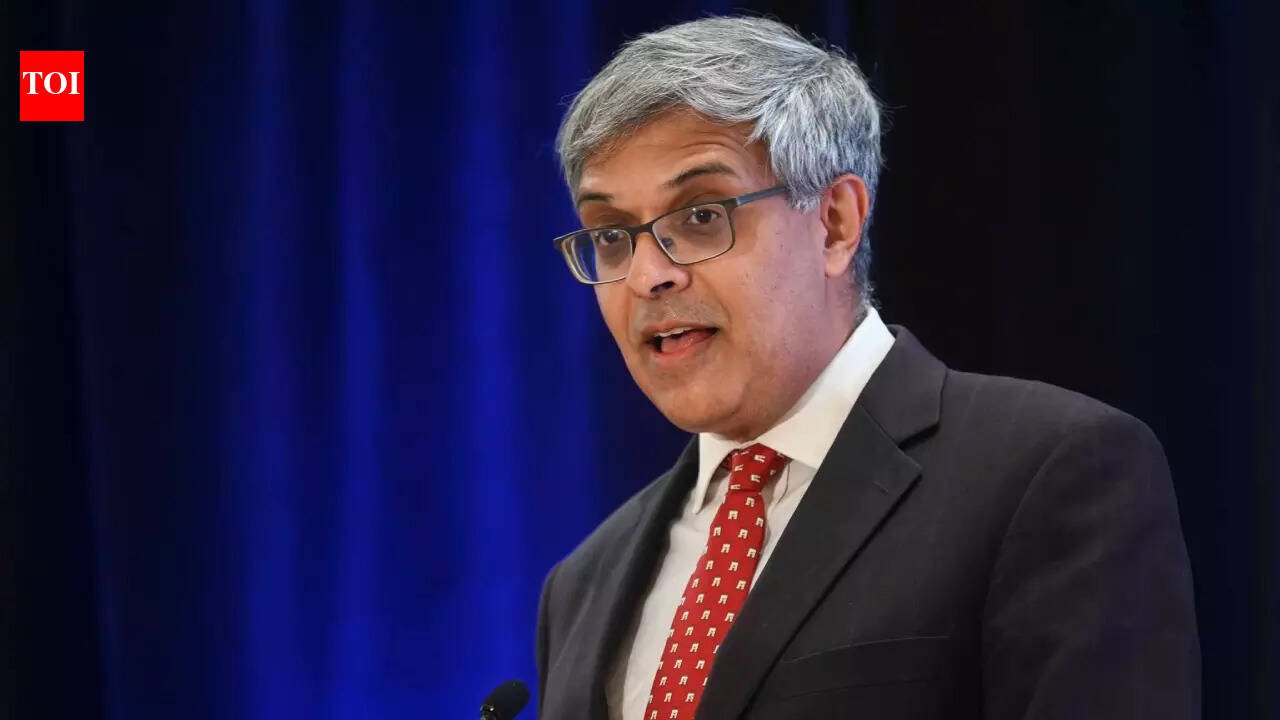
Jay Bhattacharya now sits at the apex of American public health. As director of the National Institutes of Health, he already oversees the country’s biomedical research agenda. Now, as acting director of the Centers for Disease Control and Prevention, he temporarily controls the nation’s disease surveillance and response machinery as well. The unusual consolidation of power has triggered unease among former officials and public health experts, who warn that the arrangement risks stretching leadership capacity at a moment of institutional instability.The concerns were first detailed in reporting by The Hill.What has happenedThe CDC’s top job has been unsettled for months. US president Donald Trump’s initial nominee, former Florida representative David Weldon, failed to secure sufficient Senate support. Susan Monarez, a longtime federal scientist who stepped in as interim director and was later nominated permanently, was subsequently pushed out. Jim O’Neill, a deputy Health and Human Services secretary, then assumed interim control.Bhattacharya is now the third acting CDC director in seven months, while simultaneously continuing his role at the NIH.In an internal email to CDC staff, he outlined three principles for the agency under his stewardship: transparent updates to guidance as new data emerges, ensuring investigations reflect responsibility to communities served, and strengthening internal review processes to enhance accountability and openness.Why former officials are worriedThe NIH and the CDC are not interchangeable institutions. The NIH primarily funds and coordinates biomedical research. The CDC leads disease prevention, surveillance, outbreak response and public health guidance.Former CDC physician Elizabeth Soda told The Hill that even the most experienced leader would struggle to manage both agencies effectively at the same time. Others echoed that concern, arguing that each organisation requires a distinct leadership focus.James Alwine, a professor emeritus of cancer biology at the University of Pennsylvania and member of the volunteer network Defend Public Health, said the missions and operational demands are simply too different for one person to handle concurrently.Beyond workload, critics point to Bhattacharya’s public profile during the Covid-19 pandemic. A Stanford physician and health economist, he gained prominence as a co-author of the Great Barrington Declaration, which criticised broad lockdowns. Supporters view him as a champion of open debate. Detractors see him as sceptical of mainstream public health orthodoxy. That history makes his expanded authority especially sensitive.The broader backdropThe turbulence comes amid wider reshuffling across federal health agencies under the Trump administration. Leadership changes, policy reversals and ideological tensions have unsettled career scientists.At stake is not only administrative efficiency but also credibility. The CDC’s guidance influences global health policy. The NIH steers billions of dollars in research funding and sets scientific priorities for universities and laboratories worldwide.Public health emergencies do not pause for bureaucratic transitions. Whether this dual arrangement proves stabilising or destabilising will depend on how long it lasts and how effectively both agencies function under unified leadership.For now, Washington’s health establishment is watching closely. In public health, structure often shapes substance. When two pillars of the system are placed under one roof, even temporarily, anxiety is inevitable.


