



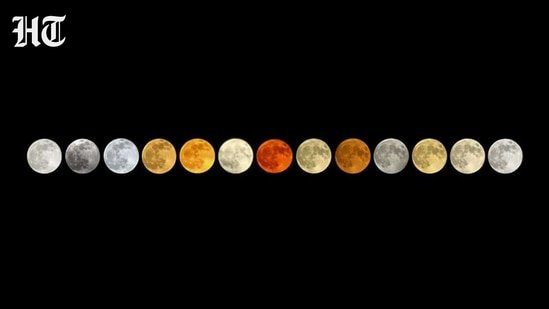
When you hear that 2026 will have 13 Full Moons, it can sound surprising at first. You are usually taught that each month has one Full Moon, so 12 months should mean 12 Full Moons. But the truth is, the Moon does not follow the human calendar. It follows its natural cycle, and sometimes that cycle does not fit neatly into our 12-month system. That is exactly what leads to 13 Full Moons in 2026.
Astrologer Sidhharrth S Kumaar of NumroVani explains why this happens and how different calendars help us better understand it.
What is the Solar Calendar?
The solar calendar is the one you most likely follow in daily life, which is based on the Earth’s movement around the Sun. One complete orbit takes about 365 days, which is why one year is divided into 12 months.
This calendar helps you stay aligned with seasons, farming cycles, and everyday planning. Over time, it has been corrected twice in history, first in 1582 and later in 1752, to fix small alignment errors between calendar time and real solar time. At the same time, the Luni-Solar calendar used in the Indian Panchang had already addressed this imbalance much earlier through the concept of Adhik Maas.
What is the Lunar Calendar?
The lunar calendar is derived from the Moon’s cycle. One full cycle from one Full Moon to the next takes around 29.5 days. If you count 12 lunar months, the year comes to about 354 days.
This creates a natural gap when compared to the solar year. The lunar year is shorter by about 11 days. While this difference may seem small, it builds up over time and slowly shifts festivals and timings if left unadjusted.
Why Panchang is actually brilliant
The Indian Panchang system handles this difference in a very balanced way. Instead of following only the Sun or only the Moon, it brings both together. It tracks tithi, vaar, nakshatra, yoga, and karana, offering a more detailed way to understand time.
It recognizes that your life is influenced by both solar seasons and lunar cycles. This balance is what makes the Panchang both spiritually meaningful and scientifically thoughtful.
The solar year is about 365 days long, while the lunar year is about 354 days. This creates a difference of roughly 11 days every year.
ALSO READ: May 2026 Full Moon: 4 zodiac signs who would benefit the most during Blue Moon
At first, it may not feel like much. But over a few years, this gap starts to grow. Festivals and lunar events are beginning to shift away from their usual seasonal timing, creating an imbalance in the calendar system.
Ancient Indian timekeeping solved this with Adhik Maas, which is an extra lunar month added from time to time. This extra month helps realign the lunar and solar calendars.
Instead of forcing the Moon to match the Sun’s cycle, the system adjusts itself. Adhik Maas is not just a religious idea; it is a mathematical correction built into the calendar to keep time in balance.
Why does 2026 have 13 Full Moons?
2026 has 13 Full Moons because it includes this adjustment cycle. When an extra lunar month is added through Adhik Maas, it naturally brings in an additional Full Moon.
That is why you will see 13 Poornimas in 2026 instead of the usual 12. Nothing unusual is happening in the sky. The Moon continues its normal cycle. What changes is how the lunar and solar calendars line up.
ALSO READ: May 2026 Horoscope: How the 2 Full Moons this month may impact each zodiac sign
Disclaimer: This article is for general informational purposes only and is based on astrological and calendrical interpretations. It should not be taken as a scientific or astronomical fact for decision-making.


