



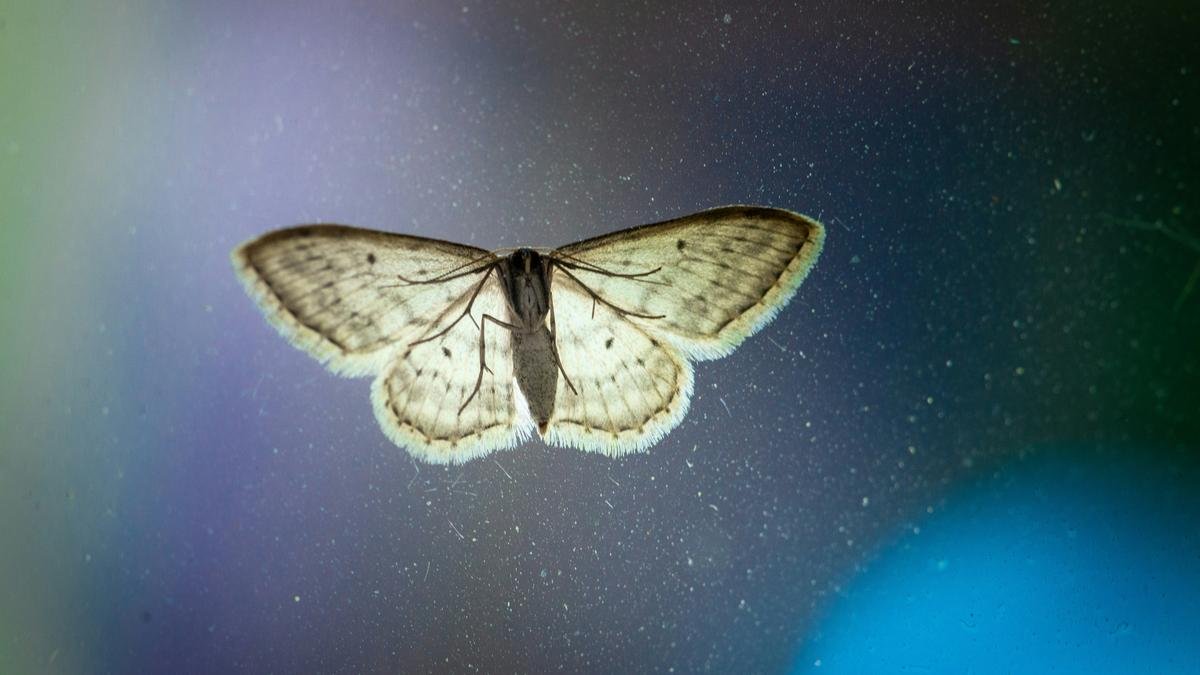
For an insect flying at night, the brightest part of the natural environment is usually the sky, including the moon and stars.
| Photo Credit: Max Kleinen/Unsplash
— Delin Paul
Recent research has actually suggested that this description is misleading. Many moths may not be deliberately flying towards the lights but because artificial lights interfere with a technique they use to keep themselves flying in the right direction.
For an insect flying at night, the brightest part of the natural environment is usually the sky, including the moon and stars. So many insects have evolved to keep their backs facing the brightest part of their surroundings. And usually this helps them stay upright.
This is also why an artificial light can confuse them. A lamp over your front door may appear next to or below the insect. One 2024 study that pieced insect flight paths together in three dimensions found that insects near artificial lights repeatedly turned their backs towards the light, causing them to bank sideways in flight, circle the light source, stall, climb steeply or sometimes flip over and crash.
This explanation challenges the more popular idea that moths use the moon or other distant celestial lights for navigation and mistake lamps for them. Some insects may still navigate that way but it does not appear necessary to explain insects’ behaviour around lamps.
Published – September 17, 2026 09:30 am IST
