


Brain tumour is probably one of the most serious diagnoses that one can receive, and according to Dr Ravindra Srivastava, senior consultant in neurosciences at ShardaCare-Healthcity, it is no longer a condition that predominantly affects the elderly.
Also Read | Do you know how waistline can indicate liver health? Doctor explains link between belly fat and fatty liver
The rise in brain tumour cases in young adults is a cause for serious concern and calls for more awareness. It becomes important for individuals to be aware of the facts surrounding the disease so that it can be detected and treated early.
Dr Srivastava shared with HT Lifestyle the reason why more young adults are being diagnosed with brain tumours, which factors actually increase the risk of the disorder, and what symptoms to look out for.
The real reason for more brain tumour detection
According to Dr Srivastava, the advancement of technology is the most prominent reason for more brain tumours being diagnosed in young adults.
“Technological advances are enabling more imaging to be performed that was once overlooked,” he stated. “The increase in diagnosis rates is in no small part due to the fact that there has not been a significant increase in the number of tumours; it is because detection has increased.”
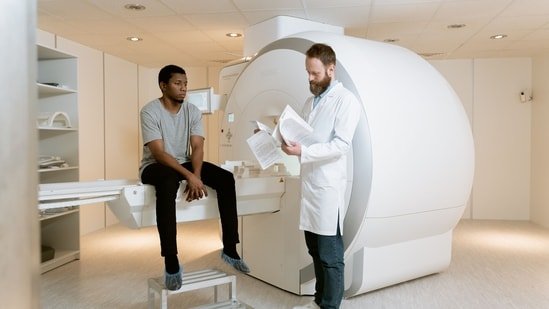
“Today, advanced MRI and CT scanning equipment are more readily available than ever before. Tumours which were not diagnosed 10 years ago are now being diagnosed earlier, sometimes at an unexpected time when scanned for other issues. This is great news, as early detection virtually guarantees treatment benefits,” he added.
Do mobile phones cause brain tumours?
Mobile phones are often considered by the elderly to be a prominent reason for the rising risk of brain tumour among youth. However, that is far from the truth, revealed Dr Srivastava.
“Let’s debunk the biggest myth in a nutshell,” he stated. “Don’t worry about the mobile phone, power lines, or certain viruses, because there has been a lot of research done on the possible causes, and it has not been found that any of these causes are responsible for brain tumours. Most cases of brain tumour, for instance, remain unknown.”
What factors play a role in brain tumour risk?
According to the neurologist, genetics and hereditary factors play a role in determining an individual’s brain cancer risk.
“There is a definite risk of developing a brain tumour if there are family members with rare genetic conditions like neurofibromatosis type 1 and neurofibromatosis type 2, so it is strongly recommended to have proactive neurological follow-ups,” he stated.
The other thing that is suspected to be linked is the lifestyle that one follows. While no clear link has been established between any one lifestyle factor and brain tumour development, it is still widely recognised that a healthy lifestyle is beneficial for brain health in general, noted Dr Srivastava.
Red flags to watch out for
While headaches are a common experience, some are different from the others, and require prompt medical evaluation. According to Dr Srivastava, the headaches that could be a sign of forming brain tumours include the following:
Headache accompanied by nausea or projectile vomiting
- Sudden, severe “thunderbolt” headache
- Headache that is worse in the morning or wakes you from sleep
- Headache with vision changes, blurred or double vision
- Headache associated with seizures or loss of consciousness
- Headache with progressive worsening over days or weeks
- Headache alongside weakness, numbness, or speech difficulty
- Headache with personality or behavioural changes
Note to readers: This article is for informational purposes only and not a substitute for professional medical advice. Always seek the advice of your doctor with any questions about a medical condition.
