



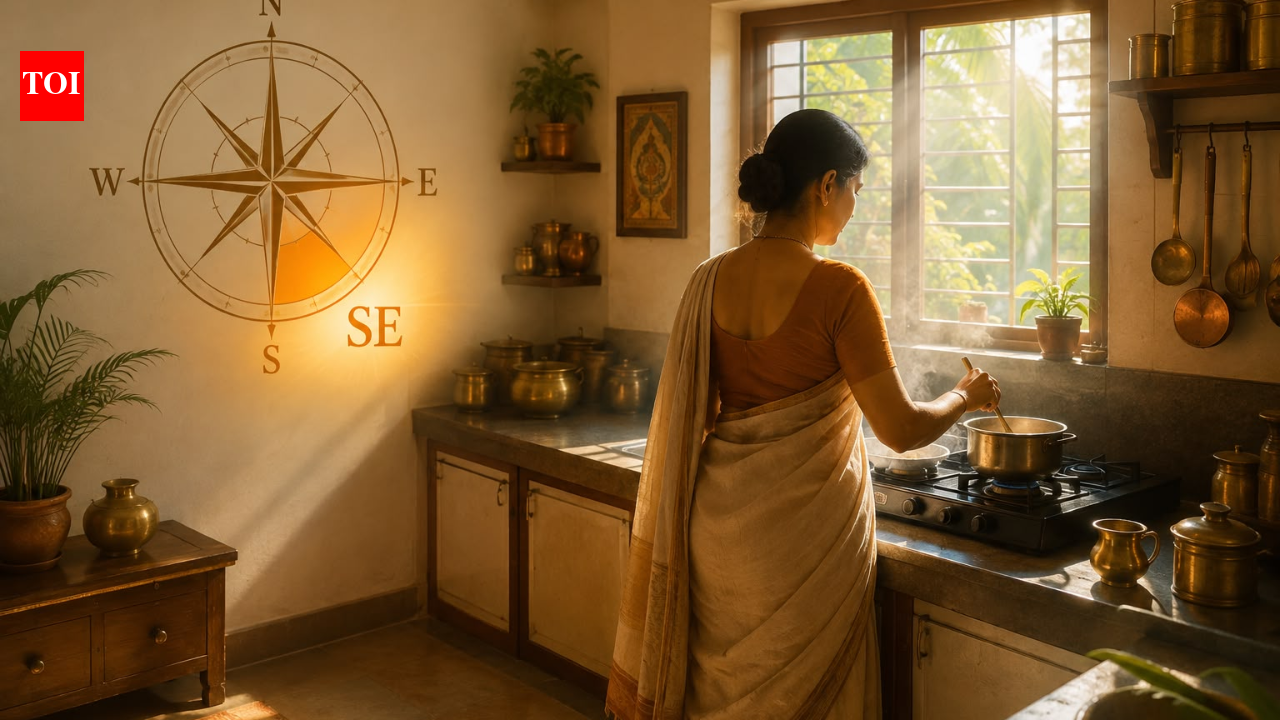
For generations, many Indian homes have placed the kitchen in the south-east corner, not simply as a matter of design but as a deeply rooted Vastu tradition. Even today, while buying a new house or planning construction, one of the first questions many families ask is, “Where is the kitchen?” In Vastu Shastra, the answer often points to the south-east. This belief comes from the ancient Indian architectural system known as Vastu Shastra, which seeks to harmonise buildings with natural elements, directions and energy flow. While some of its principles are spiritual rather than scientific, others overlap with practical considerations such as sunlight, ventilation and heat management. Together, these ideas have kept the south-east kitchen recommendation alive for centuries.
The connection between the south-east and the fire element
According to Vastu Shastra, every direction is associated with one of the five natural elements, known as the Panch Mahabhutas. The south-east is governed by Agni, or the fire element, making it the traditional location for activities involving cooking and heat. Cooking has always been one of the most important daily rituals in an Indian household. Historically, kitchens relied on wood-fired stoves, coal or earthen chulhas, making fire the central feature of the space. Vastu therefore considers the south-east the most suitable direction to house this powerful element, believing it helps maintain balance within the home.
There is practical wisdom behind the belief
Although Vastu is rooted in ancient philosophy, some experts note that the south-east kitchen may also have practical advantages in many parts of India. The morning sun rises in the east, allowing kitchens located towards the eastern or south-eastern side of the house to receive gentle daylight during the busiest cooking hours. Natural light not only improves visibility but also reduces dependence on artificial lighting.
As the day progresses, the stronger afternoon heat shifts westward, meaning a south-east kitchen may avoid the harshest evening sunlight compared with a west-facing kitchen. In India’s warm climate, this could help make cooking spaces relatively more comfortable.Good ventilation, however, remains the most important factor regardless of direction.
A space linked with nourishment and prosperity
In Indian tradition, the kitchen is often regarded as the heart of the home because it is where food is prepared for the family. Vastu associates this space with health, nourishment, abundance and overall household well-being.
Many households therefore perform rituals before building or renovating a kitchen, believing that respecting Vastu principles brings harmony and positive energy. Whether viewed through a spiritual or cultural lens, the kitchen occupies a special place in Indian family life that extends far beyond meal preparation.
Why the cooking stove is often placed facing east
Vastu guidelines typically recommend positioning the cooking stove in the south-east portion of the kitchen while encouraging the person cooking to face east. The east is traditionally associated with new beginnings, sunlight and positive energy. From a practical standpoint, cooking while facing east also allows early morning natural light to illuminate the workspace, especially in homes designed around traditional layouts.
What if the kitchen cannot be in the south-east?
Modern apartments and urban homes often leave little room for directional choices. Recognising this, many Vastu practitioners consider the north-west corner an acceptable alternative when a south-east kitchen is not possible. Rather than insisting on rigid rules, contemporary architects frequently recommend focusing on aspects that have a clearer impact on daily life, including efficient ventilation, proper exhaust systems, adequate lighting, safe gas and electrical installations, and enough workspace for comfortable cooking.
A tradition that blends culture and design
Whether one believes in Vastu or views it as a cultural practice, the preference for south-east kitchens reflects the way traditional Indian architecture attempted to align homes with both nature and everyday living. The symbolism of the fire element, combined with practical considerations like daylight and ventilation, may explain why this recommendation has endured across generations. Ultimately, a well-designed kitchen is one that is safe, hygienic, well-ventilated and functional. For many Indian families, placing it in the south-east also preserves a tradition that has been passed down through generations, connecting modern homes with centuries of architectural wisdom.


