


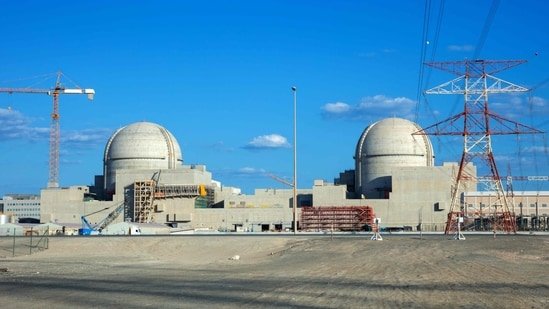
A drone attack caused a fire near a nuclear power station in Abu Dhabi in the United Arab Emirates on Sunday, authorities said, adding that no injuries were reported and radiation levels remained unaffected. The incident took place at the Barakah nuclear power plant in the remote western desert region of Abu Dhabi, close to the Saudi border.

A statement posted by the Abu Dhabi Media Office did not mention where the drone had come from. However, the UAE has recently accused Iran of carrying out attacks targeting the country’s energy and economic infrastructure.
Follow US-Iran war live updates here.
The UAE’s nuclear regulator said the fire had no effect on the plant’s safety systems. “All units are operating as normal,” it wrote on X.
Why Barakah nuclear power plant is crucial to the UAE
Built at a cost of $20 billion, the nuclear power plant was developed by the UAE with support from South Korea and began operations in 2020.
It remains the only nuclear power plant on the Arabian Peninsula and can meet one-quarter of the UAE’s energy requirements. It is also the first commercial nuclear power plant in the Arab world.
The facility is located 200 kilometres west of Abu Dhabi, the capital of the UAE, near the borders of Saudi Arabia and Qatar.
The UAE became the second country in the region to build a nuclear power station after Iran and the first Arab nation to do so.
Sunday’s strike was the first attack on the four-reactor Barakah facility during the US-Iran war.
The UAE signed a strict agreement with the US regarding the power station, called a “123 agreement”, under which it agreed to stop domestic uranium enrichment and the reprocessing of spent fuel to address concerns over nuclear proliferation. The uranium used at the plant is imported.
The West Asia crisis
The UAE has faced multiple missile and drone attacks during the Israel-US and Iran conflict. Authorities said several of these incidents originated from Iran and targeted energy sites and maritime infrastructure.
Iran has accused the UAE and other US allies in the Gulf of allowing American forces to launch attacks from their territory. The UAE has strongly rejected claims from Iran that it has taken part in carrying out attacks itself.
Washington and Tehran agreed to a truce on April 8, but peace talks have slowed, and isolated attacks have continued.
The US stopped its attacks last month but later introduced a port blockade. Iran has effectively shut the Strait of Hormuz, which earlier handled one-fifth of the world’s oil and liquefied natural gas supplies before the US and Israel launched attacks on February 28.
With inputs from agencies
