



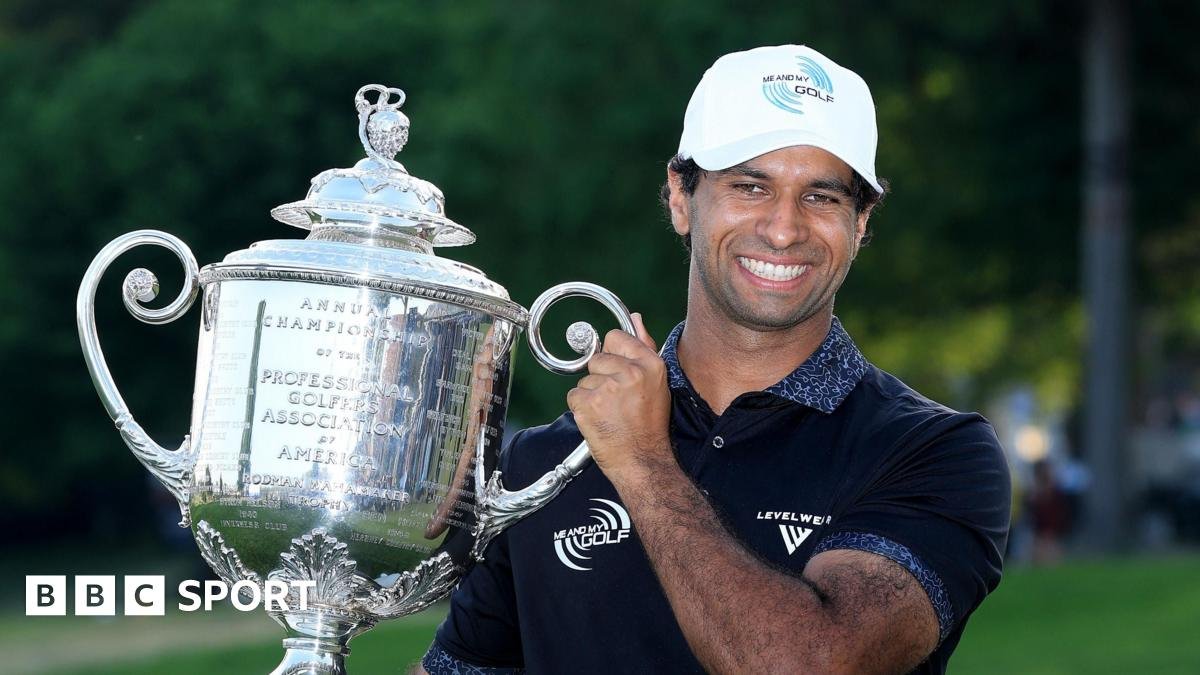
Rai’s father Amrik used to take him to 3 Hammers for lessons with instructor Darren Prosser, with the youngster going out on the par-three course afterwards to put what he had been taught into practice.
Rai already possessed a rare tunnel-visioned focus – a trait which enabled him to secure victory at Aronimink – for a player so callow, says Prosser.
By the age of 10, Rai was coached by Andrew Proudman – who also worked in the 3 Hammers pro shop – in tandem with another Wolverhampton pro Piers Ward, and the pair still guide Rai to this day.
When Prosser’s path crossed with Rai again several years later – at an Open Championship regional qualifier in Coventry – he realised the teenager had rapidly developed into a potential tour prospect.
“I hardly recognised him,” Prosser told BBC Radio 5 Live. “In such a short time he’d shot up and he was a really strong guy.
“He was right on it physically and mentally, and you thought then he was ready to go professional.”
Rai hailed the impact of his “mentors” Proudman and Ward in his post-victory news conference at Aronimink, but the most gratitude goes eternally to his parents for their sacrifices in helping him reach the pinnacle of his chosen career.
An emotional Rai said it was “hard to express everything they mean” to him.
Amrik quit his job to devote more time to Rai’s development on the course, with Dalvir – who is of Kenyan-Indian descent – working long hours to support things financially.
“I can’t put into words how much they’ve done in terms of the support, in terms of the care, in terms of love. I wouldn’t be here without them at all,” said Rai.
Very few British Asians have played golf at the highest level and, again speaking to BBC Sport in 2018, Rai said pursuing the game professionally might not always have been met with encouragement from some parents of Indian descent.
But he said his folks always encouraged him to pursue his dream – especially his father, who turned down a tennis scholarship in the US at the age of 20.
“Being from an Indian family was different back in those days,” said Rai, who turned professional in 2012.
“It was more about getting an education and a proper job, and sport or tennis at that time was never really seen as a proper job.
“That pressure to have certain kinds of career was probably there from the previous generation, and certain career paths in our culture are still more walked upon.”


