



US President Donald Trump on Monday claimed that Washington and Tehran had held “very good and productive” discussions over the past two days. However, he did not name the Iranian official involved in the talks.


Trump said the discussions were “in depth, detailed, and constructive,” and added that their overall “tenor and tone” had prompted a temporary pause in planned US military action. According to him, he had instructed the US department of war to postpone strikes targeting Iranian power plants and energy infrastructure.
Track US-Iran war live updates
The delay, he said, would last five days. Later, while speaking to reporters in Florida about the details of the call, he clarified that these negotiations do not involve the new Supreme Leader, Mojtaba Khamenei, but rather a ‘top person’.
“We’re dealing with a man who I believe is the most respected and the leader. You know it’s a little tough; they’ve wiped out, we’ve wiped out everybody,” the Republican President added.
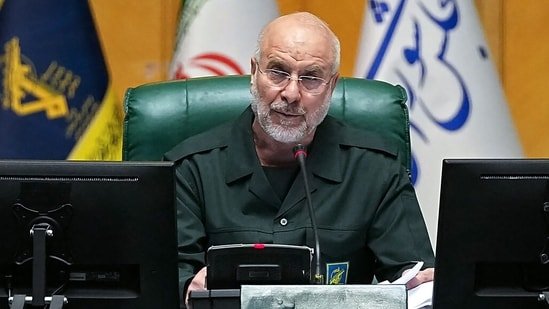
Ghalibaf named denies being Trump’s ‘top person’
Amid reports of backchannel diplomacy and buzz on the ‘top person’ named by Trump, a report in The Jerusalem Post, citing sources, claimed that Mohammad-Bagher Ghalibaf was leading the talks on behalf of Iran.
However, Ghalibaf swiftly rejected the claim, saying, “There have been no negotiations with the US, and fake news is used to manipulate the financial and oil markets and escape the quagmire in which the US and Israel are trapped,” he said.
He added that the Iranian public expects accountability, stating: “Iranian people demand complete and remorseful punishment of the aggressors. All Iranian officials stand …”
Who is Mohammad-Bagher Ghalibaf?
Ghalibaf is one of Iran’s most prominent political figures, with a career spanning military, security and political roles.
A former commander in the Islamic Revolutionary Guard Corps (IRGC), he has also served as Tehran’s mayor, national police chief and a presidential candidate, according to a previous report by Reuters.
Born in 1961 in northeastern Iran, Ghalibaf rose rapidly through the ranks during the Iran-Iraq war, becoming a general within three years of joining the Guards. He later qualified as a military pilot and went on to head the Guards’ air force unit, it added.
Despite his hardline credentials, he has at times projected himself as a pragmatist and moderniser. During his 2005 presidential campaign, he highlighted his professional background, even appearing in pilot uniform in campaign materials.
His record, however, includes involvement in key moments of domestic unrest. In 1999, he participated in a crackdown on student protests and was among commanders who warned then president Mohammad Khatami to act decisively against demonstrators, reported Reuters.
US-Iran war
The current escalation traces back to the killing of Iran’s Supreme Leader Ayatollah Ali Khamenei in joint US-Israeli strikes on February 28. Iran retaliated by targeting US and Israeli assets across the Gulf, disrupting key shipping routes and rattling global energy markets.
As tensions deepened, Iran effectively shut down the strategically crucial Strait of Hormuz, triggering widespread concerns over international trade and economic stability.


